Every spring, the mountains and forests of Hoa Binh come alive with vibrant colors and the resonant sounds of gongs during the Muong people’s Khai Ha Festival. If you are looking for a meaningful cultural experience at the beginning of the year, visit Mai Chau to immerse yourself in the lively festival atmosphere and enjoy a relaxing getaway amid peaceful nature.
The Muong Khai Ha festival: Meaning, time, and location
Each spring, Muong communities across Hoa Binh joyfully celebrate the Khai Ha Festival. This is a community ritual rich in ethnic cultural identity, marking the start of a new agricultural season.
In 2022, the Khai Ha Festival was officially recognized by the Ministry of Culture, Sports and Tourism of Vietnam as a National Intangible Cultural Heritage. The festival has since become an important cultural event, attracting large numbers of local residents and visitors from across the country.
.png "Lễ hội Khai Hạ của người Mường (nguồn: UBND huyện Cao Phong)")
The Muong Khai Ha Festival (Source: Cao Phong District People’s Committee)
According to legend, the Khai Ha Festival was established to honor the contributions of Quoc Mau Hoang Ba, the Village Guardian Deities, and the pioneers who first cleared the land and opened the fields. They taught the people how to grow rice, protect the land from invaders, and bring about abundant harvests and a prosperous life.
This festival is an occasion for villagers to express gratitude to deities and ancestors, while also praying for favorable weather, thriving crops, family happiness, and a united community.
The festival takes place annually in the first lunar month, with specific dates varying among different Muong regions. In Muong Dong (Kim Boi), it is held from the 3rd to the 5th day of the lunar month. In Muong Vang (Lac Son), the festival takes place on the 4th day at Ang Ka Shrine.
In Muong Thang (Cao Phong), the festival is celebrated on the 5th and 6th days of the lunar month at Mieu Ca Shrine. Meanwhile, Muong Bi (Tan Lac) usually holds the festival later, on the 7th or 8th day of the lunar month.
Festival venues are typically sacred locations such as communal houses, shrines, festival grounds, or spacious rice fields. All of these Muong regions are located not far from Mai Chau, making it convenient for travelers to stay in Mai Chau and combine their visit with participation in the festival.
This is also a wonderful opportunity for visitors to gain deeper insight into the spiritual and cultural values of the Muong people, while immersing themselves in the vibrant spring atmosphere of Vietnam’s Northwest mountains.
Read more: Experience Mai Chau stilt house - Culture, architecture, and staying tips
The ritual ceremony: Sacred spiritual practices
The ritual ceremony of the Khai Ha Festival is considered the most important and sacred part, deeply reflecting the agricultural beliefs of the Muong people.
Preparing offerings before the ceremony
From early morning, the atmosphere at communal houses and shrines becomes lively. Village elders, shamans, and local residents carefully prepare offerings to present to deities, ancestors, and the founding pioneers.
Typical offerings include rice wine, sticky rice, a rooster, local pork, traditional cakes, betel and areca, incense, and flowers. All items are meticulously arranged on finely crafted ceremonial trays.
Ritual offerings and prayers for a good harvest
.png "Phần lễ (nguồn: sưu tầm)")
The ritual ceremony (Source: collected)
The main rituals are conducted under the guidance of the Mo shaman, who is the keeper of the Muong people’s folk beliefs. Acting on behalf of the villagers, the shaman offers incense and recites traditional prayers, asking the deities to grant favorable weather, fertile fields, healthy descendants, and a prosperous life for the community
Palanquin procession and the calling of the Gong spirits
One of the most remarkable rituals is the palanquin procession combined with the calling of the gong spirits. The procession includes village elders, the shaman, and strong young men, all dressed in traditional costumes. They solemnly carry the spirit tablets of the deities from the shrine to the rice fields. The resonant sound of gongs blends with the rhythmic chanting of ritual prayers, echoing across the land. These sounds are believed to awaken the vitality of the mountains and forests and mark the beginning of a new agricultural season.
The field-opening ritual to begin a new crop season
The final ritual of the ceremonial part is the field-opening rite, which reenacts the first farming activities of the year. A buffalo is led to the edge of the field to plow the first furrows, followed by fertilizing, sowing seeds, and transplanting rice seedlings. This symbolic act represents the opening of the fields and the start of the spring crop, carrying wishes for a favorable new year and an abundant harvest.
Beyond its spiritual meaning, the ritual ceremony leaves a deep impression on visitors. The solemn atmosphere, the echoing sound of Muong gongs, and the strong sense of community reflect a profound belief in nature and life.
The festive part: Lively folk games and traditional cuisine
If the ritual part is sacred and solemn, the festive part is joyful and vibrant. This is when the entire community comes together to celebrate the early days of spring. Visitors to the Khai Ha Festival not only admire traditional cultural values but also take part in folk games and enjoy authentic Muong cuisine.
A lively atmosphere with traditional folk games
Immediately after the ritual ceremony, the festival grounds become bustling and cheerful. Villagers and visitors gather at communal yards and open spaces to join traditional games such as con ball throwing, tug of war, stick pushing, crossbow shooting, and rice-planting contests. These activities are not only entertaining but also vividly reflect the Muong people’s agricultural life and strong sense of unity.
Unique folk art performances
The festive atmosphere is further enhanced by traditional Muong art performances. Visitors can enjoy graceful gong dances, with resonant gong sounds blending harmoniously with heartfelt folk songs.
.png "Biểu diễn nghệ thuật dân gian đặc sắc tại Lễ hội Khai Hạ của người Mường (nguồn: Hòa Bình)")
Unique folk art performances at the Muong Khai Ha festival (Source: Hoa Binh)
In many localities, competitions showcasing traditional costumes and antiphonal singing are also organized, creating a lively and culturally rich atmosphere.
Enjoying the distinctive Flavors of Muong Cuisine
One of the highlights of the festival is the traditional food area, featuring dishes rich in mountain flavors. Visitors can savor fragrant bamboo-tube rice, grilled local pork, forest bamboo shoot soup, five-color sticky rice, as well as traditional cakes such as day cake and rang bua cake.
Equally important are jars of can wine, which bring people together around a warm fire, fostering connection and shared joy. Stalls selling brocade textiles and local products also add to the vibrant character of the festival.
Suggested accommodation for festival visitors in Mai Chau
Attending the Khai Ha Festival requires not only a well-planned itinerary but also a comfortable place to rest and recharge. Mai Chau and nearby Muong regions offer a wide range of accommodations, from local homestays to high-end resorts immersed in nature. Choosing a quiet, convenient place with good facilities will make your festival journey more complete.
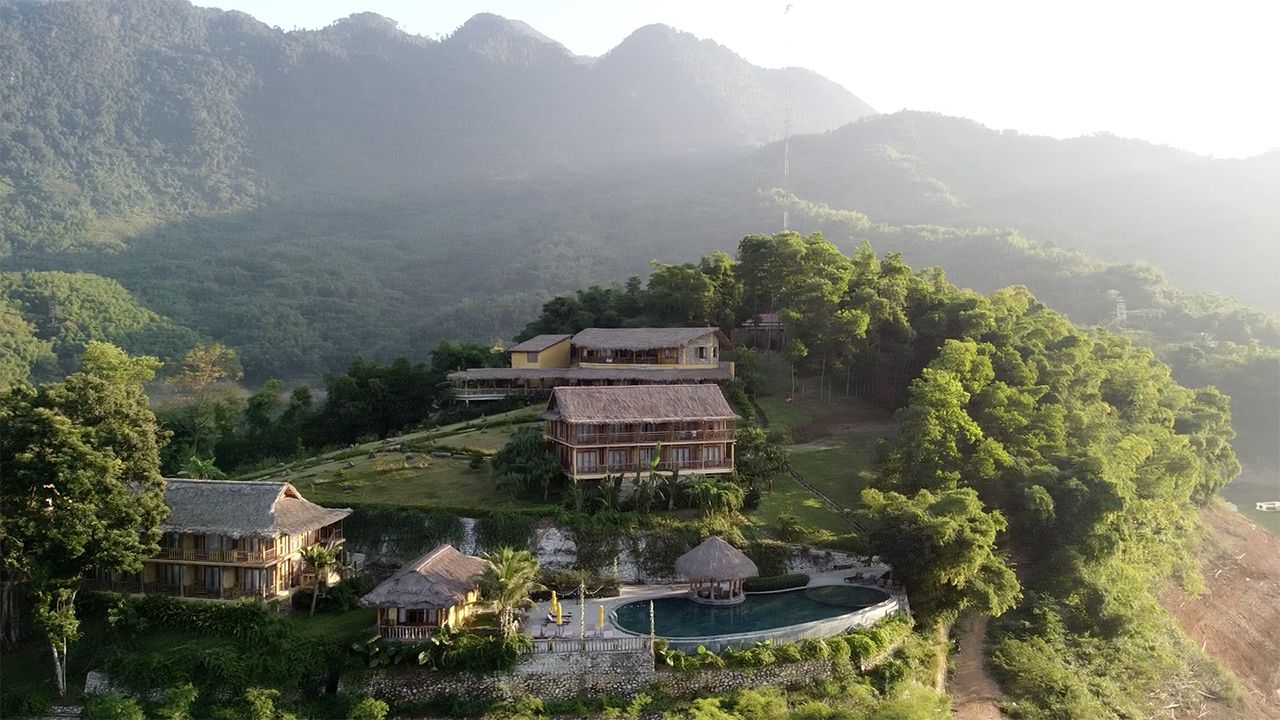
Mai Chau Hideaway Lake Resort
For travelers who wish to easily reach Muong festival areas while enjoying a luxurious lakeside retreat, Mai Chau Hideaway Lake Resort is an ideal choice. Nestled peacefully along Hoa Binh Lake, the resort is only about 30–45 minutes from major festival locations.
Beyond its picturesque mountain-and-lake scenery, the resort offers exceptional experiences with lake-view rooms, an infinity pool, spa services, and a restaurant serving refined cuisine. After a day immersed in the lively festival atmosphere, guests can enjoy complete tranquility, privacy, and comfort here.
Book your stay today at Mai Chau Hideaway Lake Resort to prepare for a memorable Khai Ha Festival season, where cultural discovery meets a refined retreat in the heart of Vietnam’s Northwest.
Read more: Mai Chau accommodation guide for the best experience
The Khai Ha Festival of the Muong people is not only a celebration for local communities but also a special occasion for visitors to fully experience the cultural beauty of Vietnam’s Northwest. Immersed in the sounds of gongs, laughter, and the flavors of mountain cuisine, visitors may feel their hearts “opening” along with the arrival of spring.