Spiritual tourism is a type of travel that combines sightseeing, worship, and the experience of cultural beliefs and practices. In Vietnam, this form of tourism has flourished, with many sacred destinations closely linked to history, religion, and the spiritual life of the Vietnamese people. This article will help you gain a clearer understanding of the concept of spiritual tourism, its characteristics, and the most famous spiritual tourism destinations in Vietnam.
What is spiritual tourism?
Spiritual tourism is a type of travel that combines sightseeing, worship, and the experience of cultural and religious values. It is not simply about visiting pagodas or offering incense; spiritual tourism also helps travelers find peace and balance, while exploring the unique cultural characteristics of each region.

What is spiritual tourism? (Source: Lao Dong news)
Nowadays, spiritual tourism is becoming a popular trend among travelers, as it not only helps them relax and learn about culture, but also combines gentle relaxation and nature experiences, creating a memorable journey that stands out from conventional types of tourism.
Distinctive features of spiritual tourism in Vietnam
Spiritual tourism in Vietnam stands out for its combination of religious beliefs, culture, and natural landscapes. Unlike recreational tourism, spiritual tourism focuses on spiritual experiences, helping travelers find peace and balance.
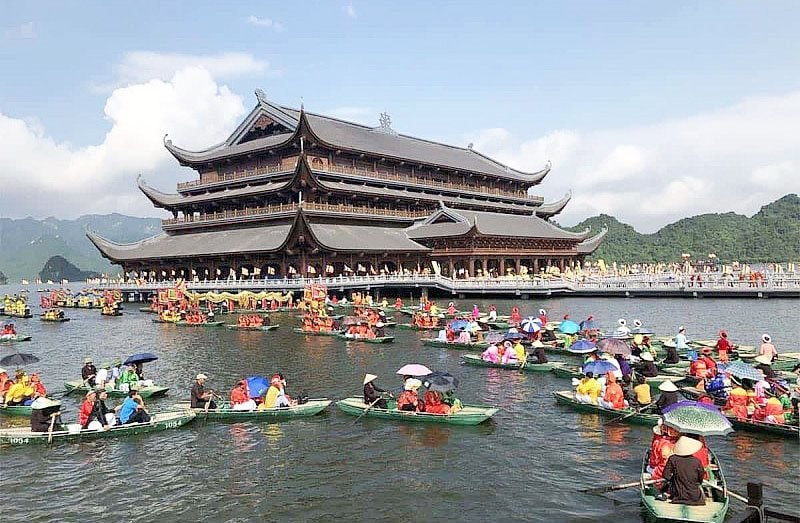
Current situation of spiritual tourism in Vietnam (Source: Hanoimoi)
- Closely linked to iconic sacred destinations
In Vietnam, spiritual tourism has developed strongly and become a popular trend, attracting both domestic and international travelers. This type of tourism is often associated with folk beliefs, Buddhism, Mother Goddess worship, and traditional festivals, offering experiences that are both sacred and rich in cultural value.
- Experiencing the combination of nature and culture
Spiritual destinations are often located in mountains, lakes, rivers, or peaceful rural areas, creating a serene environment. Travelers can both go on pilgrimages and explore ancient architecture and natural landscapes, while also learning about the customs, arts, and spiritual life of the Vietnamese people.
- Immersing in traditional festivals
Spiritual tourism is often combined with traditional festivals, such as the Hung Kings’ Death Anniversary, Huong Pagoda Festival, or Ba Chua Xu Festival. By participating in these festivals, visitors can observe rituals, enjoy folk games, and taste local specialties, creating a vivid and multi-dimensional experience.
- Experiencing virtue and inner peace
Spiritual tourism is not just about pilgrimages; it is also a journey of healing the soul, helping travelers find balance, reflect, and seek peace amidst the busyness of life.
Top 10 famous spiritual tourism Destinations in Vietnam
Let’s take a look at some of the most famous spiritual tourism destinations in Vietnam that you should not miss. From ancient pagodas in the North and sacred temples, to mountains and renowned temple complexes in the South, each place carries a sacred story, unique architecture, and rich cultural experiences.
Ba Chua Thac Bo Temple – Phu Tho (formerly Hoa Binh)
Ba Chua Thac Bo Temple is located on the shore of Thac Bo Lake, in Vay Nua Commune, Da Bac District, and Binh Thanh Commune, Cao Phong District (formerly part of Hoa Binh Province). The temple is closely associated with the sacred legend of Ba Chua Thac Bo and is highly revered by both locals and visitors, who often come to offer incense and pray for peace, health, and good fortune.
What makes this temple especially remarkable is its unique architecture and artistic features, including numerous statues, intricate carvings, and caves containing large bronze statues and sparkling stalactites, creating an experience that feels like stepping into a mystical spiritual realm.

Ba Chua Thac Bo Temple – Phu Tho (formerly Hoa Binh)
The journey to the temple is also a memorable experience. Visitors travel by boat across the lake and climb the steps up the mountain, combining worship with the enjoyment of the majestic surrounding nature. Every year, the temple attracts a large number of pilgrims and local visitors who come to offer prayers and participate in traditional rituals, especially during the early spring festivals.
After the pilgrimage and worship at Ba Chua Thac Bo Temple, you can continue your journey by exploring Mai Chau, located nearby. This region is famous for its lush green mountains, Thai and Muong villages rich in culture and traditional crafts, along with authentic local life experiences and the opportunity to savor distinctive Northwest cuisine.
At the end of a long day, Mai Chau Hideaway Lake Resort is the ideal place to relax and enjoy the tranquil natural surroundings. Nestled beside a picturesque lake amid majestic mountains, the resort offers modern, comfortable accommodations, a swimming pool, a restaurant serving local specialties, and a variety of nature-friendly relaxation experiences, creating a journey that is both peaceful and unforgettable.

Mai Chau Hideaway Lake Resort
Book your stay at Mai Chau Hideaway Lake Resort today to begin your spiritual tourism journey, combining relaxation, cultural exploration, and the breathtaking natural beauty of the region.
Fansipan spiritual complex – Lao Cai
The spiritual complex atop Fansipan, located within the Sun World Fansipan Legend complex in Sa Pa town, Lao Cai, is a place where majestic nature meets a serene spiritual atmosphere. Situated at an altitude of over 3,143 m, it offers a sense of tranquility, completely separated from the hustle and bustle below.

Fansipan Spiritual Complex – Lao Cai (Source: Thanh Nien News)
Visitors can experience the journey to the summit via a cable car crossing the Muong Hoa Valley, passing through pine forests and drifting clouds, before arriving at the complex featuring Kim Son Bao Thang Pagoda, a 21.5 m tall Amitabha Buddha statue, and the La Han Path lined with dozens of statues depicting the Arhats.
Beyond its spiritual significance, the summit of Fansipan is also a place to admire breathtaking natural scenery. From the temple courtyard, you can take in panoramic views of the cloud-filled valleys, the mist-covered peaks of the Hoang Lien Son range, and feel the mountain breeze while hearing the temple bells echo through the highlands.
Hung Kings Temple – Phu Tho
Majestically situated on Nghia Linh Mountain in Hy Cuong Commune, Viet Tri City, Phu Tho Province, Hung Kings Temple is dedicated to the Hung Kings, the ancestors of the Vietnamese nation. Every year, especially during the Hung Kings’ Death Anniversary (10th day of the 3rd lunar month), millions of people from across the country visit to offer incense, pray for peace, and honor their roots.
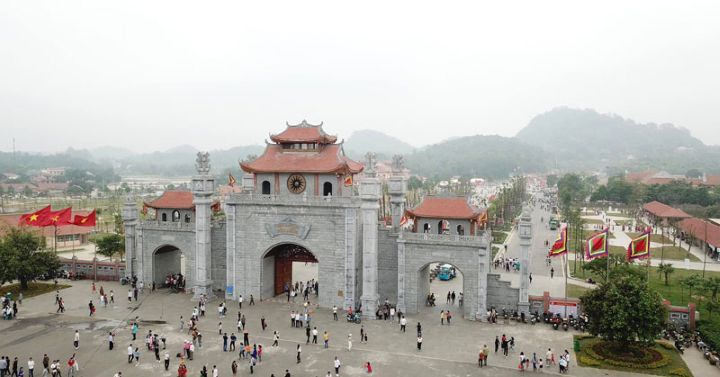
Hung Kings Temple – Phu Tho (Source: Online)
The temple complex stretches across the mountain, featuring numerous temples, tombs, and ancient relics built in traditional Vietnamese architecture with moss-covered tiled roofs, intricately carved wooden columns, and artistic statues. Each temple tells its own historical story, making the site a profound stop that evokes the nation’s roots and cultural heritage.
Stone steps lead up the mountain, surrounded by lush greenery, with valleys stretching out and the winding Lo River below. Visitors not only offer prayers but also have the opportunity to participate in traditional rituals, enjoy folk games, and learn about local culture.
Huong Pagoda – Hanoi
Located in Huong Son Commune, My Duc District, about 60 km from central Hanoi, Huong Pagoda is one of the most renowned scenic and spiritual complexes in Northern Vietnam, where majestic nature blends with long-standing spiritual beliefs. The entire area comprises dozens of temples, shrines, and caves scattered across Huong Tich Mountain, with the most notable sites being Thien Tru Pagoda, Huong Tich Cave, and Huong Chinh Pagoda.
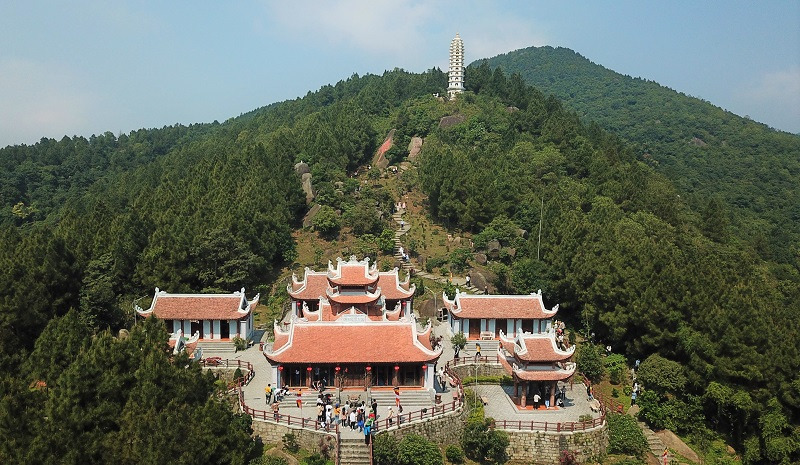
Huong Pagoda – Hanoi (Source: Znew)
The journey to Huong Pagoda begins with a boat ride along Yen Stream, whose waters wind through limestone mountains, flanked by forests and drifting mist. The deeper you go, the temple complex gradually emerges amidst the layered mountains, creating a mystical yet serene atmosphere.
During the festival season from the first to the third lunar month, Huong Pagoda becomes the largest pilgrimage site in Northern Vietnam, with crowds eagerly offering incense, the sound of temple bells resonating, mingling with the scent of incense and mountain mist.
Exploring Huong Tich Cave – known as the “First Cave of the Southern Heaven” – visitors are overwhelmed by the shimmering stalactites and the tranquil space, like stepping into a world completely separate from the mundane. Amidst the lush mountains and forests, the gentle sound of flowing streams blends with the echoing temple bells, creating a deeply peaceful experience.
Bai Dinh Pagoda – Ninh Binh
Situated amidst the majestic limestone mountains of the ancient capital Hoa Lu, Bai Dinh Pagoda is the largest pagoda in Vietnam and an unmissable destination on any cultural and spiritual tourism journey in the North. The pagoda complex spans over 700 ha, featuring the ancient Bai Dinh Pagoda hidden within the mountains and the new Bai Dinh Pagoda with grand architecture, built in a modern style while retaining strong traditional East Asian elements.

Bai Dinh Pagoda – Ninh Binh (Source: Government news)
From the majestic Tam Quan Gate, the path leading up to the pagoda stretches over 3 km, flanked by the longest Arhat corridor in Southeast Asia, featuring 500 intricately carved stone statues. As you ascend, the large bell tower, hundreds-of-ton bronze Buddha statue, and the 100 m tall Buddha relic stupa emerge amid the clouds, creating a sacred and awe-inspiring scene.
Bai Dinh Pagoda is not only a place for pilgrims to pray for peace and blessings but also a symbol of contemporary Vietnamese Buddhism, where the past and present converge. During the early spring festival season, visitors from all over the country come to worship, listening to the echoing bells amidst the Trang An mountains and feeling a sense of peace permeating every breath.
Yen Tu Mountain – Quang Ninh
Located in Uong Bi City, Quang Ninh Province, Yen Tu Mountain is a symbol of Vietnamese Zen Buddhism. It is where King Tran Nhan Tong, after abdicating the throne, became a monk and founded the Truc Lam Yen Tu Zen sect, deeply reflecting the nation’s cultural identity.
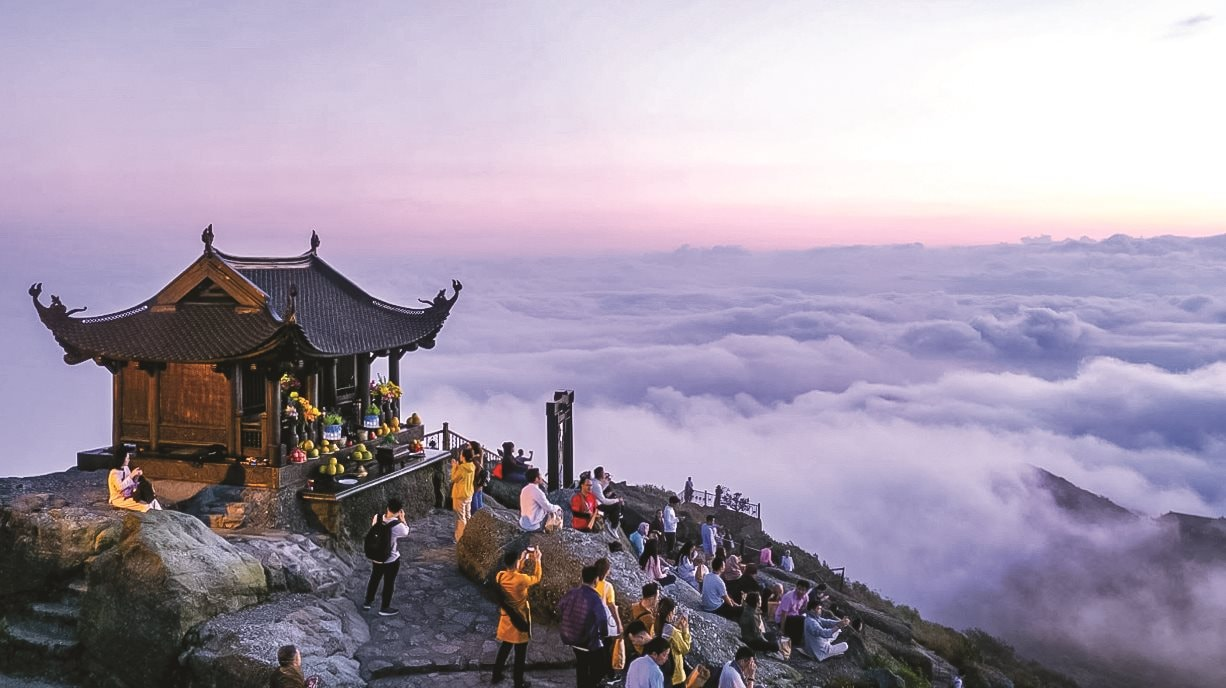
Yen Tu Mountain – Quang Ninh (Source: congly.vn)
Visitors can either walk along thousands of winding stone steps through bamboo forests or take the cable car to enjoy panoramic views of the majestic mountains. Along the way, you will pass many ancient temples such as Giai Oan Pagoda, Hoa Yen Pagoda, and Mot Mai Pagoda, each carrying its own stories and long-standing Buddhist heritage.
The summit of Yen Tu rises over 1,000 m, where Dong Pagoda – the largest single-block bronze pagoda in Asia – sits shrouded in drifting mist, creating an indescribably sacred atmosphere. Upon reaching this spot, amidst the sea of clouds and the resonating temple bells, visitors can easily find tranquility and let go of the worries of everyday life.
Linh Ung Pagoda – Da Nang
Continuing the spiritual tourism journey from the North to Central Vietnam, Linh Ung Pagoda in Da Nang is an unmissable destination. Located on the Son Tra Peninsula, the pagoda is renowned for its sacred and tranquil atmosphere. Its most striking feature is the 67 m tall statue of the Goddess of Mercy, Quan Am, facing the East Sea as if extending her arms to protect the local people and fishermen.
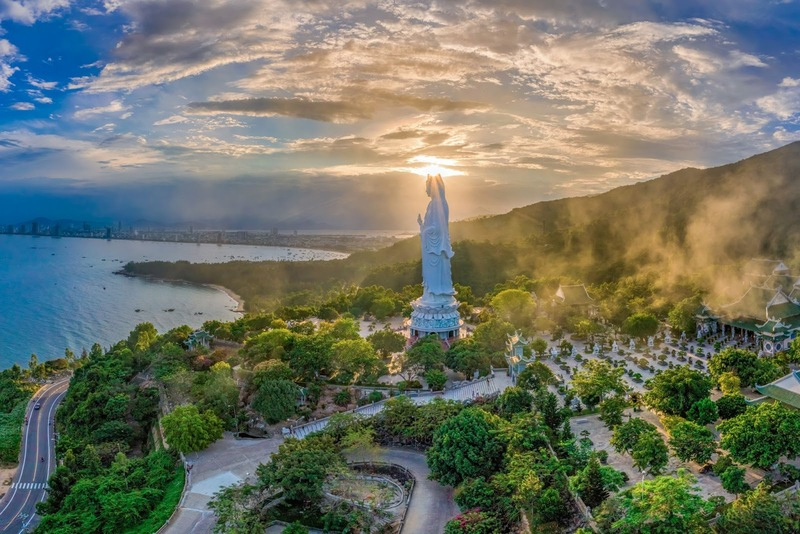
Linh Ung Pagoda – Da Nang (Source: MIA.vn)
From the temple courtyard, you can enjoy panoramic views of Da Nang City, the gently curving My Khe Beach, and the distant verdant Truong Son Mountains. Walking around the pagoda grounds, you may easily spot playful monkeys interacting with visitors. Amidst the sea breeze, the echoing temple bells, and the sunlight reflecting on the ocean, taking a moment to breathe deeply allows you to fully savor this peaceful and refreshing space.
Thien Mu Pagoda – Hue
Majestically situated on the banks of the picturesque Perfume River, Thien Mu Pagoda is a symbol of both the city and the spiritual life of Hue. Built in the 17th century, the pagoda is highlighted by the seven-story Phuoc Duyen Tower, serving as a landmark that connects the Nguyen dynasties with the spiritual practices of the local people.

Thien Mu Pagoda – Hue (Source: Dong Nam A news)
Thien Mu Pagoda always impresses visitors with its elegant architecture and poetic surroundings. Lush greenery, gentle lotus ponds, and the resonating sound of temple bells create a serene atmosphere amidst the mountains and river.
The pagoda is also associated with many fascinating legends, such as the story of Lady Thien Mu and the prophecy of the Nguyen dynasty, along with unique rituals held during major festivals. Visiting here, travelers can not only offer incense and pray for peace but also enjoy the stunning scenery of Hue’s rivers and mountains, listen to the temple bells, and experience the slow, contemplative rhythm of life in the ancient capital.
Ba Den Mountain – Tay Ninh
Prominently rising in the Mekong Delta region, Ba Den Mountain is not only the highest peak in Southern Vietnam but also a famous spiritual destination with Ba Den Pagoda, where locals and visitors from across the country come to offer incense, praying for peace and good fortune.
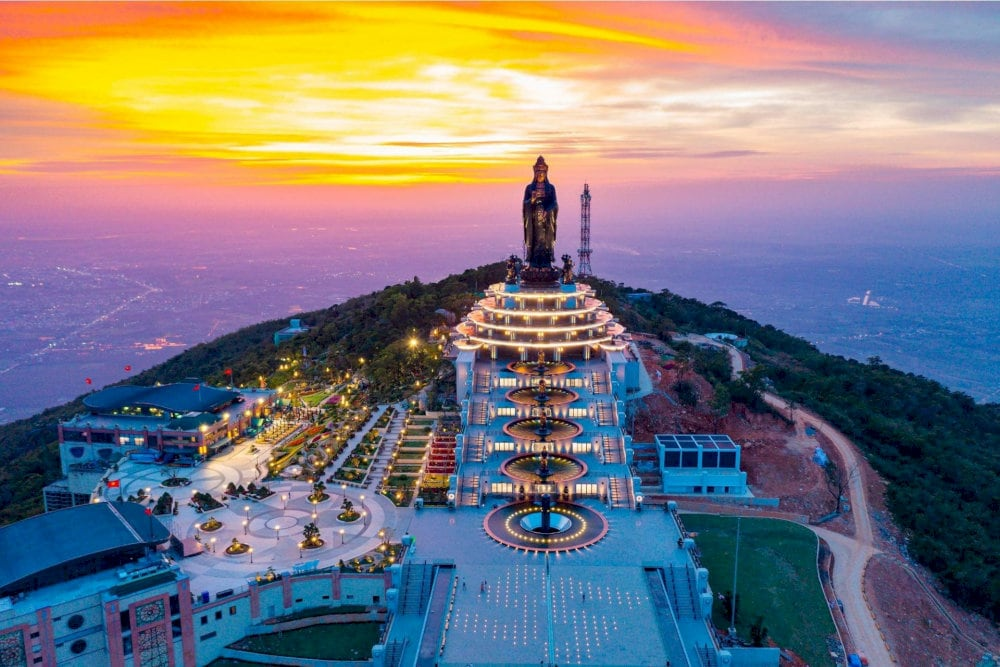
Ba Den Mountain – Tay Ninh (Source: Vietnam Airlines)
The mountain is associated with the legend of Ba Den, a kind-hearted woman with miraculous powers who protected the villagers, making it a sacred pilgrimage site, especially during the Ba Via Festival (from the 4th to the 8th day of the first lunar month).
Visitors can take the modern cable car to enjoy panoramic views of the vast mountains and the Tay Ninh plains stretching out like a green carpet, or walk along the winding trails that pass through mysterious caves, once places of meditation for monks and nuns. Some caves still house ancient Buddha statues and secluded shrines hidden within the forest.
Ba Chua Xu Temple – An Giang
Located on Sam Mountain in Chau Doc town, Ba Chua Xu Temple is a renowned religious center in the Mekong Delta, attracting hundreds of thousands of pilgrims each year. The temple is associated with the legend of Ba Chua Xu, who helped the local people overcome natural disasters and epidemics and protected the land.
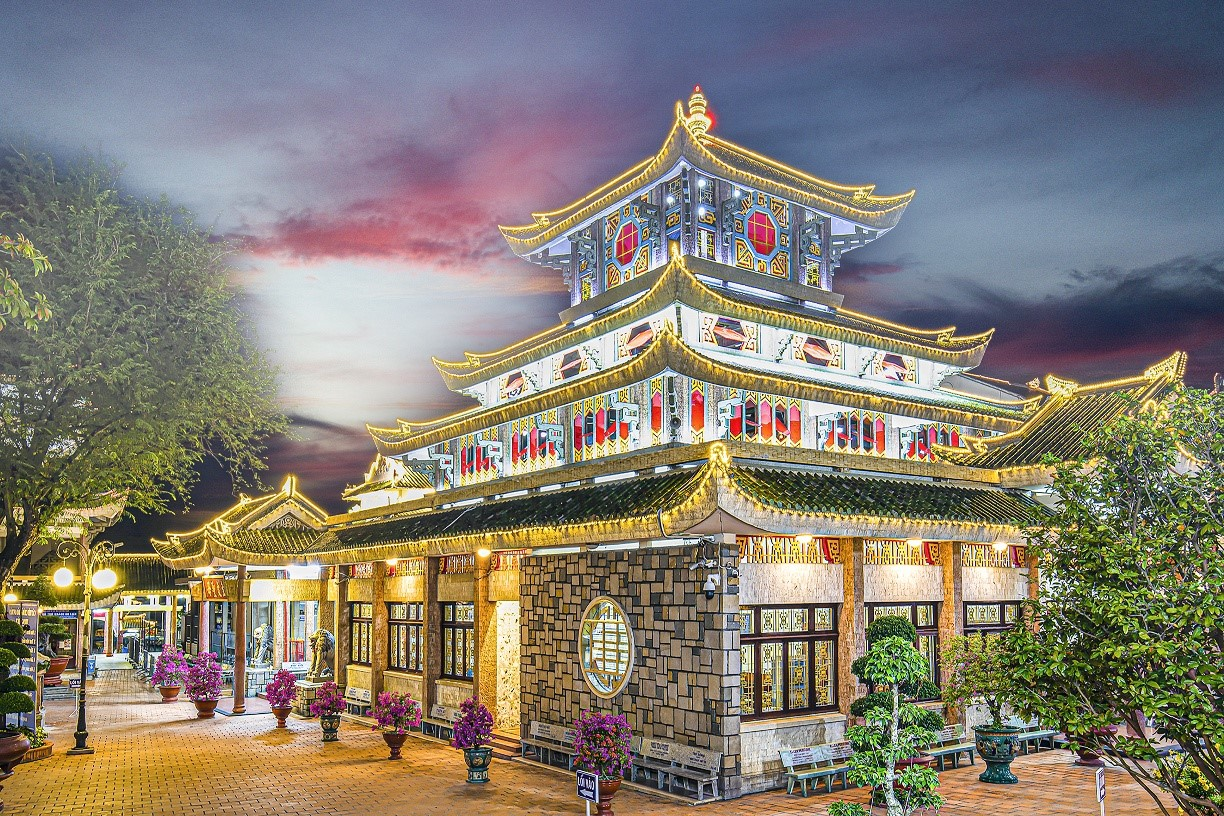
Ba Chua Xu Temple – An Giang (Source: Ban quản lý khu du lịch Núi Sam)
What makes Ba Chua Xu Temple especially remarkable is the Ba Via Festival, which lasts four days (from the 23rd to the 27th day of the 4th lunar month). During this time, crowds from all over gather to participate in traditional rituals, offer incense, and enjoy Chau Doc’s local specialties. Sam Mountain surrounds the temple with its low, verdant peaks, creating a scene that is both serene and majestic.
The area around the temple is further enhanced by a pier, ponds, and small shrines, forming a sacred and peaceful space. As visitors climb the steps leading up to the temple, they can feel the sanctity of the site while taking in panoramic views of Chau Doc, the winding Hau River, and the vast surrounding fields.
Read more: Mai Chau accommodation guide for the best experience
Guide to preparing for a spiritual tourism trip
Spiritual tourism is not just about pilgrimage; it is also a journey to explore culture, enjoy nature, and seek inner peace. To make your trip more complete, you can consider the following preparations:
- Research destinations and festivals
Many spiritual festivals take place according to the lunar calendar or on special occasions. Before you set off, carefully research each temple, pagoda, or spiritual site you plan to visit, including its history, legends, and unique rituals. Check the festival dates, full moon days, or special occasions to avoid crowds and ensure you can fully experience the celebrations.
- Plan a reasonable itinerary
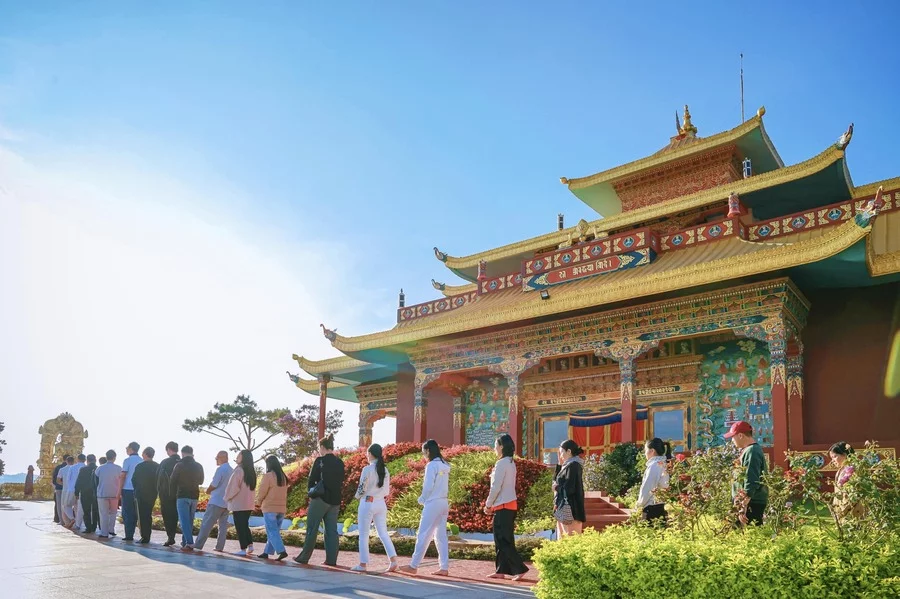
Guide to preparing for a spiritual tourism trip (Source: samten hill)
For large temple complexes or sites located on mountains, plan enough time to both worship and explore the natural scenery, architecture, and spiritual structures. A clear itinerary helps you avoid missing important experiences and ensures a comfortable, unhurried journey.
- Clothing and essentials to prepare
Wear modest, light, and comfortable clothing suitable for walking, hiking, or long transfers, showing respect for sacred spaces. Bring comfortable shoes, a hat, sunscreen, drinking water, and a small trash bag to help maintain cleanliness at spiritual sites.
- Combine with local cultural experiences
Don’t stop at just worshiping, explore the local culture and lifestyle surrounding the spiritual sites. Visiting villages, learning traditional crafts, tasting local specialties, or participating in festivals and rituals will provide a complete experience, allowing you to deeply appreciate the cultural and spiritual values of the region.
Spiritual tourism offers profound experiences of the culture, beliefs, and history of each region. From ancient temples and sacred pagodas to majestic mountain complexes, every site carries its own beauty and story, helping travelers find inner peace.
This journey also provides opportunities to explore local culture, savor traditional cuisine, and enjoy tranquil natural scenery, creating memorable and fulfilling moments. Start experiencing this unique form of tourism to feel the spiritual and cultural connection across Vietnam’s sacred lands.