Most travel guides to Hoa Binh Lake point you toward the same crowded pier. Bich Ha Port is the one they skip - and that's exactly why it's worth knowing about before you plan your boat trip to Thac Bo Temple. This guide fills that gap with real, practical information: what a day from Bich Ha Port actually looks like, how long it takes, what you eat on the way, and where you can rest before or after the journey.
Bich Ha Port: Where the Journey Really Starts
Bich Ha Port sits at the mouth of the Hoa Binh channel, on the northern side of Hoa Binh City. It began as a working harbor moving farm produce, timber, and construction materials between the city and the villages scattered across the lake, and that everyday, unpolished character still shows. Fishing boats sit next to tourist boats, and the smell of the river mixes with woodsmoke from nearby food stalls.
Unlike the larger tourist piers further along the shore, Bich Ha Port hasn't been rebuilt into a polished attraction, so what you see is closer to how locals actually use the lake. Boat owners here work directly with pilgrims, fishermen, and traders, and many of them have been running the same routes for decades. For a traveler who wants a boat trip that still feels like a discovery rather than a scheduled excursion, that difference matters.
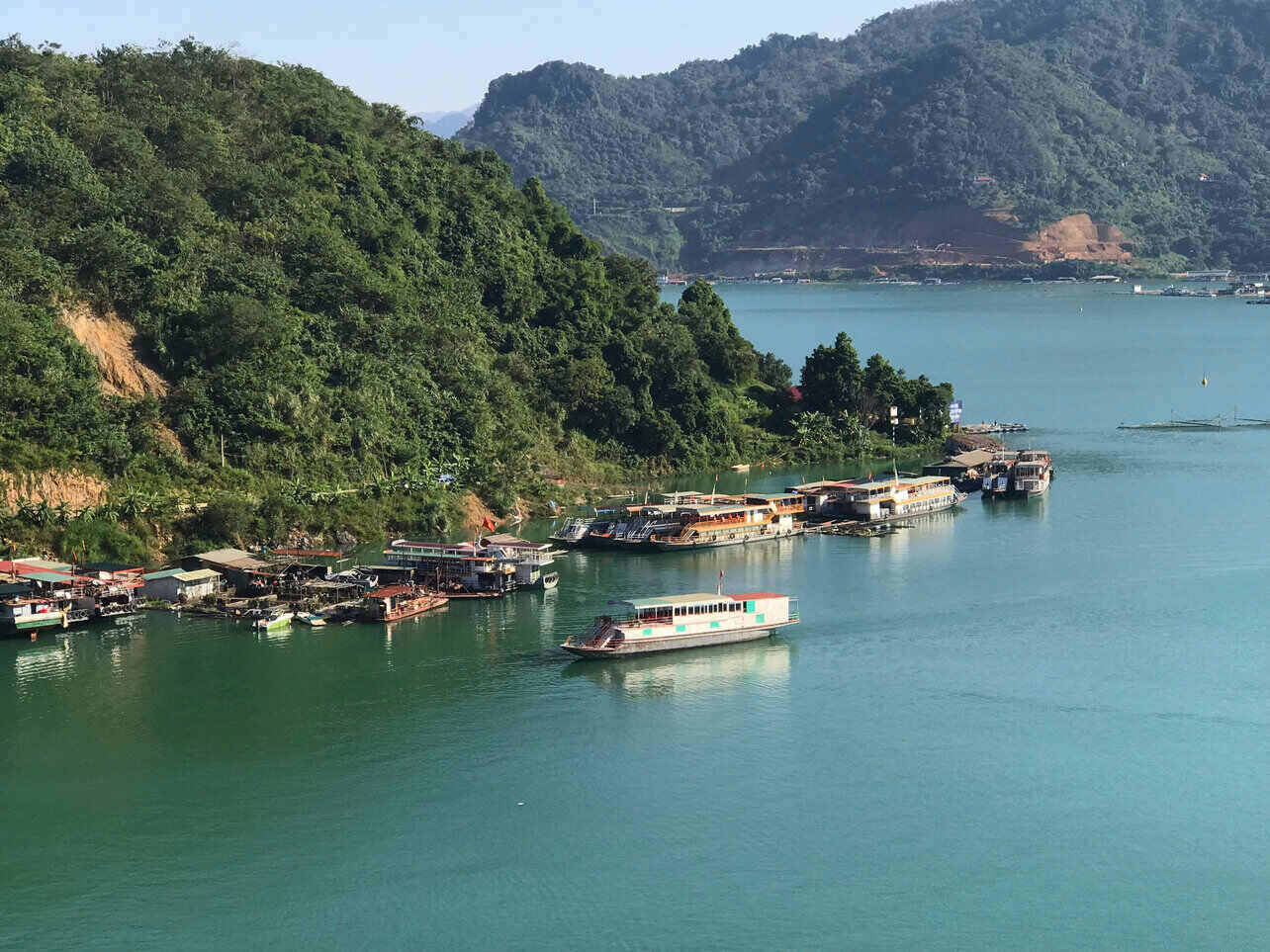
Boats docked at Bich Ha Port on Hoa Binh Lake at sunrise (Source: Collected)
Boats leaving Bich Ha Port head north into Hoa Binh Lake, a vast reservoir on the Da River often nicknamed Vietnam's "Ha Long Bay in the mountains" for its limestone islands rising out of green water. From the pier, you can already see the first hills folding into the horizon, and within a few minutes of departure, the city noise disappears completely, replaced by the sound of the engine and water against the hull.
What You'll Actually See: Two Temples and a Cave That Feels Like a Cathedral
The main reason travelers come to Bich Ha Port is to reach Den Chua Thac Bo, one of northern Vietnam's most visited spiritual sites. The route usually covers two temples and one cave, and each stop has its own character, so it helps to know what to expect before you set foot on the boat.
The first stop most boats make is Den Chua Thac Bo, the main temple dedicated to Ba Chua Thac Bo, built on a hillside overlooking the lake. The second is Den Co, also known locally as Den Ta Ngan ("the left-bank temple," referring to its position on the Da River), reached by a separate crossing.
Both temples honor the same figure, Ba Chua Thac Bo - a title that combines two historical women, Dinh Thi Van of the Muong people and a woman of the Dao people whose name isn't recorded, who are said to have organized boats, food, and manpower to help Le Loi's army cross the dangerous rapids that once ran through here in 1431, before the dam turned the river into a lake.
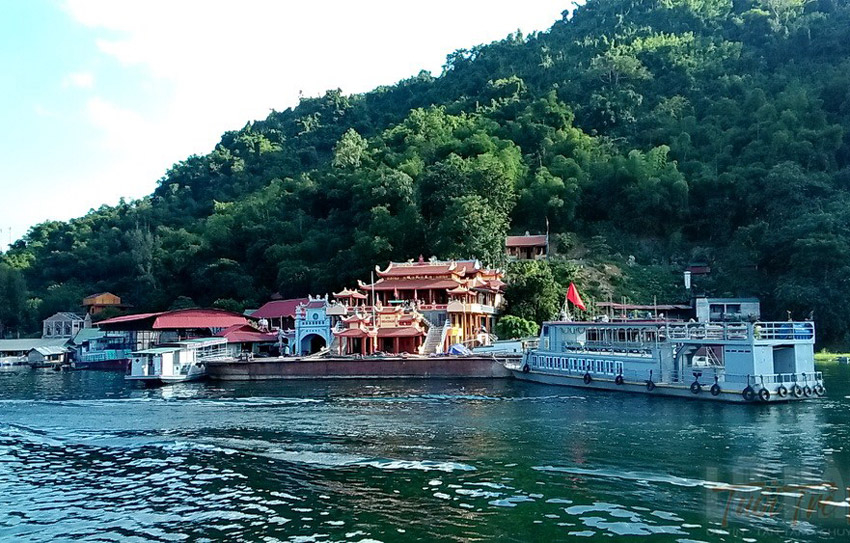
Den Chua Thac Bo temple on the shore of Hoa Binh Lake (Source: Collected)
From Den Chua Thac Bo, boats cross about fifteen minutes of open water to reach Den Co / Den Ta Ngan. If you arrive during the spring festival season, expect company - this is one of the busiest pilgrimage periods in northern Vietnam, and on the busiest ceremony days a respectful visit at each temple may be quick simply because of the crowds. On quieter days outside festival season, you can take your time, light incense, and simply sit and take in the view over the water.
The third stop, Dong Thac Bo, is a separate natural limestone cave rather than part of either temple - the two temples sit on hillsides, while the cave is roughly another fifteen minutes away by boat across the lake. When the lake is full, boats can bring visitors almost to the cave mouth; in the dry season, a set of stone steps takes their place. Either way, the temperature inside drops noticeably, and the quiet is a striking contrast to the open water outside.
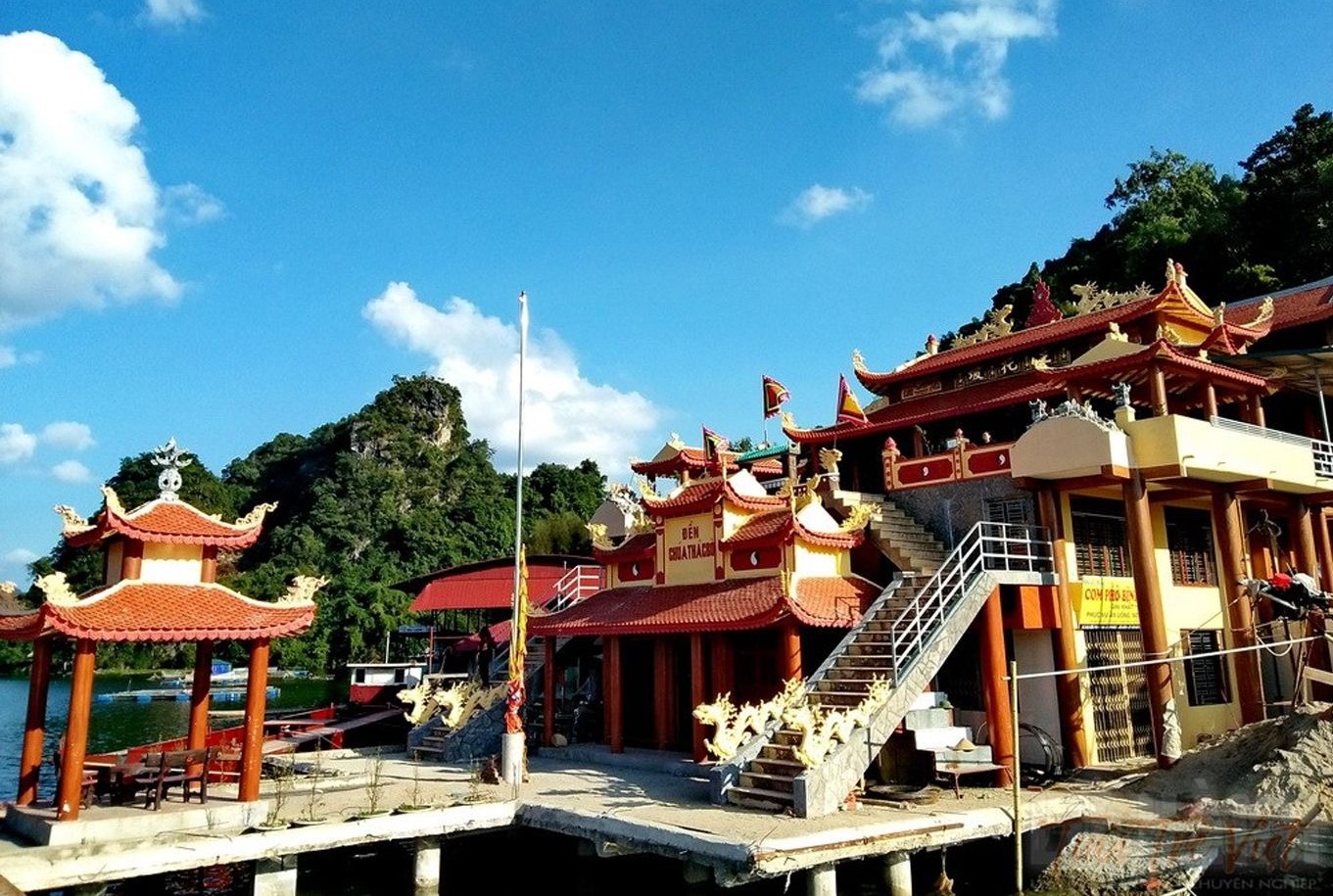
Stalactite chamber inside Dong Thac Bo cave near Hoa Binh Lake (Source: Collected)
Read more: THAC BO CAVE - A "must-visit" destination in Mai Chau that you may not know!
A Full Day on the Water: Sample Bich Ha Port Itinerary
Based on how boats currently run from Bich Ha Port, here is a realistic hour-by-hour outline for a single-day trip.
Most boats leave the pier between 7:00 and 8:00 a.m., which is also the best window for calm water and soft morning light for photos. The ride from Bich Ha Port to the temple area takes about one hour and fifteen minutes, noticeably longer than the fifteen-to-twenty-minute crossing from the larger Thung Nai Port further up the lake.
That extra time isn't wasted, though - it's spent gliding past floating fish farms, small riverside hamlets, and karst hills that only get more dramatic the further north you travel.
Once you reach the temple area, the two temples and the cave typically fill the late morning, with timing that flexes around festival crowds as described above. By early afternoon, most groups are ready for lunch, and this is usually eaten either on the boat itself or at a floating restaurant anchored nearby, with the option to keep cruising slowly along the shoreline while you eat.

Lunch on a floating restaurant on Hoa Binh Lake (Source: Collected)
The return leg typically begins around 2:00 to 3:00 p.m., giving you enough daylight to either head back to Hanoi or continue on toward a place to rest for the night.
If you'd rather not drive straight back to the city after a full morning on the water, Mai Chau Hideaway Lake Resort sits further along Hoa Binh Lake and makes a natural next stop, reachable by an additional stretch of road from Hoa Binh City.
|
Stage
|
Approx. Time
|
What Happens
|
|
Departure
|
7:00 – 8:00 a.m.
|
Board at Bich Ha Port, boat heads north up the lake
|
|
Boat ride to temple area
|
~1h15
|
Scenic cruise past fish farms and limestone hills
|
|
Den Chua Thac Bo
|
15–30 min
|
Incense, prayer, viewpoint over the water
|
|
Crossing to Den Co / Den Ta Ngan
|
~15 min
|
Boat crossing to the second temple
|
|
Den Co / Den Ta Ngan
|
15–30 min
|
Incense, prayer, second hillside temple
|
|
Crossing to Dong Thac Bo
|
~15 min
|
Boat crossing to the cave, a separate stop
|
|
Dong Thac Bo cave
|
20–40 min
|
Stalactite chambers, cooler air, guided walk-through
|
|
Lunch
|
Around midday
|
On the boat, at a floating restaurant, or ashore
|
|
Departure back
|
2:00 – 3:00 p.m
|
Return to Hanoi, or continue toward a lakeside resort
|
Best Time to Depart and How Long the Boat Ride Takes
Timing makes a bigger difference on this trip than most travelers expect, both for comfort and for how much you actually get to see. Two factors matter most: what time you leave Bich Ha Port, and which month you're traveling in.
An early departure between 7:00 and 8:00 a.m. is worth protecting even if it means an early wake-up call. Later boats run into stronger midday sun with little shade on open water, and during festival season (roughly the first four months of the lunar calendar, from February through April), afternoon piers can get congested with boats waiting to load. Leaving early also means arriving at the first temple before the largest tour groups do, which makes for a calmer, more contemplative visit.
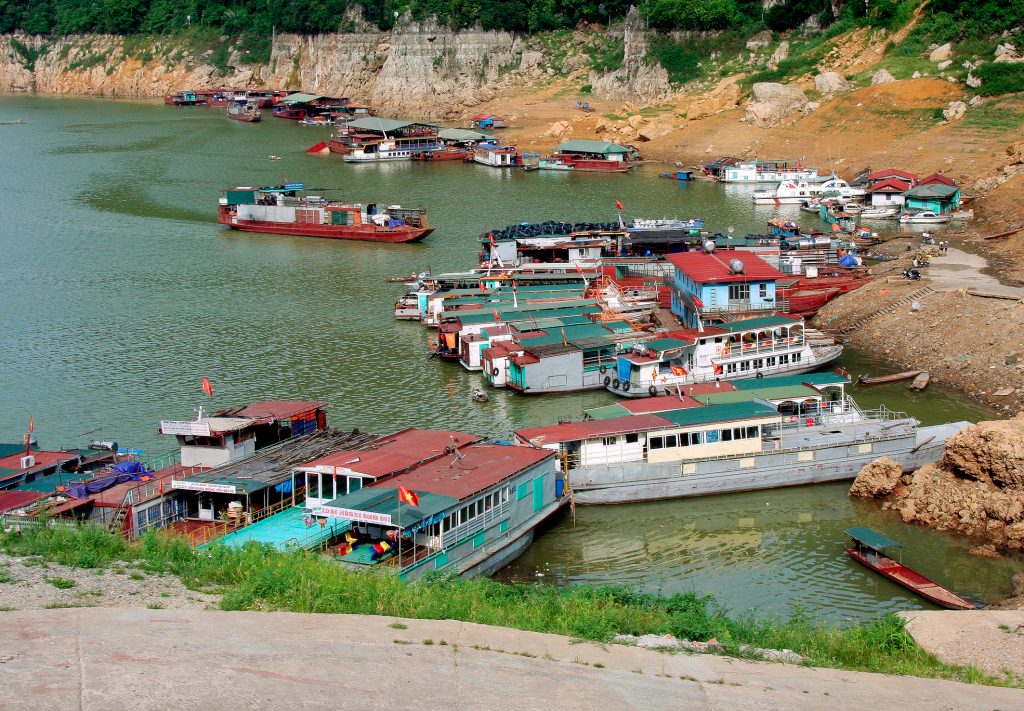
Morning boat ride on Hoa Binh Lake near Bich Ha Port (Source: Collected)
The one-hour-fifteen-minute ride from Bich Ha Port is consistently longer than the roughly 15-to-20-minute crossing from Thung Nai Port, the larger pier further up the lake that sits closer to the temple islands. Ba Cap, a smaller pier also serving this route, runs on a similar schedule to Bich Ha, with boat operators quoting a comparable one-hour-plus crossing to the temple area.
That trade-off is worth understanding clearly: a shorter ride from Thung Nai gets you to the temples faster, but the longer ride from Bich Ha or Ba Cap gives you far more time on genuinely scenic water, with fewer boats crossing your path. If your priority is the journey itself and not just the destination, the extra time works in your favor rather than against it.
The main pilgrimage season runs from the 7th day of the lunar new year through the end of the fourth lunar month (roughly February to April on the Western calendar), when the temples see the heaviest crowds. Outside that window, the lake is noticeably quieter and boat owners tend to be more flexible with departure times and pricing - a trade worth considering if a calmer, more personal pace matters more to you than festival atmosphere.
Local Flavors on the Water: Free-Range Chicken, Grilled Fish, and a Song or Two
Food is not an afterthought on this trip - for many travelers, lunch on the boat becomes one of the most memorable parts of the day. The lake and its surrounding villages supply most of what ends up on the table.
The two dishes that appear most often are free-range chicken, raised in the hillside villages around the lake and known locally for firmer, more flavorful meat than farmed poultry, and freshly grilled fish, caught from the lake's floating fish farms and cooked over charcoal right on board or at a floating kitchen nearby. Both are usually served simply, with rice, local greens, and a dipping sauce, letting the freshness of the ingredients do most of the work rather than heavy seasoning.
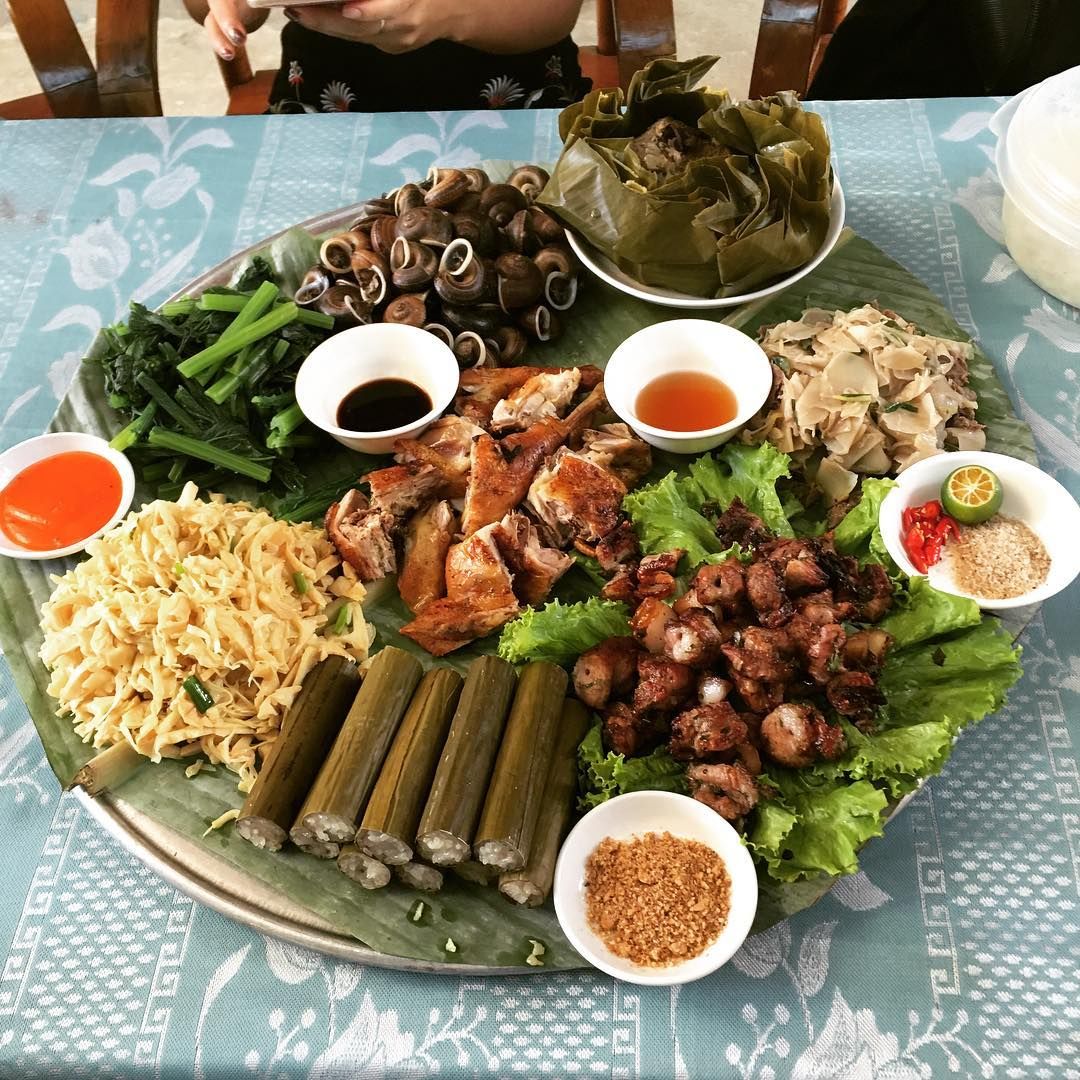
Grilled fish and free-range chicken cooked on board a Hoa Binh Lake boat (Source: Google Maps)
Many boats are set up for exactly this kind of onboard meal, with a shaded seating area, a small kitchen space, and sometimes karaoke equipment for groups who want to keep the mood going after lunch. It's common to see local families or pilgrimage groups singing between courses, and visitors are usually welcome to join in even without knowing the songs. If a livelier lunch isn't your preference, most boat operators are equally happy to moor quietly along the bank instead, giving you a peaceful spot to eat while looking out over the water.
One traveler summed up this stretch of the lake well after a private boat outing from a nearby resort, describing how the ride let them "see the vast nature and the fishing villages" and calling the whole stay one of the most tranquil, view-filled trips they'd taken. That mix of nature and everyday village life on the water is really what a Bich Ha Port boat day is built around - it isn't a polished cruise, it's a genuine slice of how people here still live with the lake.
How to Reach Bich Ha Port and Where to Rest Before or After
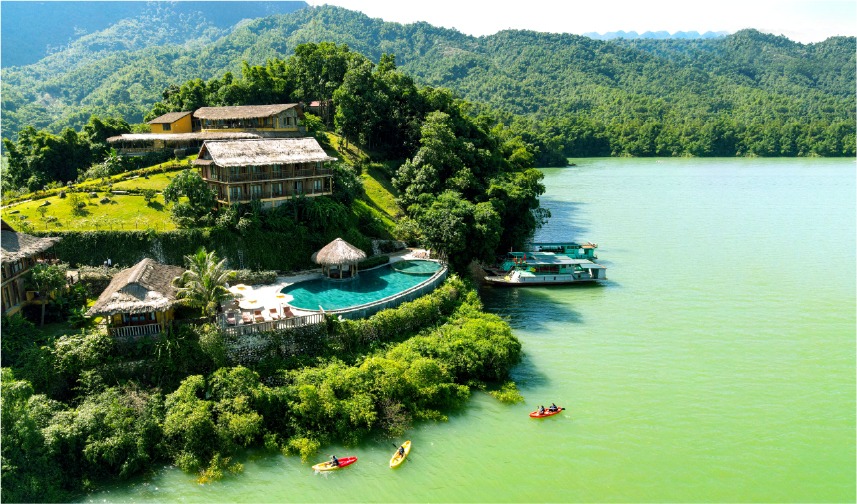
Mai Chau Hideaway Lake Resort on the shore of Hoa Binh Lake
Getting to Bich Ha Port is straightforward from Hanoi, and knowing the route in advance saves time on the morning of your trip, especially if you're aiming for that early 7:00 a.m. departure.
From central Hanoi, Hoa Binh City is roughly 70 to 80 kilometers away, which usually works out to about 1.5 to 2 hours by car or private transfer along the Dai Lo Thang Long–Hoa Lac–Hoa Binh Expressway. Once you're in the city, you follow the Da Giang dyke road toward the Hoa Binh Hydropower Plant, then turn onto Au Co Street, which is signposted for the lake tourism area and leads directly to the port. If you're self-driving, it's worth confirming directions with your accommodation the night before, since several of the final turns are only marked with small local signs.
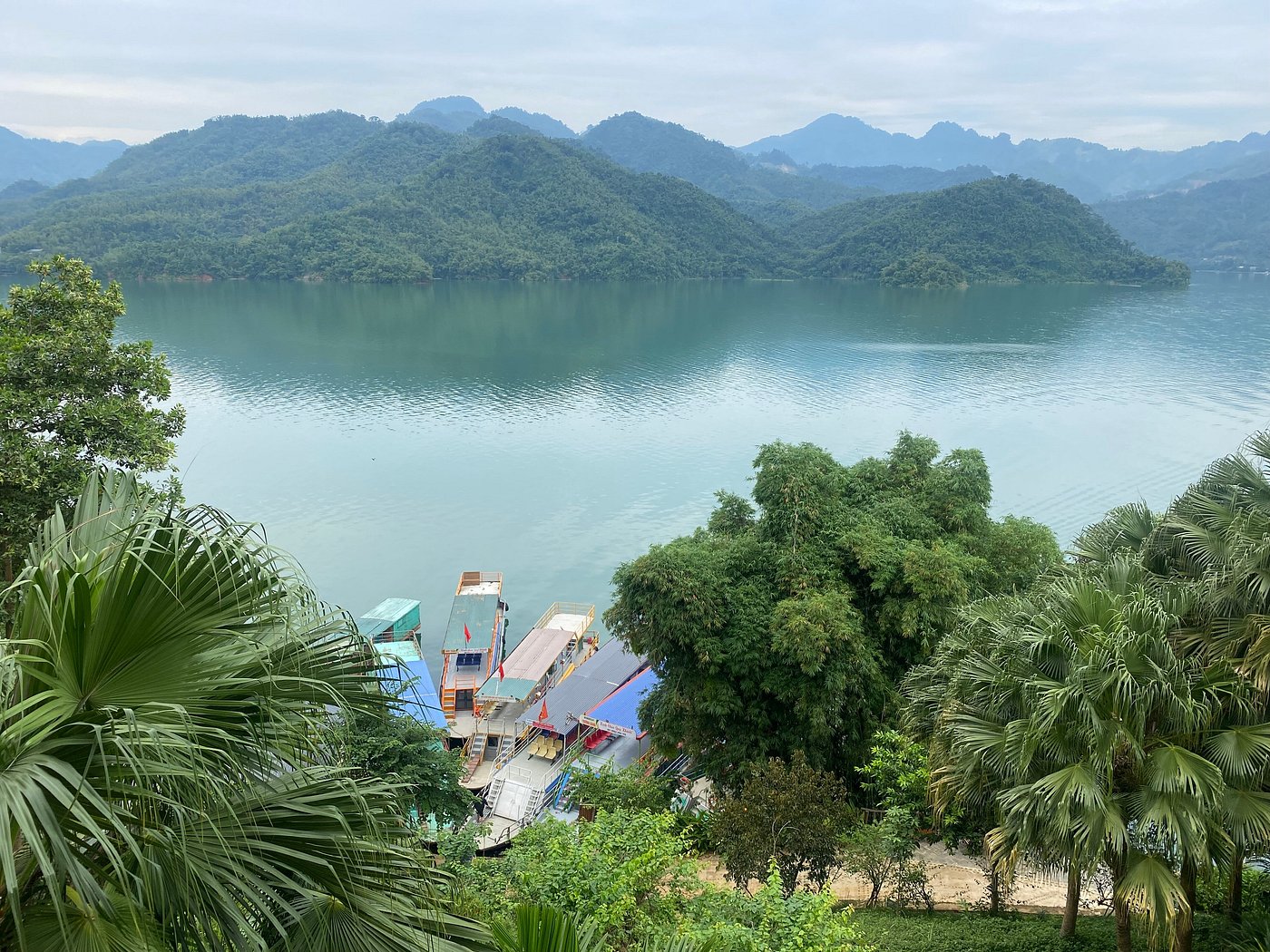
A photo of a visitor when came to Mai Chau Hideaway Resorts at first
Because the round trip - travel time plus the boat journey itself - can easily fill a full day, many international travelers prefer to base themselves near Hoa Binh Lake for a night or two rather than commuting from Hanoi twice in one day. Mai Chau Hideaway Lake Resort sits further along the lake, on its own peninsula, and is a further stretch of road beyond Hoa Binh City - worth planning as an overnight stop before or after your Bich Ha Port trip rather than a same-afternoon add-on.
Guests who stay lakeside can round out the trip with the resort's own water activities on a separate day, including its ferry boat trips on Hoa Binh Lake and kayaking sessions from the resort's own shoreline. One guest's family, marking a birthday during their stay, later wrote that the trip left them with the sense that happiness was simply "seeing every person you love appear together in one frame" - a reminder that for many visitors, the resort itself becomes as much a part of the memory as the lake trip that brought them here. If you'd like the fuller picture of the region before you go, Mai Chau Hideaway's Hoa Binh travel guide and directions page cover routes, transfer options, and seasonal tips in more depth.
Practical Tips for International Visitors
A few small details make the difference between a smooth day at Bich Ha Port and an avoidable headache, especially if this is your first time visiting a Vietnamese pilgrimage site by boat.
- What to wear and bring: Both temples are active places of worship, so modest clothing that covers your shoulders and knees is appreciated, even though enforcement is relaxed compared to larger tourist temples. Bring cash in small denominations for the boat fare, the port's small entrance fee, parking, and any offerings you'd like to make, since card payment isn't reliably available at the pier or on the water.
- Booking ahead matters more than it looks: Boat capacity at Bich Ha Port is limited, and during festival season (the first four lunar months of the year) demand can outpace supply on weekends. Contacting a boat operator two to three days ahead on a normal weekday, or a week or more ahead for a festival weekend, is enough to avoid being placed into a shared group boat when you were hoping for a private one.
- Safety and comfort on the water: Life jackets are standard on tourist boats leaving Bich Ha Port, and it's worth confirming one is available for each passenger before departure rather than assuming. The lake is generally calm, but weather on open water can shift quickly, so checking the forecast the evening before and choosing a boat with a covered seating area is a sensible precaution, particularly for families traveling with children or older relatives.
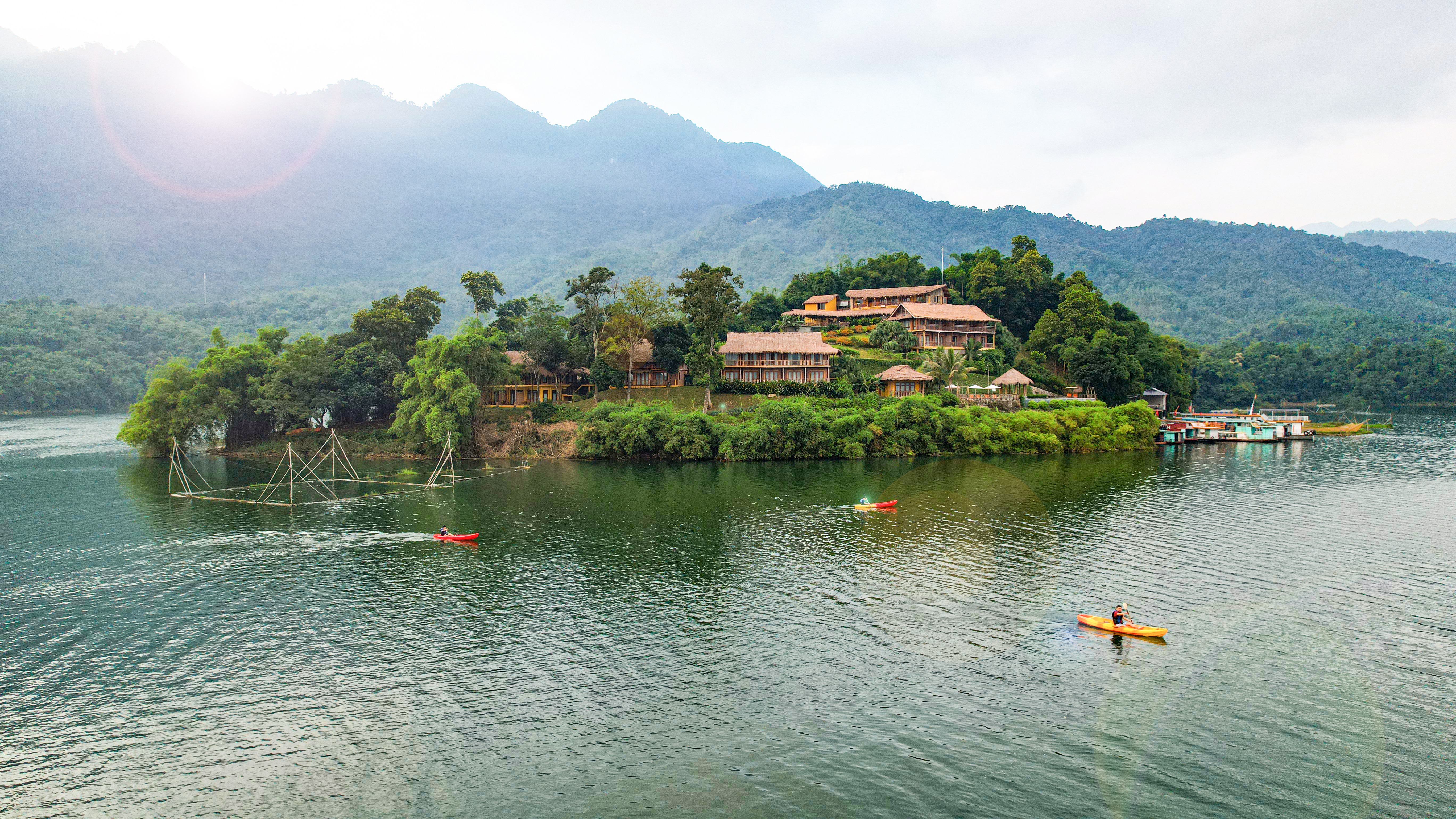
Travelers boarding a boat with life on the lake
Ready to turn a Bich Ha Port boat trip into a full lakeside escape? Book your stay at Mai Chau Hideaway Lake Resort and let the lake be the view from your own balcony too.