Hanoi rewards curiosity, but it can also be exhausting. After several days of traffic, tightly scheduled tours and crowded landmarks, many travellers begin looking for somewhere quieter without adding another flight or overnight train to their itinerary. A lakeside retreat sounds like a simple solution, yet the phrase can refer to very different experiences. Some properties are beside urban lakes, others are resort compounds within one or two hours of Hanoi, while the more secluded options require a longer journey into northern Vietnam’s mountain regions.
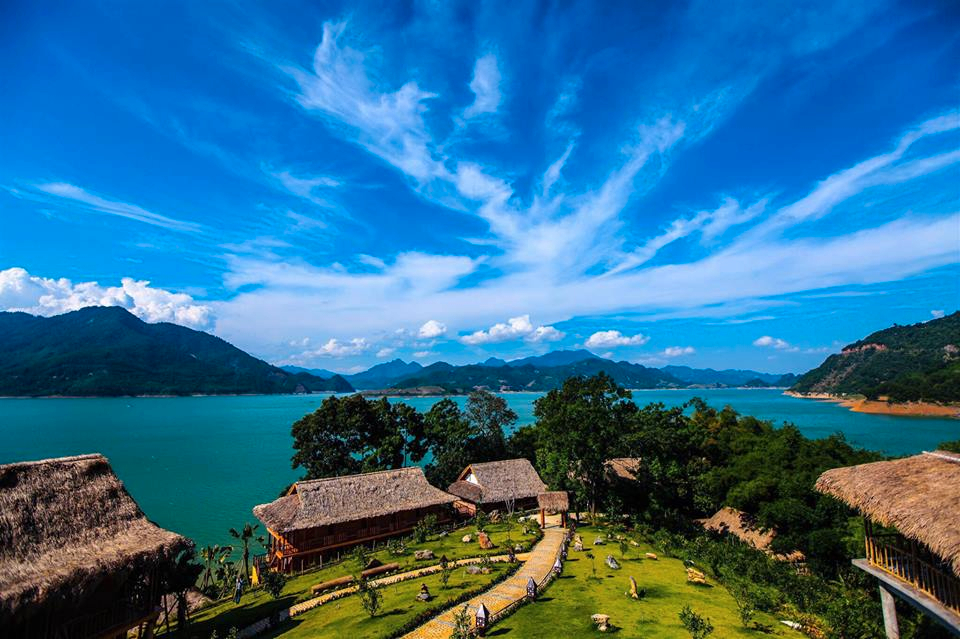
Mai Chau Hideaway Lakes Resort surrounded by Hoa Binh Lake and forested mountains
Mai Chau belongs to the third category. It is not the closest possible escape from Hanoi, but it offers something that shorter suburban retreats often cannot: a clear change of landscape, a slower daily rhythm and enough cultural and outdoor experiences to justify staying for more than one night. From central Hanoi, the journey to the Mai Chau area generally takes around three and a half to four hours. That makes it suitable for a two- or three-night break rather than a spontaneous afternoon away. Travellers who accept the longer drive are rewarded with a landscape of forested mountains, rural communities and the broad waters of Hoa Binh Lake.
For those specifically searching for a lakeside retreat near Hanoi, the most important decision is not simply which resort to book. It is whether they want to stay beside the lake, within Mai Chau Valley or close to one of the area’s tourism villages. Those choices produce noticeably different trips.
Is Mai Chau Really “Near Hanoi”?
The word “near” is relative. Mai Chau is approximately 140 to 160 kilometres from Hanoi, depending on the route and final accommodation. Under normal conditions, the journey usually takes between three and four hours each way. This is close enough for a long weekend, but it is not close enough for a relaxed same-day visit. A one-day return means spending six to eight hours in a vehicle, often leaving only a few hours for lunch, cycling or village visits.
For this reason, Mai Chau works best when travellers have at least two nights available. The first day absorbs the road journey, the second becomes a complete destination day and the final morning remains slow enough to feel like part of the retreat.
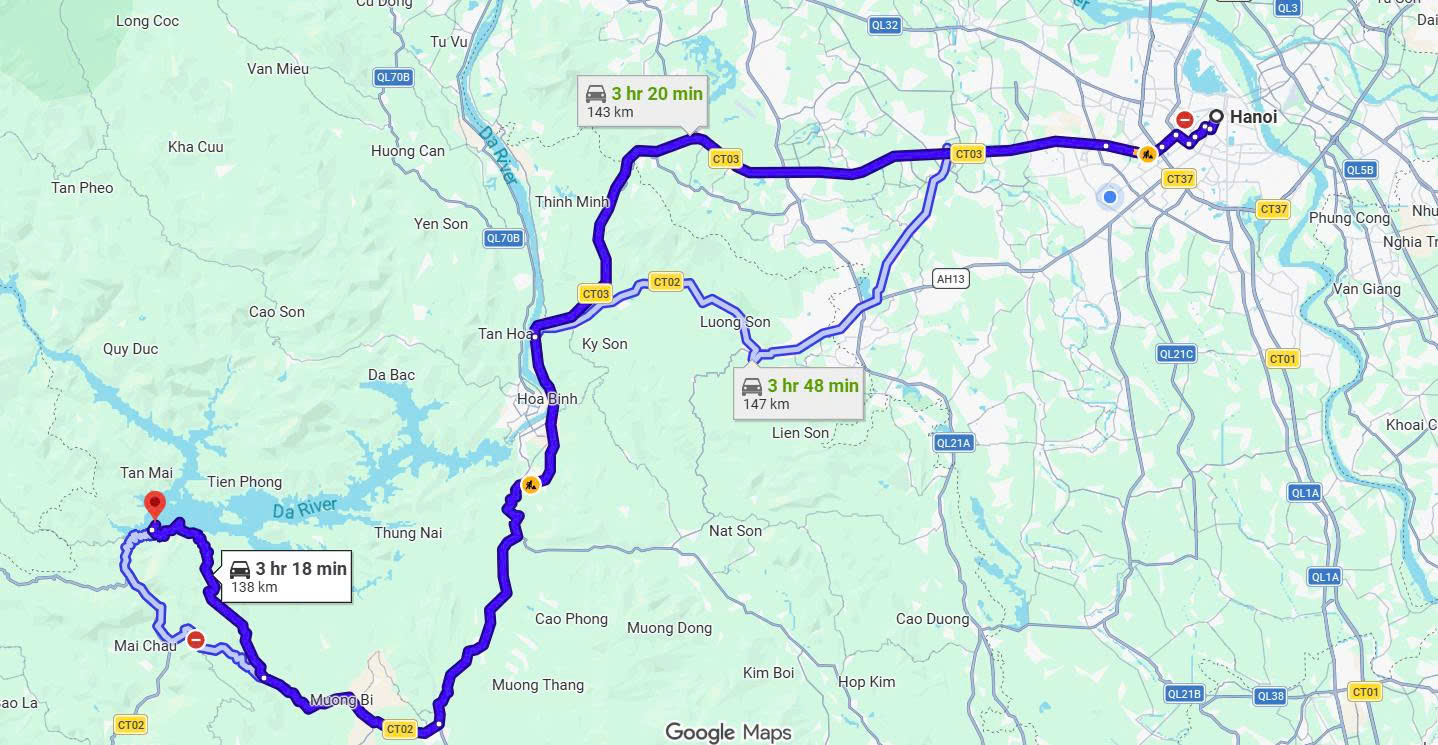
Map showing the driving route from Hanoi to Mai Chau Hideaway Lake Resort
A practical way to assess the distance is to compare it with the rest of a Vietnam itinerary. Travellers with only one free night before an international flight may be better choosing somewhere closer to Hanoi. Those with two or three open days can reach Mai Chau without adding an airport transfer, domestic flight or sleeper journey.
The realistic travel window: Leaving Hanoi between 7:00 and 8:00 usually allows arrival around lunchtime. Returning after lunch on the final day generally brings travellers back to the city in the late afternoon or early evening, although weekend traffic and poor weather can extend the journey.
Do not schedule a flight immediately afterwards: Anyone returning to Hanoi on the same day as an international departure should leave a substantial buffer. Mountain roads, fog, traffic and unscheduled stops can affect arrival times.
Administrative note for 2026: Older travel guides still describe Mai Chau and Hoa Binh Lake as part of Hoa Binh Province. Following Vietnam’s 2025 provincial reorganisation, the former provinces of Hoa Binh, Vinh Phuc and Phu Tho were combined under the name Phu Tho Province. The destination names Mai Chau and Hoa Binh Lake remain in normal tourism use, which is why travellers may see both old and new province names on maps and booking pages.
Why Mai Chau Offers More Than a Hotel Beside a Lake
A city hotel overlooking a lake may provide an attractive view, but it does not necessarily create a retreat. The surroundings, access to outdoor space and pace of the destination matter as much as the water itself. Mai Chau offers separation from the capital without requiring travellers to enter a completely remote region. Once beyond Hanoi’s outer districts, the road moves through increasingly mountainous terrain. The final setting is not defined by city cafés, shopping streets or nightlife but by water, hills, villages and small rural roads.
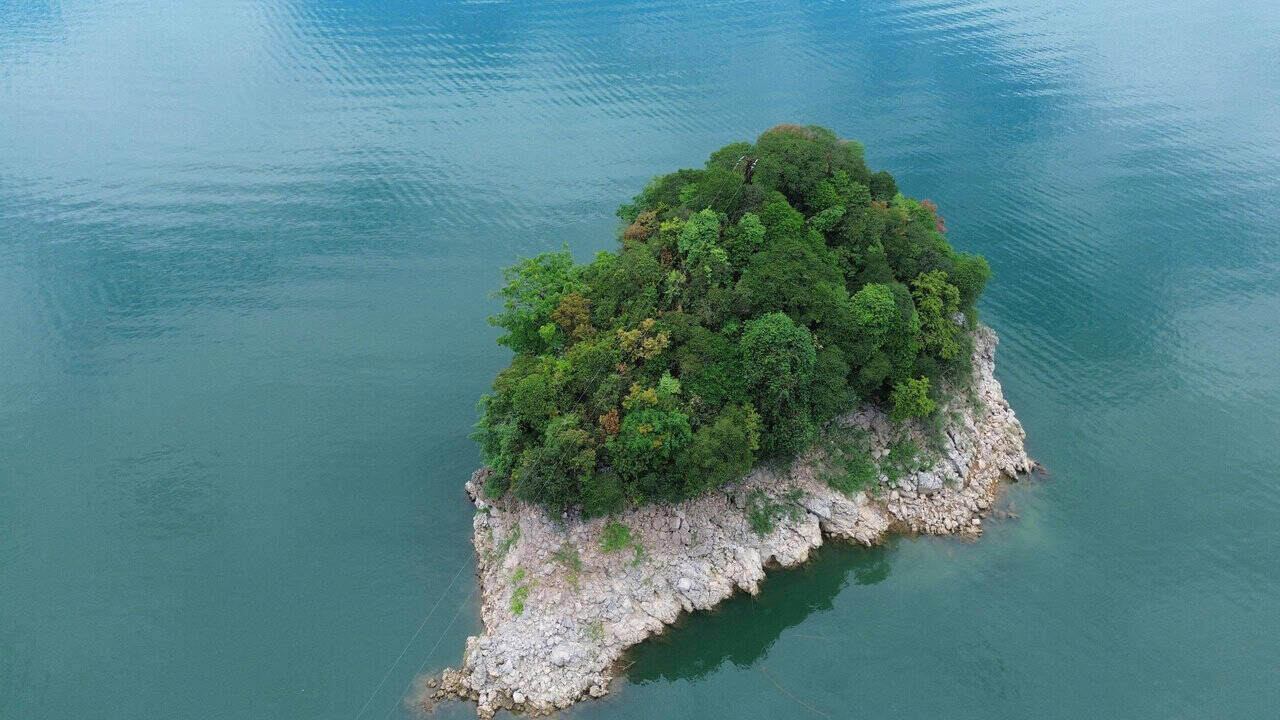
Hoa Binh Lake on a clear morning (Source: Bao Lao Dong)
Hoa Binh Lake is also different from the compact natural lakes that travellers may imagine when searching for a lakeside holiday. It is a large reservoir on the Da River, extending between mountain ranges and settlements. Its scale creates long views across open water, while islands, inlets and changing shorelines give different parts of the lake their own character. Because it is a reservoir, conditions are not identical throughout the year. Water colour, visibility and the amount of exposed shoreline may change after heavy rain or during drier periods. Promotional photographs should therefore be treated as examples of the landscape rather than a guarantee that the water will look exactly the same on every date.
The value of a stay here comes from the complete setting: mountain air, open water, fewer evening distractions and activities that can begin directly from or close to the accommodation.
Lakeside Mai Chau and Mai Chau Valley Are Not the Same Experience
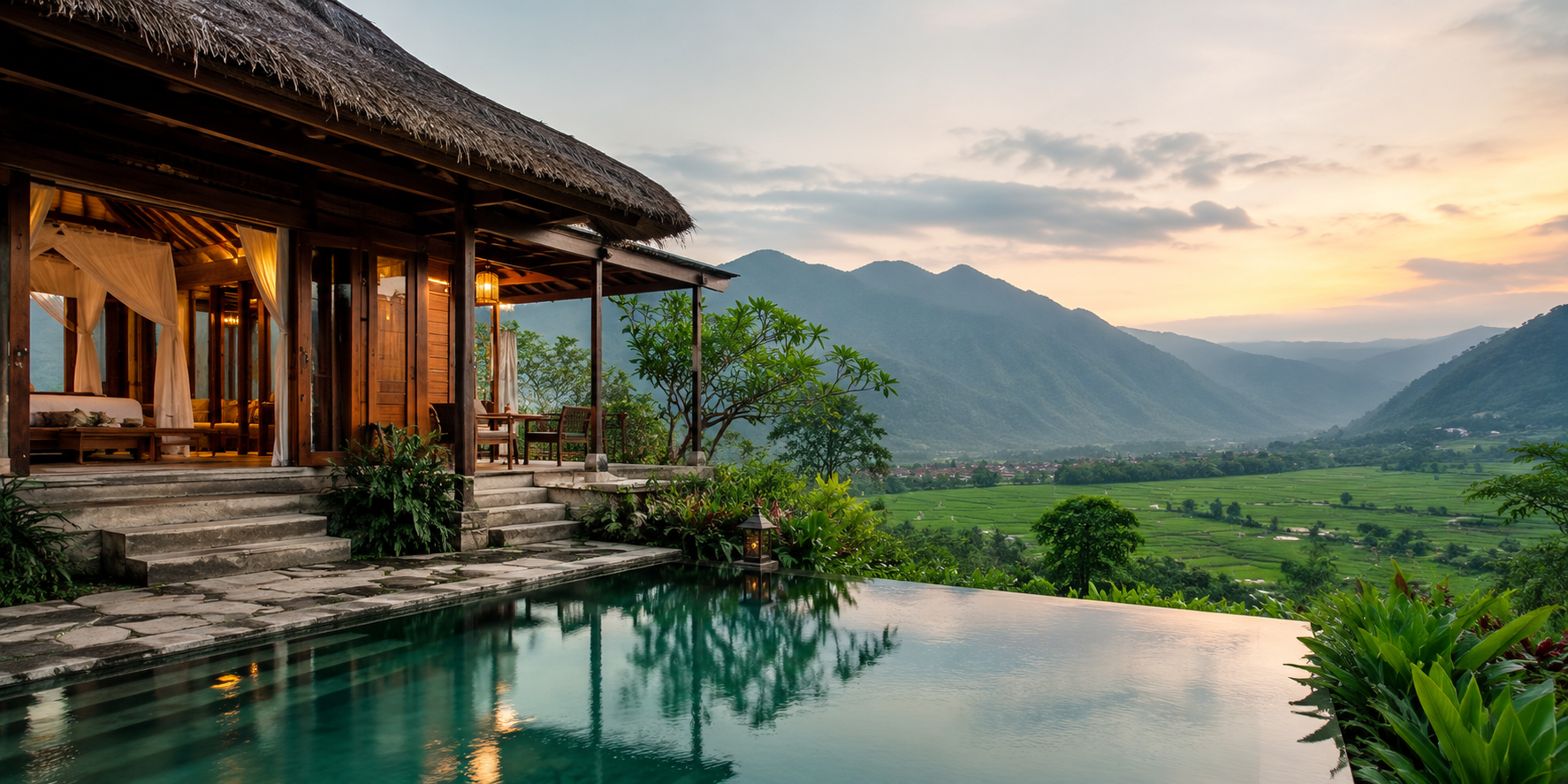
Comparison between a lakeside resort and the rice fields of Mai Chau Valley
One of the most useful distinctions for first-time visitors is the difference between staying beside Hoa Binh Lake and staying in Mai Chau Valley. Both can be marketed as a “Mai Chau retreat”, but they suit different priorities.
|
Consideration
|
Lakeside stay
|
Valley stay
|
|
Main scenery
|
Open water and forested mountains
|
Rice fields, villages and limestone hills
|
|
Atmosphere
|
More secluded and resort-oriented
|
More connected to village life
|
|
Best activities
|
Kayaking, boating, swimming and slow resort time
|
Cycling, walking, homestays and craft shopping
|
|
Dining
|
Often centred around the resort
|
More local restaurants and homestay meals nearby
|
|
Getting around
|
Usually requires arranged transport
|
Easier to cycle or walk between nearby villages
|
|
Best for
|
Couples, families and travellers prioritising rest
|
Cultural travellers and those wanting village access
|
The valley is associated with places such as Lac and Pom Coong villages, traditional stilt houses and relatively flat cycling routes. Vietnam’s official tourism website highlights homestays, local crafts and cycling as central Mai Chau experiences. A lakeside stay places greater emphasis on scenery, privacy and water-based activities. It can still include cultural visits, but travellers should not assume they will be able to walk from a secluded lake resort to the valley’s main tourism villages.
This difference matters when choosing accommodation. A traveller expecting to step outside and walk between village restaurants may be disappointed by an isolated peninsula resort. Conversely, someone seeking quiet mornings and direct water views may find a central valley homestay busier than expected.
The right question is therefore not “Which area is better?” but “What do I want most from these two or three days?”
Who Should Choose a Lakeside Retreat in Mai Chau?
Mai Chau is a strong choice for travellers who want their accommodation to be part of the experience rather than simply a place to sleep.
- Couples seeking quiet time: The combination of lake views, a slower schedule and limited nightlife creates a setting where there is little pressure to keep moving. Couples can divide the day between one activity and several hours of unstructured time.
- Families with school-age children: Kayaking, cycling, swimming and boat trips can make the destination engaging without requiring long sightseeing days. Parents should still check age limits, life-jacket availability and supervision requirements before booking water activities.
- Hanoi-based residents and expatriates: For people already familiar with the capital, Mai Chau offers a weekend that feels more substantial than a nearby suburban resort while remaining possible by road.
- First-time visitors with a longer northern itinerary: Mai Chau can fit between Hanoi and destinations such as Pu Luong or Ninh Binh, although the route should be planned carefully rather than assuming every destination connects directly by convenient public transport.
- Slow travellers: Those comfortable spending an afternoon reading, swimming or looking across the lake will gain more from the setting than travellers who measure a trip by the number of attractions visited.
Who May Prefer Another Destination?
A trustworthy recommendation also needs to acknowledge when Mai Chau may not be the best match. Travellers with only one available night may find the round-trip road time disproportionate. Those who want bars, late-night restaurants, shopping or a wide choice of independent dining will also have more options in Hanoi, Ninh Binh or a central Mai Chau village.
The destination may not suit visitors who are uncomfortable on mountain roads. National Highway 6 includes sections with truck traffic, bends and possible fog around higher areas such as Thung Khe Pass. The resort’s own route guidance advises caution in foggy conditions, especially in the early morning and evening. A lake resort may also be inconvenient for travellers who prefer to organise everything spontaneously after arrival. Transport, cycling routes, boat trips and village visits are easier when arranged in advance, particularly outside busy weekends.
Finally, a retreat based around kayaking and outdoor views will be more weather-sensitive than a city break. Heavy rain, strong winds or poor visibility can affect water activities. Guests should be comfortable with replacing an outdoor session with spa time, a slower meal or indoor rest.
How Long Should You Stay?
The difference between one and two nights is significant because the drive occupies a large part of both the arrival and departure days.
|
Length of stay
|
Suitable for
|
Main limitation
|
|
One night
|
A quick change of scenery
|
Little time beyond one afternoon and one morning
|
|
Two nights
|
Most couples and families
|
Requires one complete weekend or three travel days
|
|
Three nights
|
Slow travellers and mixed activity trips
|
More expensive and unnecessary for guests wanting only a short break
|
One night: Leave Hanoi early, arrive for lunch, choose one afternoon activity and return after breakfast or an early lunch the next day. This can work, but it feels more like an overnight escape than a retreat.
Two nights: This is the strongest balance for most international travellers. The arrival afternoon can remain light, the second day can combine lake and village experiences, and the final morning does not need to be rushed.
Three nights: A longer stay allows weather flexibility and makes it easier to combine the lake with Mai Chau Valley, nearby waterfalls or a longer cycling route. It also suits travellers who want a genuinely slow break rather than a standard weekend itinerary.
What a Well-Paced Two-Night Stay Looks Like
A useful retreat itinerary should protect free time rather than fill every hour.
Day 1: Hanoi to the lake
Leave Hanoi early enough to avoid arriving after the standard lunch period. The road journey is part of the transition, so one planned viewpoint or refreshment stop is reasonable. Too many roadside stops, however, can turn a three-and-a-half-hour transfer into most of the day.
After check-in, keep the afternoon simple. A short swim, an easy walk around the property or a brief kayaking session is enough. Avoid arranging a long village excursion immediately after arrival unless the group is particularly energetic. Dinner at the accommodation is usually the most convenient choice at a secluded lake property. Travellers should not assume that several restaurants will be available within walking distance.
Day 2: One active experience and one slow period
Begin with kayaking or another water activity if conditions are calm. Morning sessions are often more comfortable because temperatures are lower and the day has not yet become crowded with other plans.
After lunch, choose between cycling, a boat trip, a village visit or several hours at the resort. Combining kayaking, cycling, a waterfall, a cultural performance and a full boat excursion in one day defeats the purpose of a retreat. A better rhythm is one main outdoor activity before lunch, a rest period in the afternoon and a shorter experience before dinner.
.jpg "Guests relaxing beside Hoa Binh Lake during a slow Mai Chau retreat")
Guests relaxing beside Hoa Binh Lake during a slow Mai Chau retreat
Day 3: A genuine final morning
Do not treat the final morning only as check-out time. Breakfast, a short walk, a swim or quiet time by the lake helps the trip end naturally. Leaving between late morning and early afternoon normally gives enough time to return to Hanoi before evening. On weekends, public holidays or days with poor weather, allow additional time.
What to Do During a Lakeside Stay
Mai Chau has enough activities for a short trip, but the setting is most rewarding when guests choose selectively.
Kayaking on Hoa Binh Lake
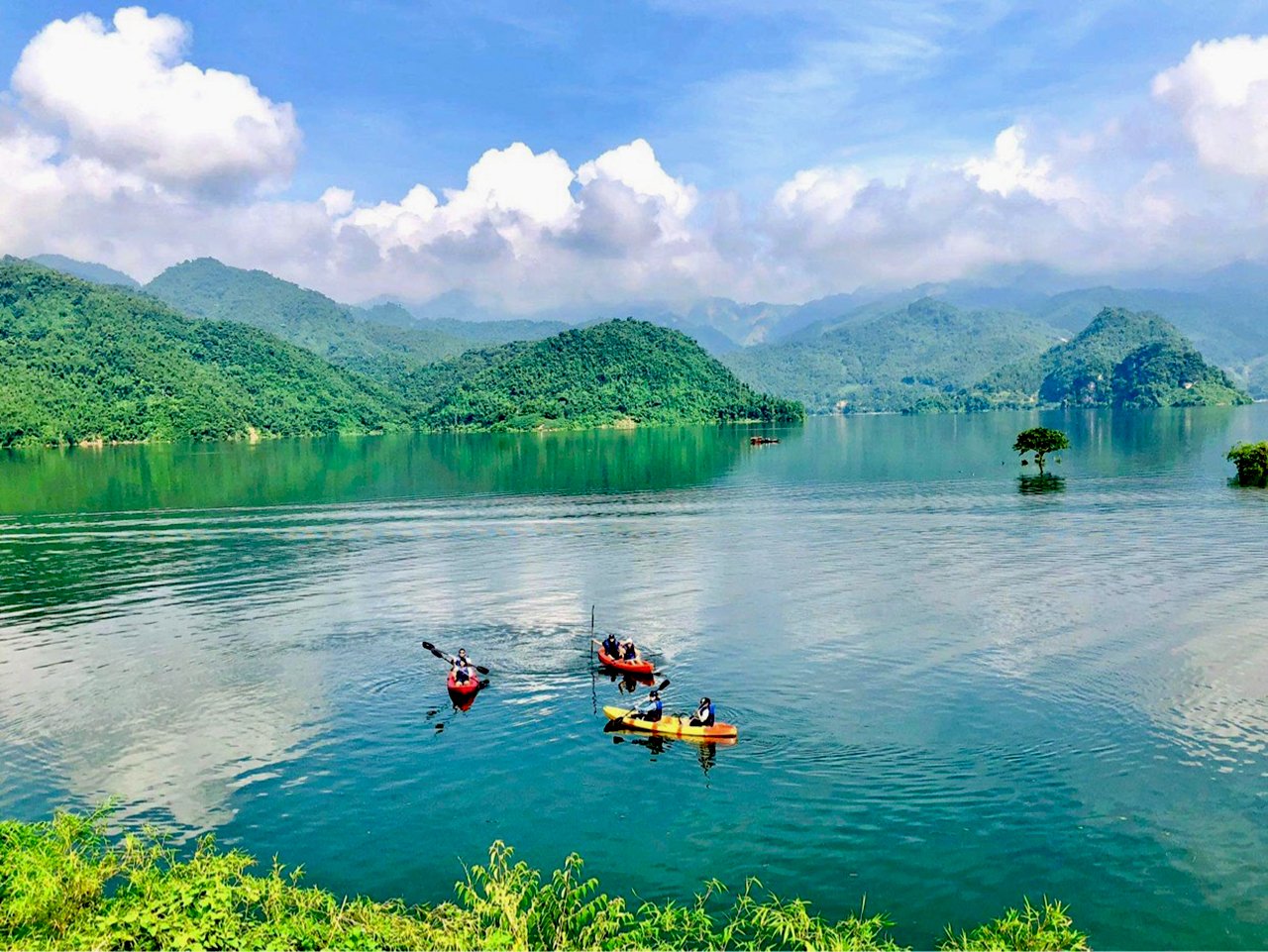
Kayaking provides a lower and quieter perspective than a motorised boat. Once away from the immediate shoreline, travellers can see the mountain layers and scale of the reservoir more clearly. Mai Chau Hideaway includes kayaking among its main guest activities and offers itineraries combining paddling with cycling and village visits.
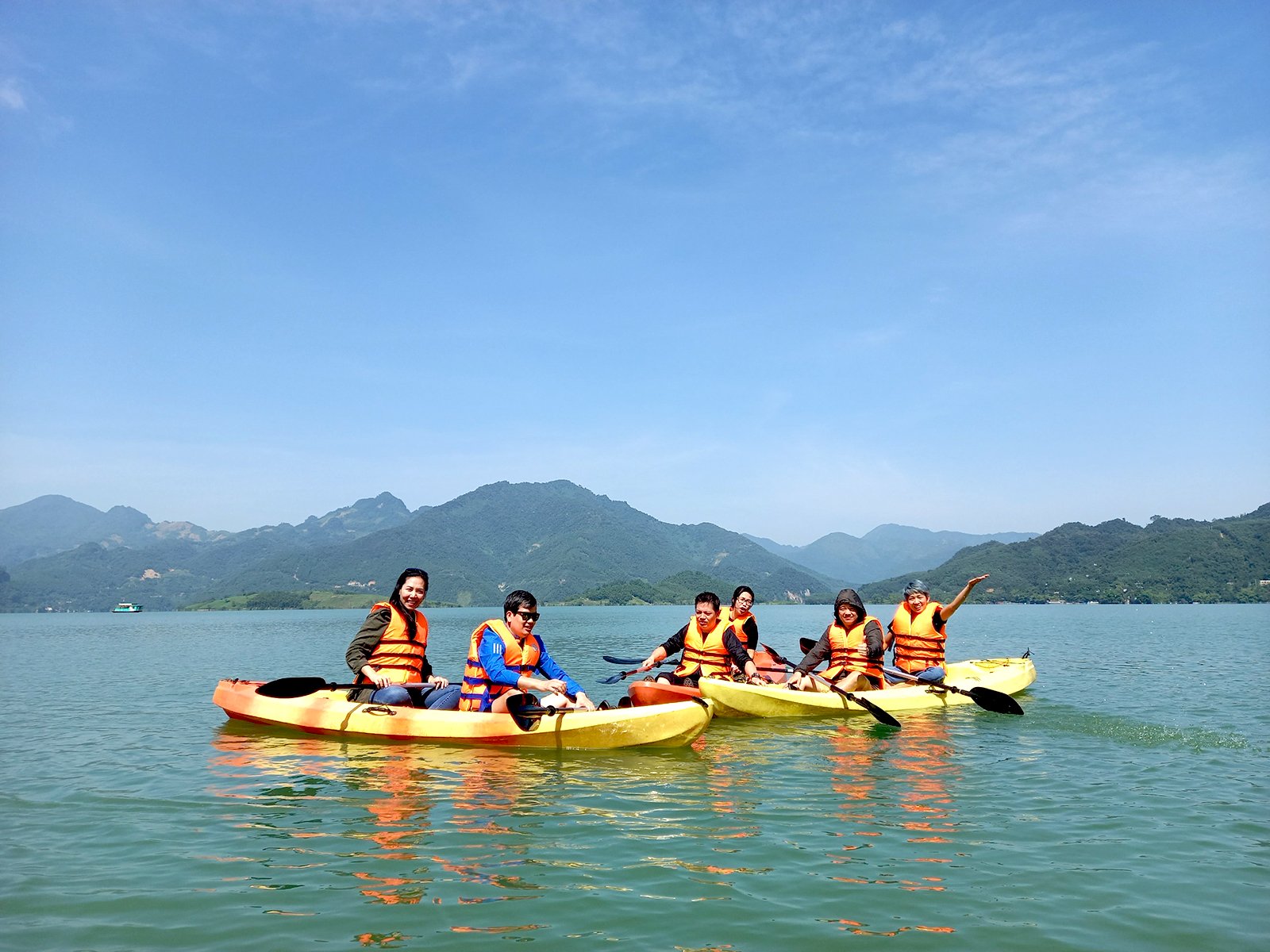
Guests go kayaking on Hoa Binh Lake
Beginners should ask about the expected route, duration and current conditions rather than assuming every session is a casual paddle. Life jackets should be worn throughout the activity. Children need suitable equipment and direct supervision, while strong wind, storms or poor visibility are valid reasons to postpone.
Waterproof phone pouches are useful, but valuable documents and non-water-resistant electronics are better left in the room.
Read more: 2 Days - 1 Night: Kayaking On Da River - Biking In Bamboo Forest
Cycling through rural communities
Cycling remains one of the strongest ways to experience the wider Mai Chau region. In the valley, many routes are relatively flat and pass rice fields, houses and small village roads. Routes from lakeside accommodations may include more uneven surfaces, bamboo roads or hillier sections.
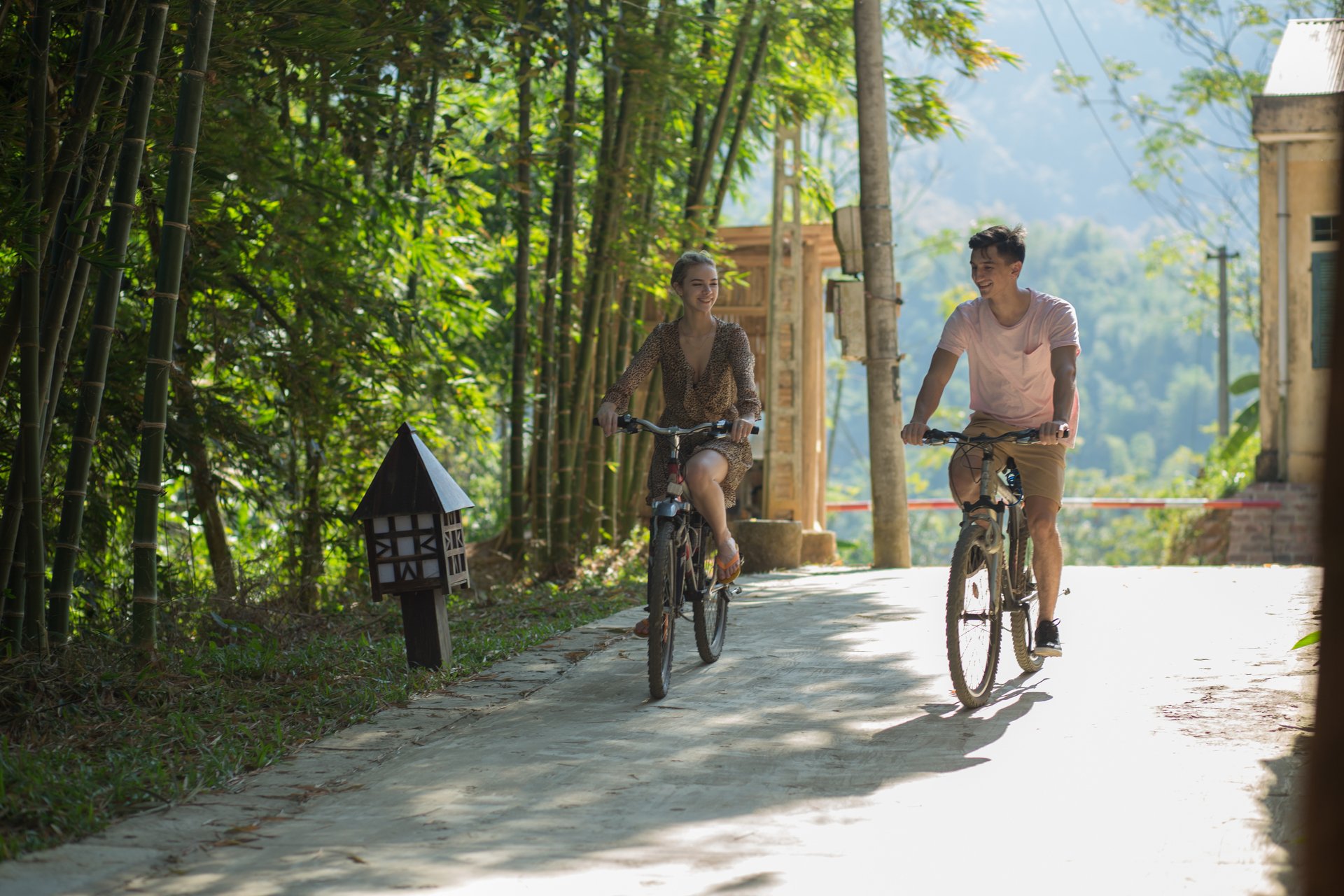
Travellers cycling along a rural road through Mai Chau villages
The resort currently promotes cycling journeys towards local communities and Go Lao Waterfall, including combined kayaking and cycling programmes. Before joining, ask whether the route uses paved roads, dirt tracks or steep sections. Travellers who have not cycled recently may enjoy a short village ride but struggle with a longer off-road itinerary. Closed shoes are preferable after rain. Light-coloured clothing, sun protection and drinking water are useful even on cool-looking mountain days.
Read more: Tour Biking Mai Chau - Mai Ha
Boat trips and floating communities
A motorised boat covers more distance than a kayak and works better for multi-generational families or guests who do not want a physically demanding activity. Some resort itineraries include floating houses, fish-farming areas, Ngoi Hoa Bay and kayaking stops. These trips provide context for how communities use the reservoir rather than treating the lake only as scenery.
Boat passing floating houses and fish farms on the lake (Source: Collected)
Travellers should confirm whether a boat trip is private or shared, how long it lasts and whether the quoted rate includes transfers, life jackets and entrance fees. Older promotional packages may still appear in search results, so current pricing should always be checked directly.
Swimming and unstructured resort time
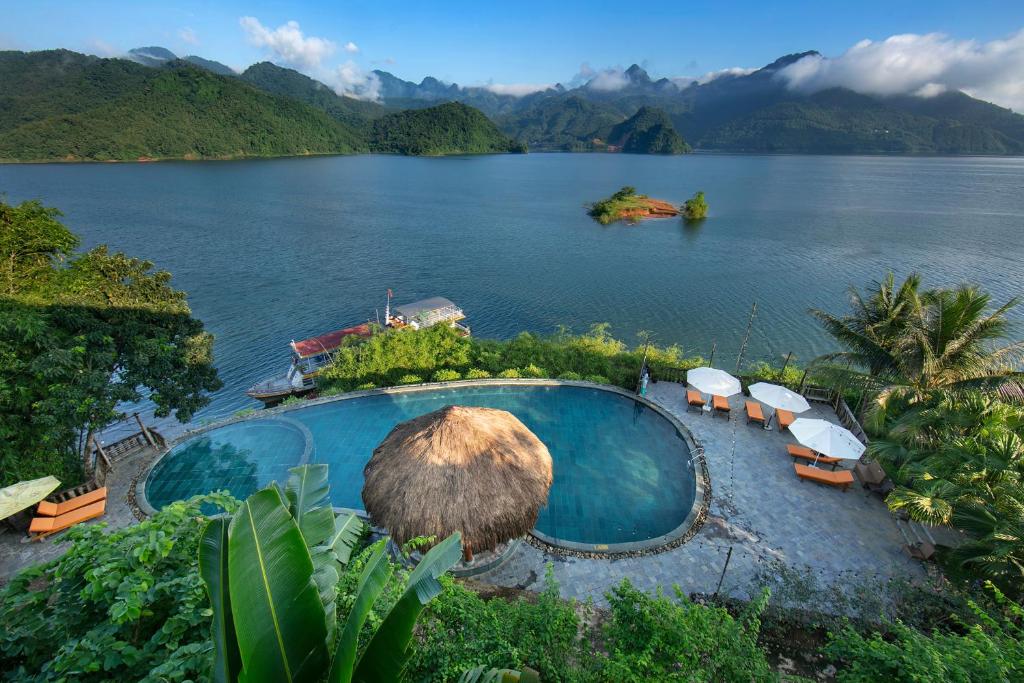
The infinity pool at Mai Chau Hideaway overlooks Hoa Binh Lake and is one of the property’s defining shared spaces. The more useful planning insight is not simply that the pool exists, but that guests should reserve time to use it. A resort stay loses much of its value when every daylight hour is spent travelling to outside attractions. Families with young children should note that a lakeside property combines a swimming pool, slopes and direct proximity to open water. Continuous adult supervision remains necessary even when formal safety equipment is available.
Spa and recovery time
Spa treatments can be scheduled after cycling, kayaking or the road journey. Mai Chau Hideaway currently lists massage, skincare and body treatments among its spa services. Availability should be reserved in advance on busy weekends. It is also sensible to leave a gap between a strenuous outdoor activity and a treatment rather than booking sessions back-to-back.
Local food and cultural context
Mai Chau is associated with Thai and Muong communities, stilt-house architecture, weaving, rice-based dishes and regional ingredients. Cultural value comes from understanding the area as a lived-in region, not only as a landscape for photography.
Travellers should ask permission before photographing residents, avoid entering private houses uninvited and purchase crafts directly from local makers when possible.
At a resort, meals may provide a convenient introduction to regional dishes, but they should not be described as identical to eating in a family homestay. The setting, preparation and level of adaptation for international guests will differ.
The Best Time for a Lakeside Retreat
Mai Chau can be visited throughout the year, but the experience changes by season.
- March to May: Temperatures are often comfortable for cycling, walking and outdoor meals. Spring mist can soften lake views, although it may also reduce visibility on mountain roads.
- June to August: The landscape is green, but the weather is hotter, more humid and wetter. Heavy rain can affect kayaking, cycling surfaces and road conditions. Travellers should keep activities flexible rather than committing every hour in advance.
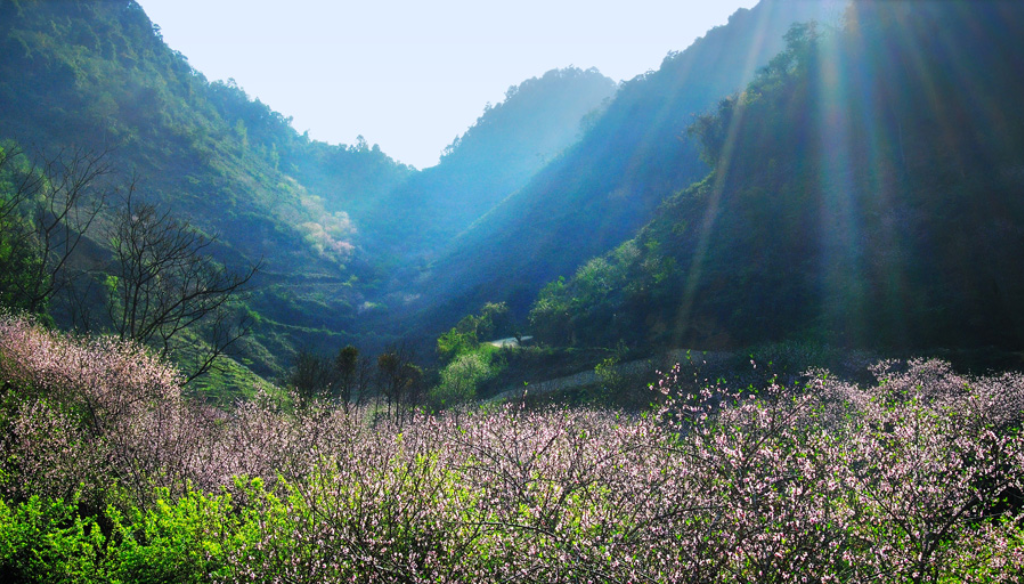
Spring in Mai Chau (Source: Collected)
- September to November: This is one of the most popular periods for outdoor travel in northern Vietnam. Conditions are often more comfortable, and parts of Mai Chau Valley may show harvest colours. Travellers staying beside Hoa Binh Lake should understand that a lake-view room does not necessarily overlook the valley’s rice fields.
- December to February: Mornings and evenings can feel cool, especially beside open water. The quieter atmosphere suits couples and travellers interested in scenery, but swimming and kayaking may feel less appealing on colder days.
The official Vietnam tourism guide identifies spring and autumn as favourable periods for Mai Chau, while also noting that summer rain can affect travel conditions. A reliable planning habit is to check the forecast again 48 to 72 hours before departure. Seasonal averages are useful, but the immediate forecast should guide kayaking, clothing and road decisions.
How to Travel From Hanoi
There is no railway station or airport in Mai Chau, so road transport remains the standard choice.
Private car
A private transfer is the easiest option for couples, families and small groups. It provides hotel pick-up, luggage space and control over rest stops. Confirm that the driver has the exact resort location. “Mai Chau” can refer to the valley, former town areas or lakeside communities, and they are not interchangeable drop-off points.
Ask whether tolls, waiting time and the return journey are included. For the return, reconfirm the departure time with reception rather than relying only on the original booking message.
Shared limousine or shuttle
A shared vehicle is more economical, but some services terminate at a town, roadside point or central drop-off rather than the resort itself. The resort’s published guidance has listed both direct services and routes requiring an additional taxi or motorbike transfer from the drop-off point. Schedules and fares can change, so guests should confirm the exact final stop before paying. This is particularly important for travellers arriving after dark or carrying large luggage.

Choose a transfer that reaches your resort (Source: Collected)
Public bus
Public buses are possible but less convenient for a short retreat. They may involve multiple stops and a final local transfer. The time saved by choosing the cheapest transport option may be lost through waiting and last-mile arrangements.
Motorbike
The route attracts experienced riders because of its mountain scenery, but it should not be treated as a beginner journey. Fog, bends, trucks and changing road surfaces increase the level of difficulty. International travellers should also ensure that their licence and insurance are valid for riding in Vietnam. A rental shop handing over a motorbike does not automatically mean the rider is legally licensed or insured.
Boat approach
One alternative combines road transport with a boat journey from Ngoi Hoa Port across Hoa Binh Lake. The resort describes this as a scenic route rather than the fastest option, with the water segment taking approximately two hours on one published itinerary.
This journey requires prior coordination and is better suited to travellers who want the transfer itself to become part of the trip
Read more: Directions to Mai Chau Hideaway Lake Resort: Fastest & easiest way from Hanoi
Where to Stay for Direct Lake Views
Lake-facing room at Mai Chau Hideaway overlooking the water and mountains
Many accommodations carrying the name “Mai Chau” are located in the valley rather than on the shore of Hoa Binh Lake. Travellers should check a map rather than relying only on the destination name.
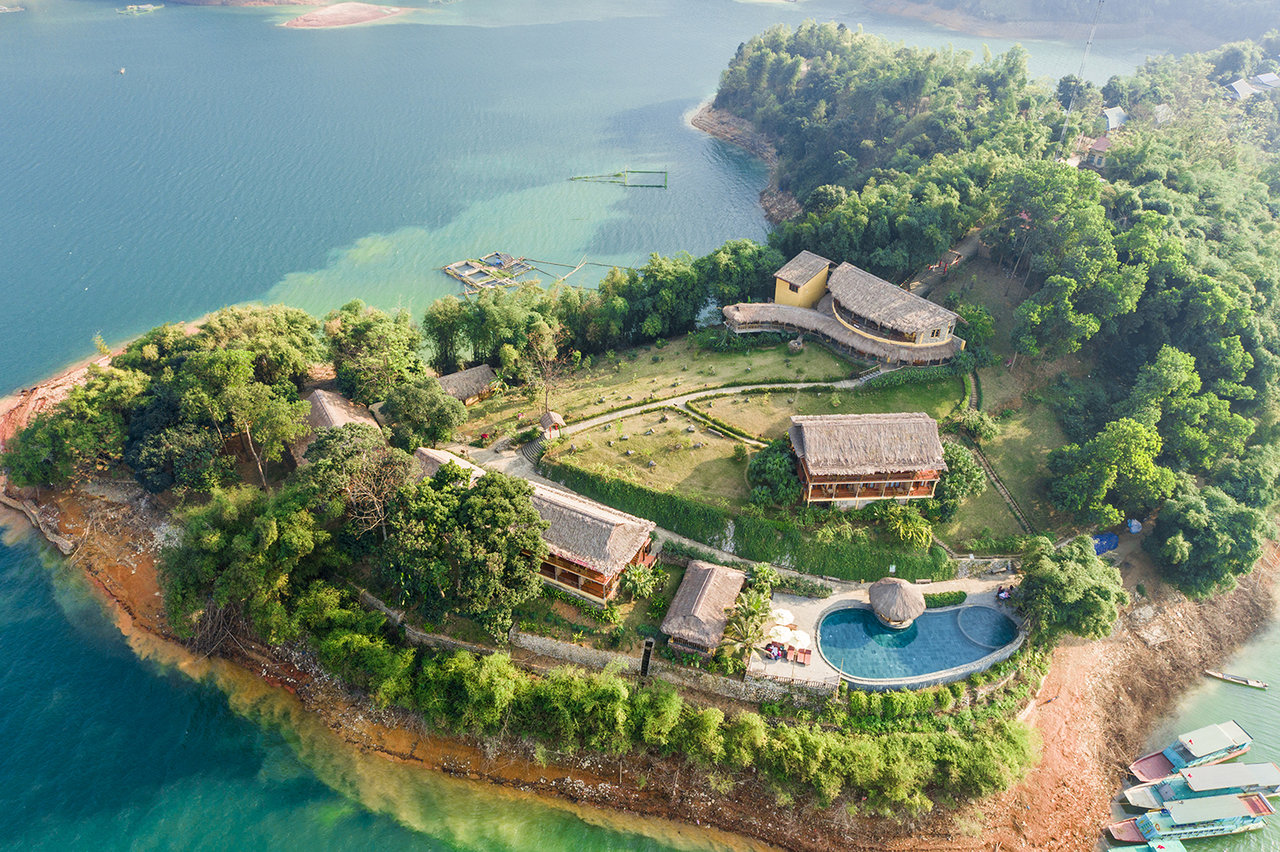
Mai Chau Hideaway Lake Resort is positioned on a peninsula beside the lake, with accommodation buildings, Bamboo Restaurant and an infinity pool oriented towards the surrounding water and mountains. Its strongest advantage is not simply the presence of a view. Guests can combine accommodation, meals, kayaking, cycling and recovery time in one base without making a separate road journey for every activity.
This makes the resort particularly suitable for travellers whose main priorities are:
- Direct lake scenery rather than rice-field views
- A quiet property away from the main village centre
- On-site swimming and wellness facilities
- Kayaking and boat-based experiences
- A two- or three-night itinerary with limited transfers
The same location creates several trade-offs. Guests should not expect an extensive restaurant district outside the gate, spontaneous evening shopping or easy walks to central valley villages. Transport for outside visits should be planned rather than assumed.
Room categories and views should also be checked carefully. Marketing terms such as “lake view” can refer to different angles, floors and levels of obstruction. Travellers with a strong preference should ask whether the selected room has a full, direct or partial view before confirming.
What to Confirm Before Booking
The booking stage is where a commercial travel article can provide the most practical value. Instead of comparing only room prices, travellers should clarify the full retreat experience.
Does the transfer end at the resort?
--> A low-cost limousine ticket is not necessarily door-to-door. Ask for the exact drop-off point and last-mile arrangements.
Which activities operate on the selected dates?
--> Kayaking, boat trips, spa appointments and guided cycling may require minimum numbers, suitable weather or advance reservations.
What is included in the room rate?
--> Breakfast, bicycles, kayaking equipment, cultural programmes and transfers may be included in one package but charged separately in another.
What happens during bad weather?
--> Ask whether outdoor activities can be rescheduled, replaced or refunded.
Are there age or fitness restrictions?
--> Families should confirm rules for children, while older guests should ask about stairs, slopes and walking distances around the property.
Which meals are available?
--> At a secluded retreat, the restaurant schedule matters. Confirm lunch and dinner service, dietary requests and whether advance ordering is recommended.
What type of lake view is guaranteed?
--> Request the specific room description rather than relying only on general resort photographs.
Is the booking refundable?
--> Mountain weather and transport disruptions make cancellation and date-change terms more important than they may be for an urban hotel. These questions reduce the risk of choosing a beautiful property that does not suit the group’s mobility, dietary needs or preferred pace.
Is Mai Chau the Right Lakeside Retreat for You?
Mai Chau is not the nearest possible escape from Hanoi, and that is part of its appeal. The three- to four-hour journey creates enough distance for the scenery, pace and daily routine to feel genuinely different from the capital. It is most rewarding for travellers who can stay two nights, choose only one or two main activities per day and accept that weather may change the plan. It works less well as a rushed day trip or a base for nightlife and constant sightseeing.
Evening view across Hoa Binh Lake from Mai Chau Hideaway Lake Resort
The most important decision is whether to stay in Mai Chau Valley or beside Hoa Binh Lake. Travellers interested primarily in villages, rice fields and walkable local life may prefer the valley. Those seeking open-water views, kayaking, a pool and extended time within one quiet property will gain more from a lakeside base.
For the latter, Mai Chau Hideaway Lake Resort offers a practical combination of accommodation, lake scenery, outdoor activities, dining and wellness facilities. Its peninsula setting allows the retreat to begin at the property itself rather than requiring guests to travel out every morning.
Allow at least two nights, confirm transport and activities before departure, and leave enough empty space in the itinerary to make the journey feel like a retreat rather than another tour.