Where Is Da Bac?
Da Bac is a mountainous lakeside area in northern Vietnam, closely connected with Hoa Binh Lake and the Da River. It lies to the west of Hoa Binh City and southwest of Hanoi, making it one of the quieter nature escapes that can still be reached from the capital within a short break.
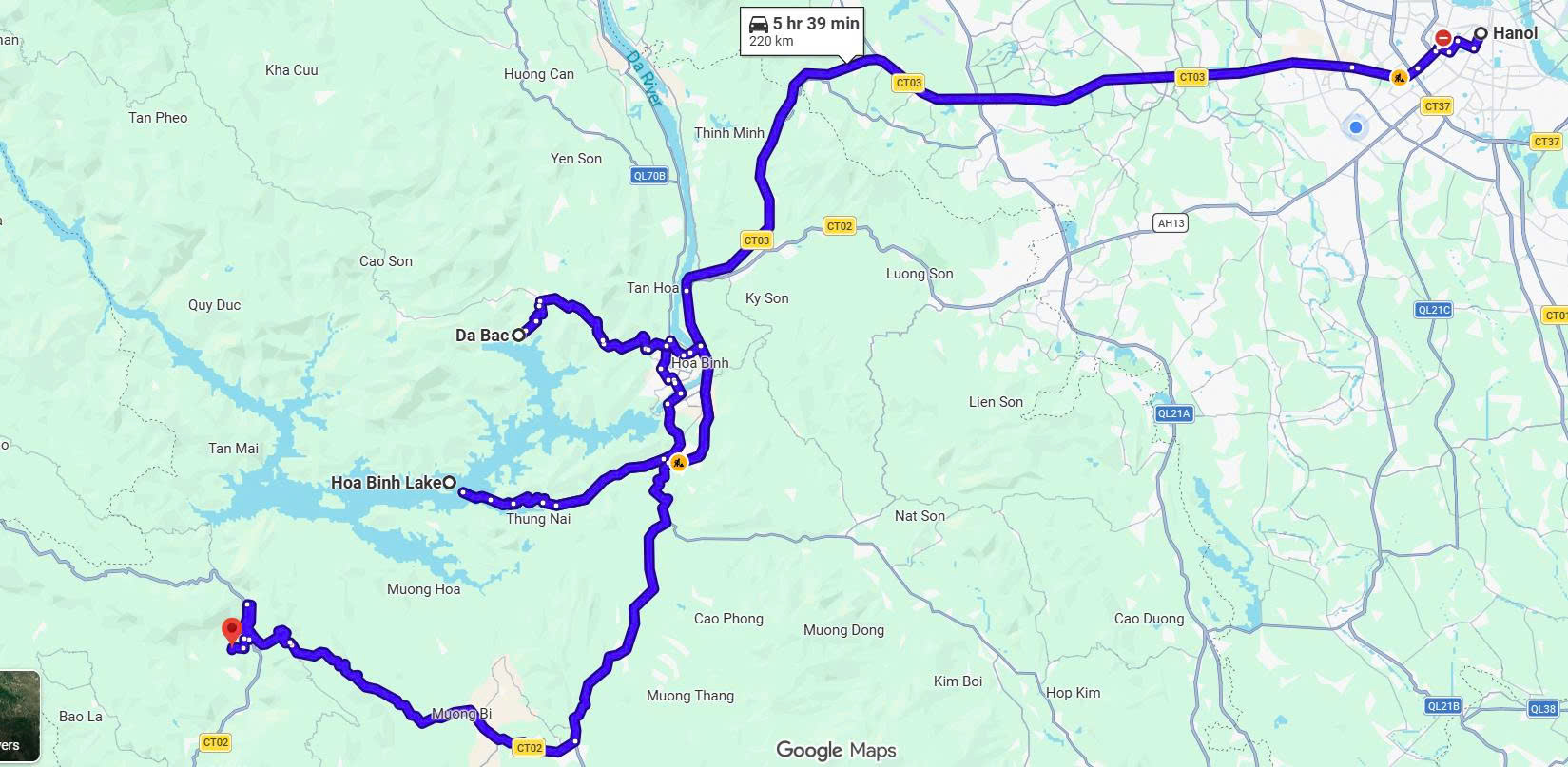
Da Bac is located between Hanoi, Hoa Binh Lake and Mai Chau
For years, Da Bac has been known in travel guides as Da Bac, Hoa Binh. This name is still useful for trip planning because it is how the destination appears in many maps, travel articles and local tourism materials. Since Vietnam’s administrative changes in 2025, Hoa Binh has become part of the expanded Phu Tho Province, but international travel searches still commonly use the older destination name.
The easiest way to picture Da Bac is not as a single attraction, but as a rural lakeside district made up of mountain roads, ethnic villages, small homestays, boat routes and quiet sections of Hoa Binh Lake. It is not a place for nightlife, shopping streets or famous monuments. Its appeal comes from scenery, water, village life and a slower rhythm than Vietnam’s more visited northern destinations.
Quick location guide
|
Question
|
Practical answer
|
|
Where is Da Bac?
|
In the former Hoa Binh area of northern Vietnam, near Hoa Binh Lake and the Da River
|
|
How far is Da Bac from Hanoi?
|
Around 90-100 km, depending on the exact village or lakeside point
|
|
How long does the journey take?
|
Usually about 2.5-3.5 hours by private car
|
|
Is Da Bac near Mai Chau?
|
Yes. Da Bac and Mai Chau can be combined in a 2-3 day northern Vietnam itinerary
|
|
What is Da Bac known for?
|
Hoa Binh Lake scenery, community-based tourism, ethnic villages, kayaking, walking and homestays
|
|
Who is it best for?
|
Guests who prefer quiet nature, local culture and off-the-beaten-path travel
|
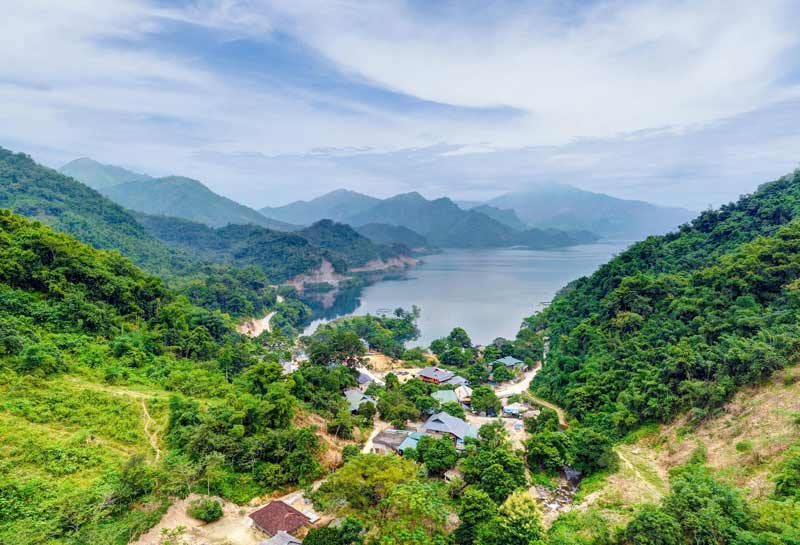
The journey to Da Bac passes through mountain roads and rural lake scenery (Source: MIA)
What Makes Da Bac Different From Other Places Near Hanoi?
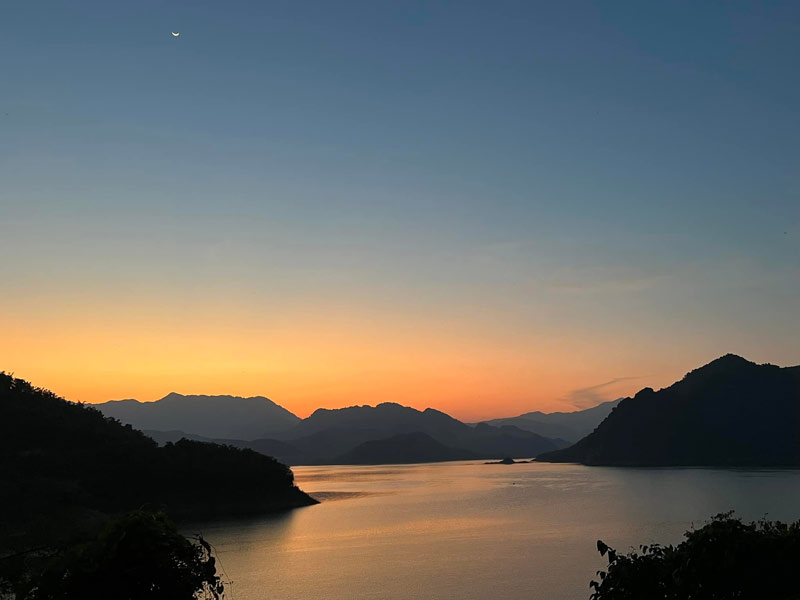
Da Bac is known for quiet lake views and village-based travel (Source: Collected)
Da Bac is not a destination built around famous landmarks or busy sightseeing routes. Its appeal comes from the way mountains, lake scenery and village life meet in one quiet corner of northern Vietnam. For travellers who have already heard of Mai Chau, Ninh Binh or Ha Long Bay, Da Bac offers a much less commercial experience.
The area is closely connected with Hoa Binh Lake, where calm water, forested hills and small lakeside communities create a slower style of travel. Instead of moving from one attraction to another, visitors usually spend their time boating, kayaking, walking through villages, sharing local meals or staying overnight in a community homestay.
This is why Da Bac suits travellers who want to step away from crowded routes near Hanoi without travelling as far as Ha Giang or Sapa. It is close enough for a short escape, but quiet enough to feel like a real change of pace.
Understanding Da Bac Through Hanoi, Hoa Binh Lake and Mai Chau
Da Bac becomes much easier to understand when it is placed in relation to three familiar travel points: Hanoi, Hoa Binh Lake and Mai Chau.
From Hanoi, Da Bac is close enough for a short nature trip but far enough to feel completely different from the city. The route begins with more developed roads around Hanoi and Hoa Binh, then gradually shifts into mountain roads and rural scenery. This is why travel time can vary even when the distance looks short on a map.
From Hoa Binh Lake, Da Bac is part of the landscape that gives the lake its travel value. Hoa Binh Lake is not only a body of water. Around its bays and islands are villages, boat routes, homestays, small tourism communities and cultural sites. Da Bac is one of the areas where guests can experience this environment at a slower pace.
From Mai Chau, Da Bac offers a different type of nature. Mai Chau is known for open valleys, rice fields, cycling routes and Thai ethnic villages. Da Bac feels more lake-based, more rustic and less polished. The two places work well together because they do not repeat the same experience. One gives the feeling of water and mountains; the other opens into valley landscapes and softer resort options.
For a guest planning a northern Vietnam itinerary, this distinction matters. Da Bac should not be sold as “another Mai Chau”. It should be positioned as the quieter lakeside side of the same wider region.
How to Get to Da Bac From Hanoi
The most practical way to reach Da Bac from Hanoi is by private car or arranged transfer. The distance is usually described as around 90-100 km, but guests should plan by travel time rather than distance. Depending on the final stop, road conditions and weather, the journey can take around 2.5 to 3.5 hours. A private car is the easiest choice for couples, families, small groups and guests carrying luggage. It also gives more flexibility for stops, photo breaks and onward travel to Mai Chau or another lakeside stay.
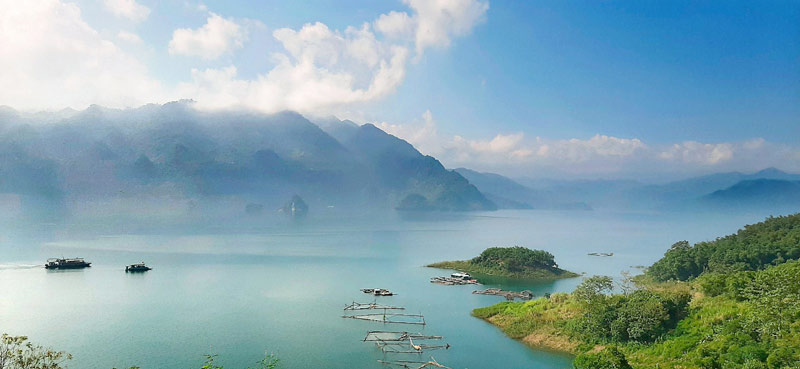
Most visitors reach Da Bac from Hanoi by private car (Source: Collected)
Public transport is possible but less convenient. Da Bac’s tourism points are spread across villages rather than concentrated around one central tourist town. A guest may be able to reach Hoa Binh City first, then continue by local taxi or pickup arranged by a homestay, but this requires more coordination. It is not the most comfortable option for a short holiday.
Motorbike travel can appeal to experienced riders because the scenery is beautiful, but it should not be treated casually. Rural and mountain roads may include sharp bends, narrow sections and slippery surfaces during rainy periods. Anyone choosing this option should have proper riding experience, valid documents and suitable insurance.
Local planning note: if the itinerary includes a boat transfer, kayaking or a homestay in a smaller village, guests should confirm the exact meeting point before leaving Hanoi. “Da Bac” is a broad area, and the final 30 minutes of the route can make a big difference to the day’s schedule.
What Makes Da Bac Different From Other Places Near Hanoi?
Da Bac is not the easiest destination near Hanoi, and that is part of its identity. Ninh Binh is easier for first-time visitors because the main attractions are well organised. Ha Long Bay has a mature cruise system. Mai Chau has more accommodation choices and a clearer tourism structure. Da Bac is quieter and more local, but it also requires more realistic planning.
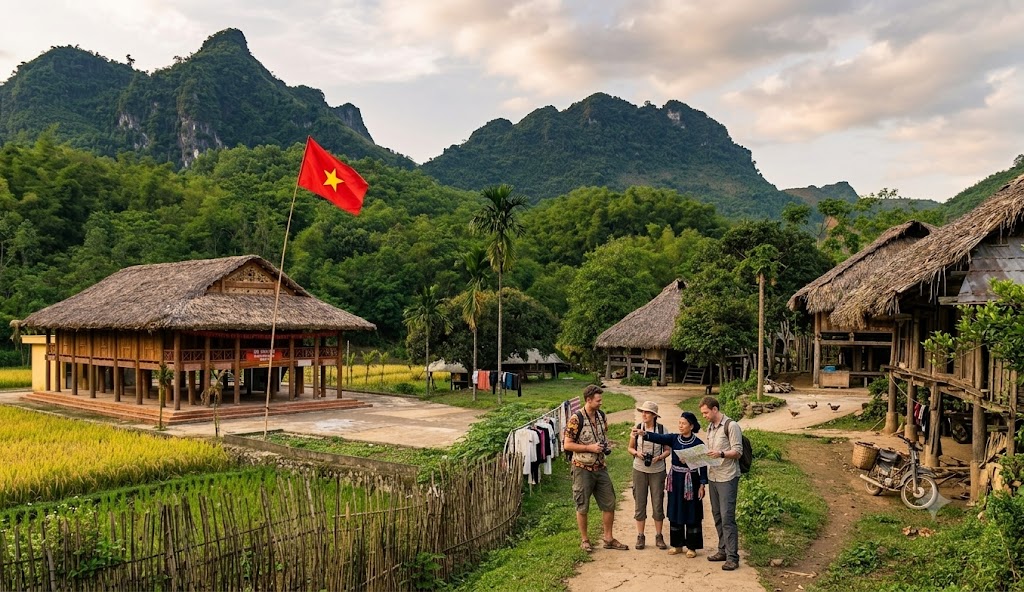
The strongest value of Da Bac is the connection between landscape and village life. A guest does not go there only to look at the lake. They go to stay near local communities, eat simple home-cooked meals, walk through rural areas, join lake activities and experience a side of northern Vietnam that has not been shaped entirely around mass tourism.

Da Bac offers a slower pace compared with more popular destinations near Hanoi (Source: Collected)
This gives Da Bac a stronger sense of place. The scenery is not separated from daily life. Boats, gardens, stilt houses, forest paths, local meals and ethnic traditions are part of the same travel experience. That also means the destination is not suitable for every guest. Someone expecting luxury service, many restaurant choices, late-night entertainment or a dense sightseeing schedule may find Da Bac too quiet. Someone looking for nature, culture and slow travel may find exactly what they came for.
What to Do in Da Bac
Da Bac works best when the schedule is built around a few meaningful experiences rather than a long checklist of attractions. The destination does not need to be rushed. A good trip usually combines one lake activity, one village experience and enough time to simply enjoy the setting.
- Take a boat trip on Hoa Binh Lake: A boat ride helps guests understand why Da Bac is closely associated with Hoa Binh Lake. From the water, the mountains, islands and lakeside villages feel more connected than they do from the road. This is also a good way to reach some communities or quiet corners that are harder to appreciate from land.
- Try kayaking or bamboo rafting: Kayaking is suitable when the water is calm and the weather is safe. It is not usually an extreme activity; the appeal is the quiet movement across the lake, the mountain views and the slower pace. Life jackets should always be used, and lake activities should be adjusted if there is wind, rain or poor visibility.
- Stay in a community homestay: A homestay is one of the most important parts of the Da Bac experience. Guests may stay in a traditional-style house, eat with a local family and learn about daily life in the village. Facilities are usually simple, so expectations should be clear before booking. This is cultural travel, not resort travel.
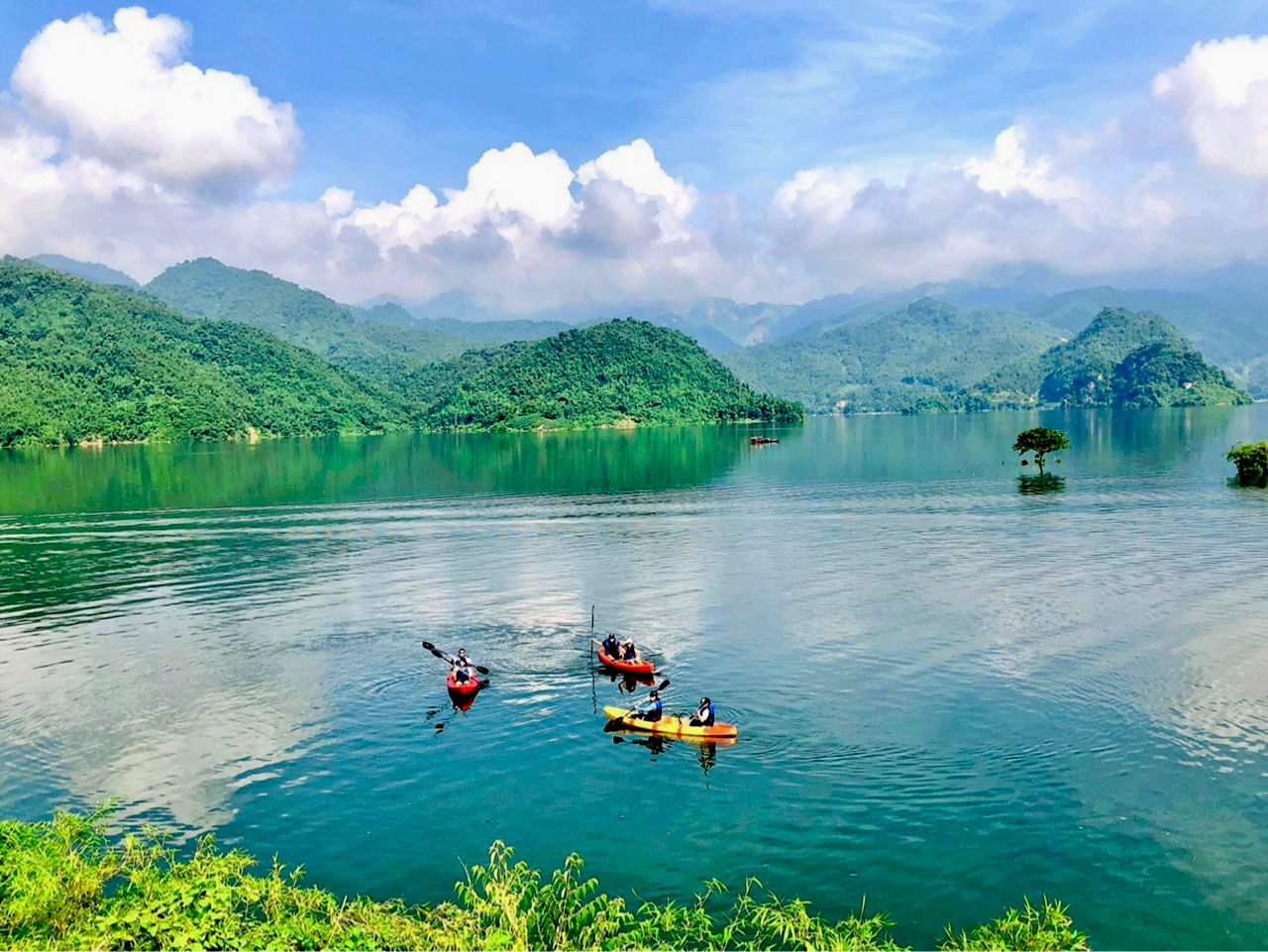
Kayaking and boat trips are among the best ways to experience Da Bac (Source: Collected)
- Walk through villages and nearby trails: Short walks can be more meaningful than long treks if a local host explains the landscape, farming habits, house architecture or community customs. Some routes pass rice terraces, gardens, stilt houses or forest edges. Shoes with good grip are useful because paths can become slippery after rain.
- Learn through local food: Meals in Da Bac are often based on available local ingredients such as fish, chicken, pork, sticky rice, bamboo shoots, vegetables and seasonal produce. The food experience is not about fine dining. It is about understanding how the meal connects with the lake, the mountains and the household preparing it.
Read more: 2 Days - 1 Night: Kayaking On Da River - Biking In Bamboo Forest
Key Villages and Community Tourism Areas in Da Bac
Da Bac’s travel value is strongly connected with community-based tourism. Instead of one central tourist zone, the area has several village-based experiences. Each one offers a slightly different landscape and cultural setting.
Sung Hamlet is often associated with the Dao Tien community and mountain scenery. It suits guests who are interested in ethnic culture, village walking, traditional crafts and a quiet upland atmosphere. The landscape here feels more mountainous than purely lakeside, which gives it a different character from villages closer to the water.
Ke Hamlet and Hien Luong areas are useful reference points for lake-based experiences. This side of Da Bac can work well for guests interested in Hoa Binh Lake views, water activities and a more open lakeside atmosphere. It is a good area to consider when the trip focuses on boating, kayaking or staying close to the lake.
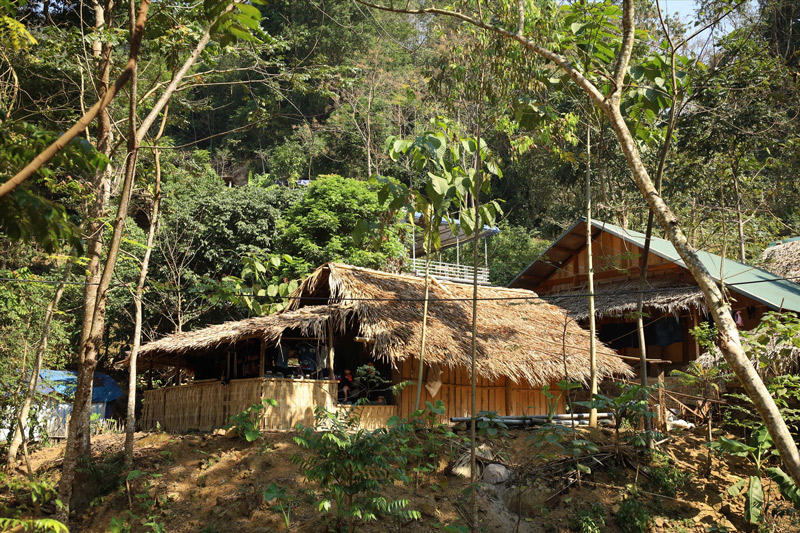
Community-based tourism connects Da Bac’s scenery with local village life (Source: Collected)
Duc Phong and Da Bia area are often mentioned in connection with Muong community tourism and the wider Hoa Binh Lake experience. This area can suit guests looking for local meals, simple village stays and cultural exchange rather than a resort-style holiday.
When writing or planning around these places, avoid presenting them as “must-see attractions” in the same way as a temple, viewpoint or theme park. They are living communities. The right travel tone should be respectful, slow and practical.
Da Bac or Mai Chau: Which Destination Fits Better?
Da Bac and Mai Chau are close enough to appear in the same travel conversation, but they answer different needs. Mai Chau is easier to understand at first glance. It has open valleys, rice fields, cycling routes, a wider range of places to stay and a softer landing for guests visiting rural northern Vietnam for the first time. It is a strong choice for couples, families and guests who want nature but still need comfort and easier logistics.
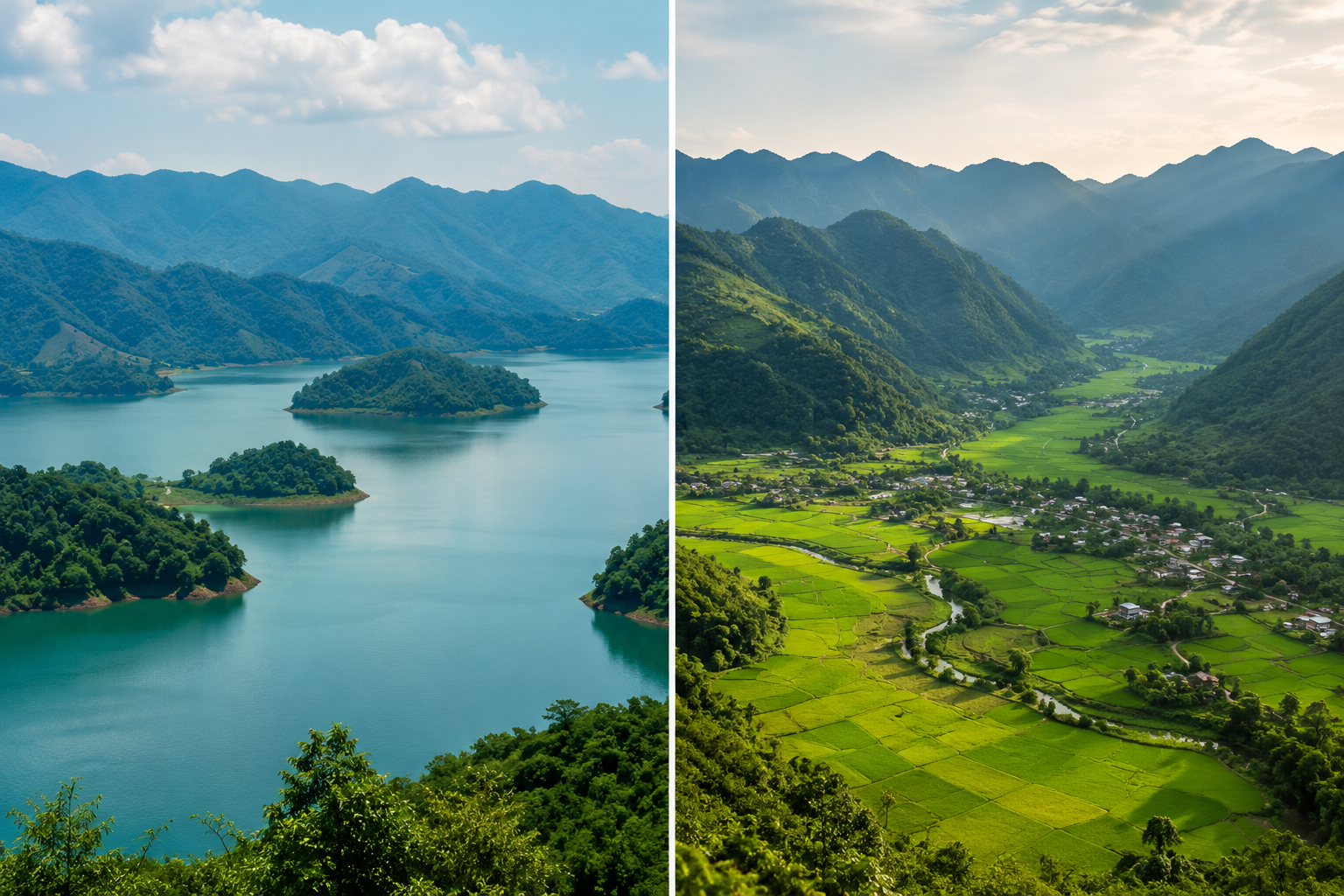
Da Bac offers lake scenery, while Mai Chau is known for open valley views (Source: Collected)
Da Bac feels more rustic. It is better for guests who are curious about community tourism, lake scenery and village life. The reward is a quieter experience, but the trade-off is that planning can be less straightforward.
|
Travel preference
|
Better fit
|
|
Easy first rural trip from Hanoi
|
Mai Chau
|
|
Quiet lake scenery
|
Da Bac
|
|
Cycling through rice fields
|
Mai Chau
|
|
Community homestay experience
|
Da Bac
|
|
More accommodation comfort
|
Mai Chau
|
|
Kayaking and boat-based scenery
|
Da Bac
|
|
Family trip with elderly guests
|
Mai Chau or a lakeside resort base
|
|
Rustic off-the-beaten-path feel
|
Da Bac
|
|
2–3 day lake and valley itinerary
|
Combine both
|
A useful way to position the two destinations is this: Da Bac gives the trip local depth, while Mai Chau gives it comfort and balance. Guests with three days can experience both without forcing the itinerary.
How to Combine Da Bac With Hoa Binh Lake and Mai Chau
A strong itinerary does not need to choose between Da Bac and Mai Chau. The better option is often to build a route that moves from lake scenery to valley scenery. A simple 3-day route can begin in Hanoi, continue to Da Bac for community tourism and Hoa Binh Lake, then finish in Mai Chau for a more comfortable valley stay. This creates a natural rhythm: rural lake experience first, softer rest afterwards.
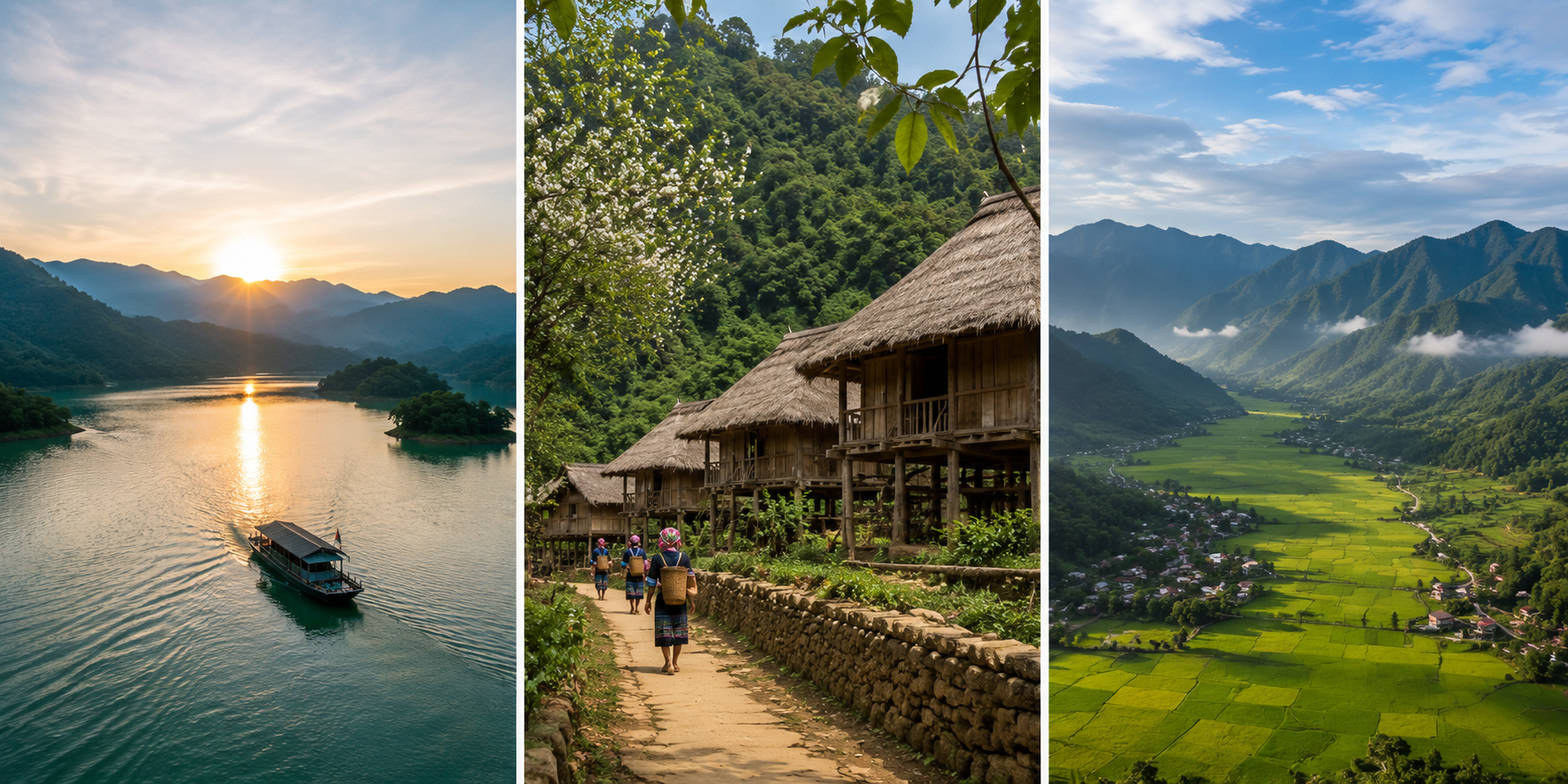
A three-day itinerary combines the lake scenery of Da Bac with the valleys of Mai Chau
Day 1: Hanoi to Da Bac
Leave Hanoi in the morning and travel toward Da Bac. Keep the afternoon light. After arrival, take a village walk, meet the host family, enjoy the scenery and have dinner at the homestay. This day should not be packed with too many activities because the transfer already takes time.
Day 2: Hoa Binh Lake experience, then continue toward Mai Chau
Use the morning for a boat trip, kayaking session or guided village activity. After lunch, continue toward Mai Chau or a lakeside resort in the wider Hoa Binh Lake area. This transition works well because guests have already experienced the local, rustic side of the region.
Day 3: Mai Chau slow morning and return to Hanoi
Spend the morning walking, cycling or relaxing. Return to Hanoi in the afternoon. This gives the trip a calmer ending and avoids the feeling of rushing back from a remote village.
Where to Stay: Da Bac Homestay or Mai Chau Hideaway Lake Resort?
Accommodation is one of the biggest decisions when planning a Da Bac trip. The right choice depends on how much comfort the guest expects.
A Da Bac homestay gives the strongest cultural connection. It is suitable for guests who want to sleep in a village, join a shared meal, learn from a host family and experience a more direct form of community-based tourism. The trade-off is that facilities can be simple, privacy may be limited and services may not match hotel standards.
A lakeside resort near Mai Chau gives a softer version of the same landscape. Guests can still enjoy Hoa Binh Lake, mountain views and a quiet northern Vietnam atmosphere, but with more comfort, private rooms, easier meals and better rest after the drive.
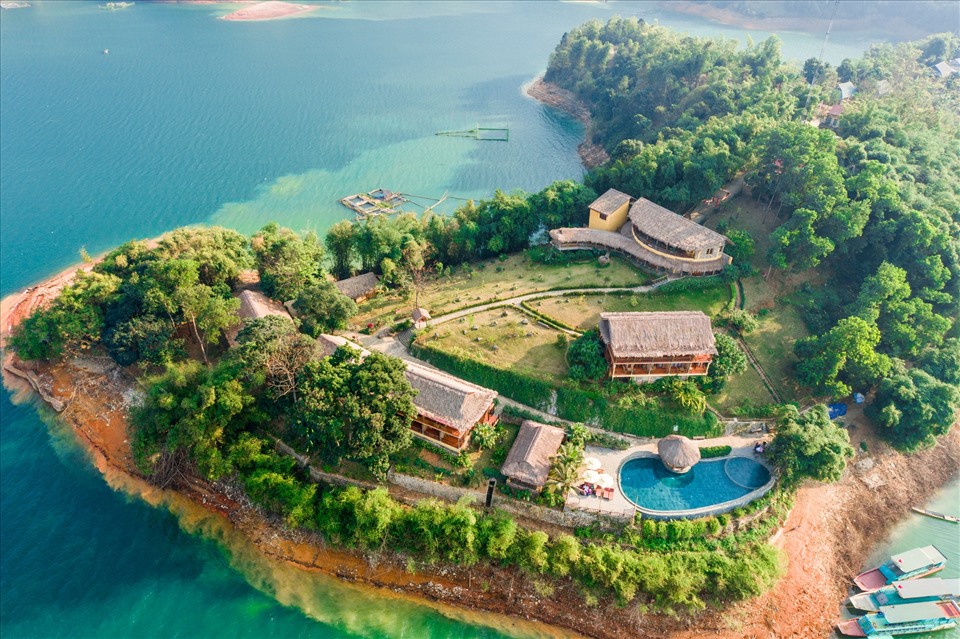
A lakeside stay near Mai Chau offers a softer way to enjoy Hoa Binh Lake
This is where Mai Chau Hideaway Lake Resort can be introduced naturally. It should not be positioned as a replacement for Da Bac’s community tourism. Instead, it can be presented as a better base for guests who like the idea of Hoa Binh Lake but prefer a more comfortable stay.
If Da Bac sounds appealing but a full homestay experience feels too rustic, consider staying by Hoa Binh Lake near Mai Chau. Mai Chau Hideaway Lake Resort offers a calmer lakeside base with mountain views, resort comfort and easier access to the wider Hoa Binh Lake region.
Read more: Hidden Resort in Northern Vietnam: 6 Quiet Escape Beyond the Usual Route
Best Time to Visit Da Bac
The best time to visit Da Bac is usually during the cooler and drier months, especially from autumn to spring. This period is more comfortable for walking, boating, kayaking and staying in rural villages. Autumn often brings clearer skies and pleasant temperatures. Winter can be peaceful, although mornings and evenings may feel cool in the mountains. Spring is a good time for fresh scenery and cultural travel, especially if guests enjoy village landscapes rather than beach weather.
Autumn and spring are usually the most pleasant seasons to visit
Summer is green and beautiful, but it can be hot, humid and rainy. Rain can affect walking trails, boat schedules and smaller rural roads. Guests visiting during this period should keep the itinerary flexible and avoid planning every activity too tightly.
The main travel advice is simple: Da Bac is better when the schedule has room to breathe. Weather, local events and road conditions can change the rhythm of the trip, and that flexibility is part of travelling in a rural lake area.
How Long Should You Stay in Da Bac?
A one-day trip to Da Bac is possible, but it is not ideal. The journey from Hanoi takes enough time that the actual experience may feel rushed. If the goal is only to take photos and return, other destinations closer to Hanoi may be easier.
Two days and one night is the minimum recommended plan. It allows guests to arrive without rushing, spend the night in a village or lakeside area, enjoy a local dinner and join one meaningful activity the next morning.
Three days and two nights is better for a deeper trip. This gives enough space for a lake activity, a village walk, a slower meal, a cultural experience and a connection with Mai Chau. It also reduces the risk of the trip feeling like a long transfer with only a short stop in the middle. For international guests, the strongest recommendation is usually two nights if the itinerary allows. Da Bac rewards time more than speed.
Is Da Bac Worth Visiting?
Da Bac is worth visiting if the guest is looking for nature, local culture and a quieter side of northern Vietnam. It is not a destination built around famous landmarks, but that is exactly why it appeals to people who want something different from the standard Hanoi–Ninh Binh–Ha Long route.
The destination is especially suitable for guests who enjoy slow travel, small communities, lake scenery, homestays, light adventure and meaningful contact with local life. It can also work well for repeat visitors to Vietnam who have already seen the better-known highlights.
However, Da Bac is not the right match for every itinerary. Guests who need luxury at every stop, a wide choice of restaurants, nightlife, polished tourism infrastructure or very easy public transport may feel limited. Families with young children or elderly relatives should check room comfort, road time, toilet facilities, walking distance and meal arrangements before booking.
Responsible Travel Tips for Da Bac
Responsible travel matters in Da Bac because much of the experience is built around local communities. The villages are not performance spaces. They are people’s homes. Guests should ask before taking photos of people, especially older residents and children. Clothing should be comfortable but respectful. Loud behaviour, drone use and entering private spaces without permission should be avoided.
Cash is useful because card payments may not be available in smaller villages. Guests should also carry basic personal items, medicine, insect repellent, a reusable water bottle and shoes suitable for uneven ground.
Buying meals, local products or guided activities directly through community tourism groups can help tourism income stay in the area. A good trip should benefit both the guest and the host community. Da Bac is a quiet mountainous area near Hoa Binh Lake in northern Vietnam, historically known as part of Hoa Binh and now within the expanded Phu Tho Province. It is around 90–100 km from Hanoi and can usually be reached in about 2.5–3.5 hours by private car.
Its strongest appeal is not a single attraction, but the combination of lake scenery, ethnic villages, homestays, kayaking, walking and community-based tourism. It is best suited to guests who want a slower and more local experience near Hanoi.
If the trip needs more comfort, Da Bac can be combined with Mai Chau or a lakeside resort near Hoa Binh Lake. This gives the itinerary a better balance: local depth in Da Bac, then easier rest and softer scenery around Mai Chau.