Cuisine is the soul of every land, and in Northwest Vietnam, it is a symphony of mountains, kitchen smoke, and human warmth. Join Mai Chau Hideaway Lake Resort on a culinary journey through the Northwest, from savoring iconic specialties such as thang co, pa pỉnh tộp (grilled fish), and smoked buffalo meat, to experiencing the rustic, hospitable way of life of the local communities.
When is the best time for a culinary trip to Northwest Vietnam?
Northwest cuisine is deeply shaped by the mountains, the agricultural seasons, and highland lifestyles. Each time of year brings a distinct character, from ingredients and dishes to cooking methods. Choosing the right season is therefore key to making your culinary journey truly complete.
Spring (late January – April): Festival season & Traditional flavors
As spring arrives, the Northwest mountains burst into bloom with ban, peach, and plum flowers. This is also the peak season for traditional festivals, when visitors can taste authentic ethnic dishes prepared for communal celebrations, an ideal time to explore classic flavors and festive food culture of the highlands.
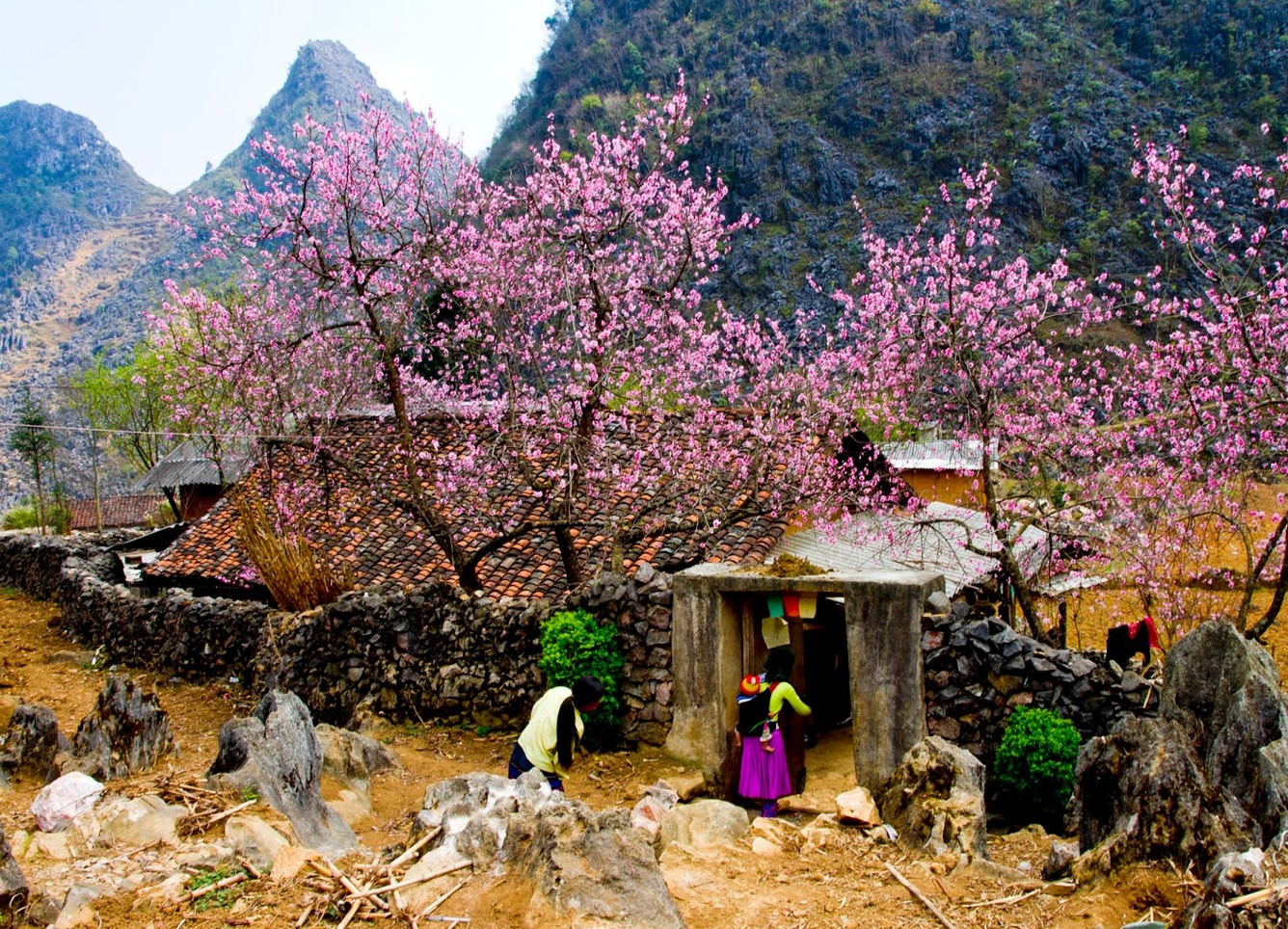
Spring peach blossoms in Northwest Vietnam (Source: VietTravel)
During this season, specialties such as five-color sticky rice, thang co, smoked buffalo meat, corn wine, and grilled stream fish appear frequently at local gatherings and festivals. The pleasantly chilly weather, along with the aroma of kitchen smoke drifting through the villages, makes every meal feel warmer and more memorable than ever.
Summer (May – August): The season of forest vegetables and stream fish
In summer, Northwest Vietnam is wrapped in refreshing shades of green, with the gentle sound of streams weaving through villages. This is an ideal time for travelers to enjoy dishes that feel the freshest and most rustic, simple flavors drawn directly from the forest and the water.
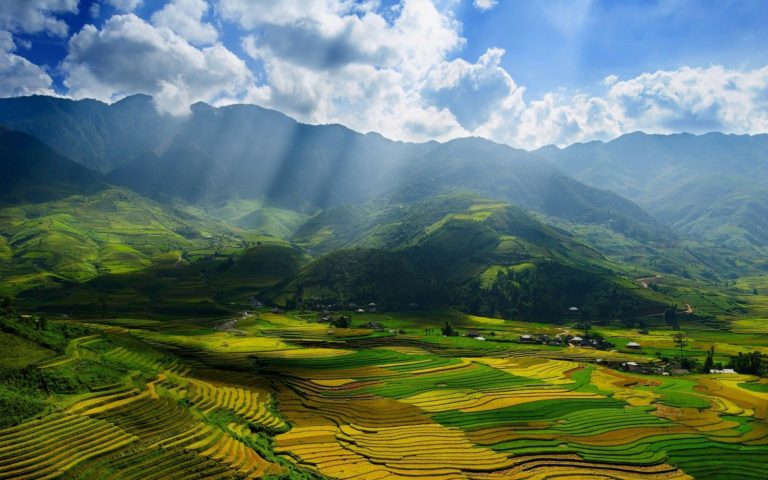
Lush green hues across the Northwest in summer (Source: Dac San Tay Bac)
During summer, local people often prepare rustic yet flavorful dishes such as grilled stream fish, free-range chicken grilled with mac khen pepper, stir-fried bitter bamboo shoots with wild garlic, and young forest vegetable soups. In addition, highland markets in summer are especially lively, offering visitors the chance to sample a wide range of traditional specialties, sip can wine, enjoy thang co, or taste banh ngai in a warm, vibrant atmosphere.
Autumn (late August – October): The season of ripe rice and new rice aroma
Autumn is considered the most beautiful time for a culinary journey through Northwest Vietnam. Across valleys and hillsides, terraced rice fields turn a brilliant golden yellow, filled with the fragrance of ripe rice.
This is also when local communities prepare many dishes made from freshly harvested glutinous rice, such as bamboo-tube rice (com lam), upland sticky rice, young green rice (com), and black chung cake, all symbolizing abundant harvests and a prosperous life.
Winter (October – December): The season of hearth fires and grilled dishes
When the cold sets in, nearly every household in the Northwest keeps its fire burning. Winter is the perfect season to enjoy grilled meats, smoked dishes, smoked buffalo meat, and grilled local pork with mac mat leaves, savored beside a warm hearth amid the chill of the mountains.
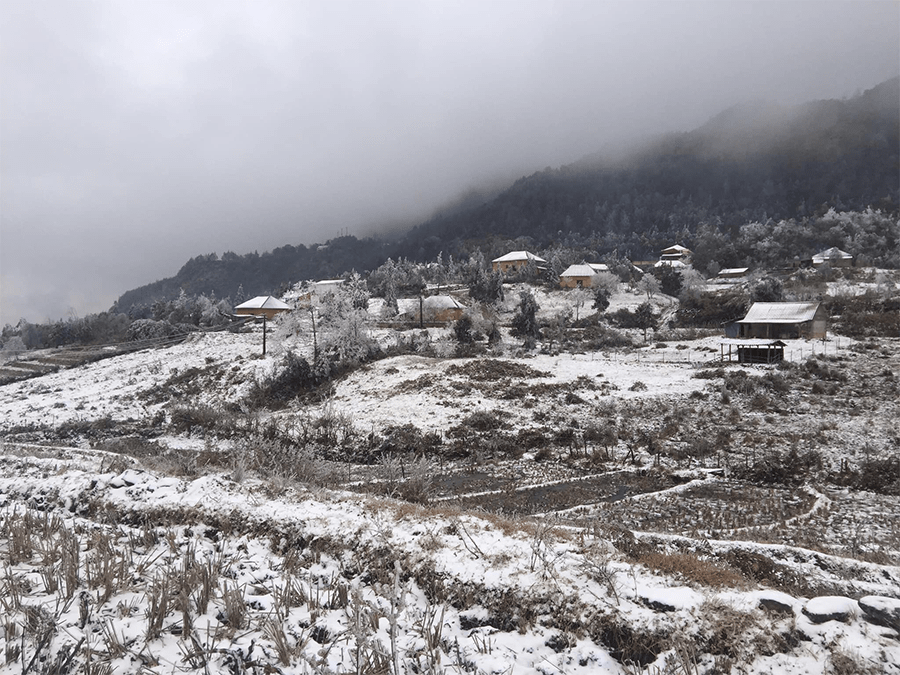
Winter in Northwest Vietnam
The cool air of winter enhances the rich flavors of local dishes. Sitting by a warm hearth, sipping corn wine, and enjoying freshly grilled food is a signature experience that cannot be missed on a culinary journey through Northwest Vietnam.
Each season in the Northwest offers its own culinary identity. However, autumn is considered the best time to fully explore the flavors and food culture of the highlands, when nature, people, and cuisine blend into a vivid and emotional tapestry.
The unique appeal of Northwest Vietnam culinary travel
Northwest cuisine is a true fusion of nature, culture, and highland life. Every dish is not only appealing for its bold flavors but also carries stories of daily life, customs, and traditions of ethnic communities. That is why culinary travel in the Northwest always brings experiences that feel both familiar and refreshingly new.
Ingredients and spices infused with mountain flavors
The first defining feature of Northwest cuisine lies in its natural ingredients. From stream fish, free-range hill chicken, wild bamboo shoots, fern shoots, honey, to forest mushrooms, all are gathered, hunted, or cultivated using traditional methods.
In particular, mac khen pepper and doi seeds are considered the “soul” of highland cuisine. Their distinctive aroma, fragrant, mildly spicy, and gently bitter, adds depth and uniqueness to dishes, setting them apart from food in the lowlands. These spices are commonly used to marinate grilled meats, season stream fish, or serve as dipping condiments for sticky rice, leaving a lasting impression on visitors.
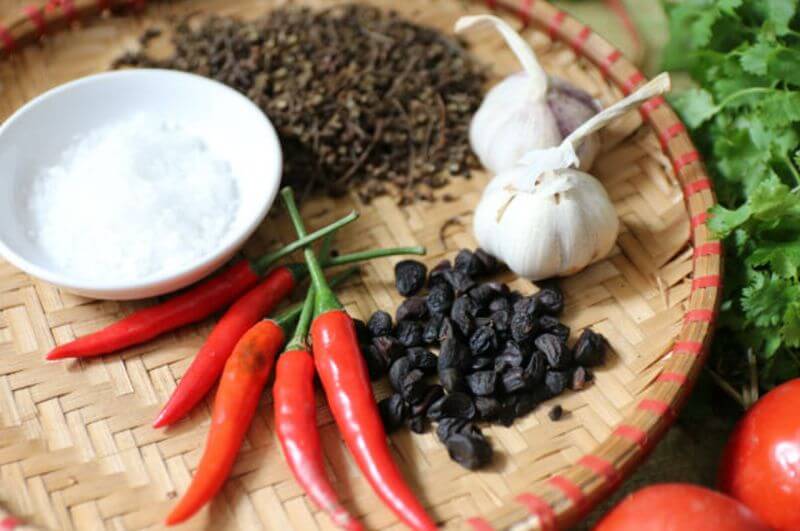
Mac khen pepper and doi seeds – signature spices of Northwest cuisine
Simple yet refined cooking methods
Northwest cuisine is captivating for its rustic yet skillful preparation. Locals often grill, smoke, steam, lam (cook in bamboo tubes), or ferment foods to preserve them and create distinctive flavors. Each dish reflects generations of experience, well suited to mountain life while carrying strong indigenous cultural identity.
A strong sense of communal dining
Culinary travel in the Northwest is also special for the way food is shared. Meals around the hearth, jars of can wine during festivals, or steaming pots of thang co at highland markets are not just about eating well, but about connection. Food becomes a bridge, between guests and hosts, and between villages.
Where nature, people, and culture come together
Northwest cuisine is inseparable from seasons and daily customs. Each season brings its own ingredients: spring offers young bamboo shoots and wild greens; summer brings stream fish and forest fruits; autumn is the season of new glutinous rice for making com; winter is ideal for grilled dishes and smoked meats.
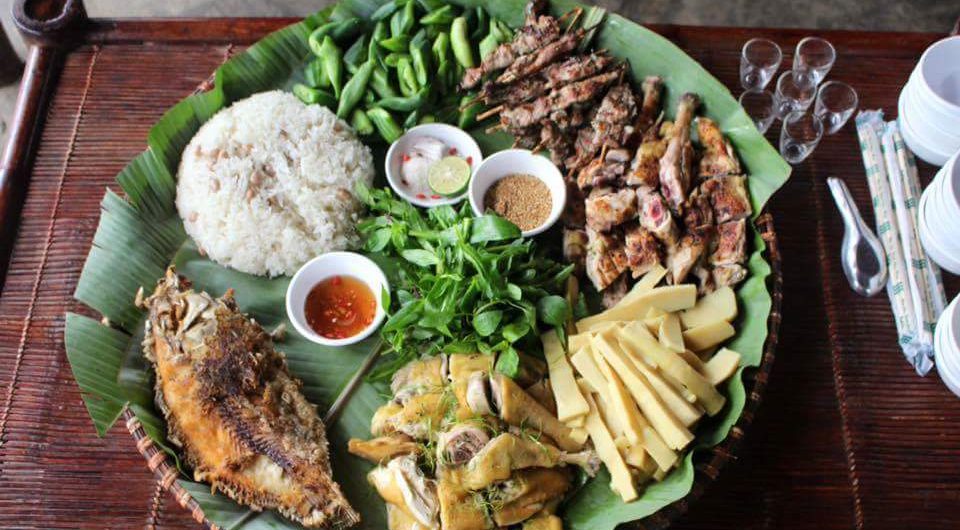
Northwest Culinary Travel: A harmony of nature, people, and culture
This close connection creates the lasting appeal of Northwest culinary travel, where visitors can truly taste the “flavor of the mountains” in every meal.
Read more: Top 10+ Northwest Vietnam ethnic market destinations rich in highland cultural identity
Top 10+ must-try Northwest specialties
Below are 10 iconic Northwest dishes you should not miss when starting your culinary journey through the region. Each dish not only offers a distinctive flavor but also carries stories, customs, and cultural identity unique to each ethnic group.
Thang Co – The symbol of highland markets
Closely associated with highland markets, thang co is considered a symbol of Mong culinary culture. The dish is made from horse, beef, or goat meat and offal, cooked together with dozens of spices such as cardamom, cinnamon, mac khen pepper, and wild chili. As it simmers, the steaming pot releases a rich aroma that spreads throughout the market, creating an unforgettable sensory experience.
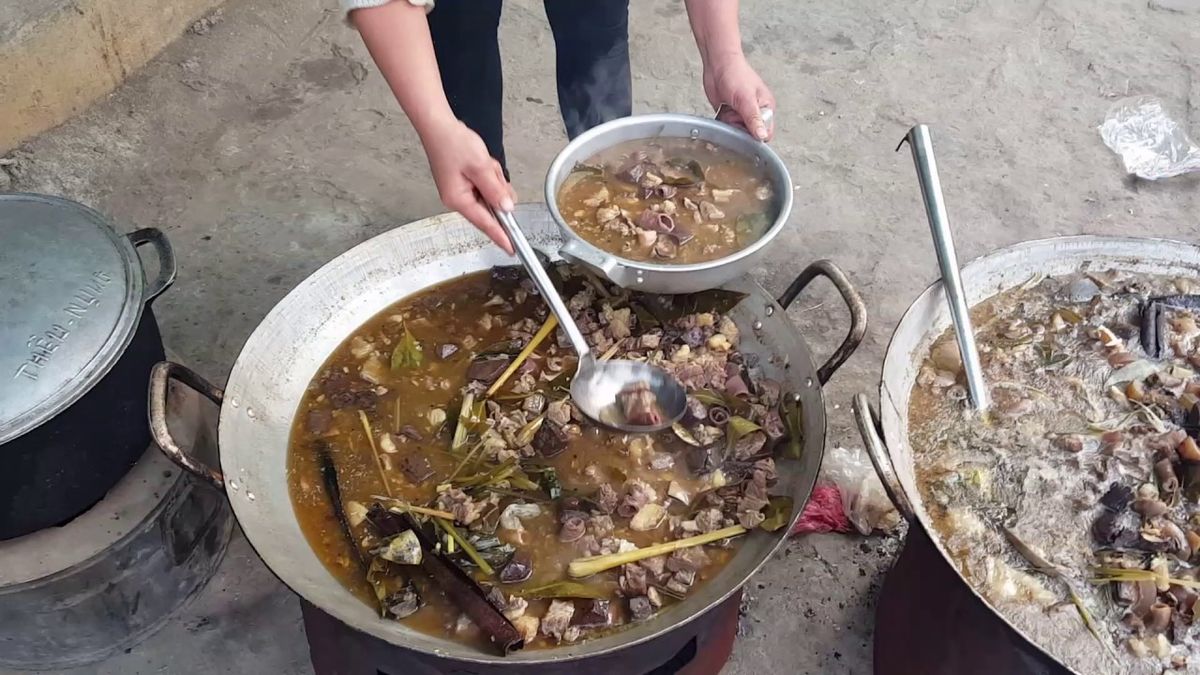
Thang Co – A culinary symbol of Mong culture
For first-time diners, the flavor of thang co may feel a bit “strong.” The richness of the offal combined with the aroma of forest spices can be surprising at first. It’s best to start with a small bowl, enjoyed alongside fresh herbs and cham cheo dipping sauce, to fully appreciate the deep sweetness and warming sensation that lingers on the palate.
Smoked buffalo meat – The smoky essence of the mountains
Smoked buffalo meat vividly reflects the ingenuity of the Thai and Mong ethnic communities in preserving food. The meat is marinated with garlic, ginger, and mac khen pepper, then hung above the kitchen fire and slowly smoked for many days. When eaten, it is simply torn into thin strips and dipped in cham cheo, revealing a mild spiciness, a smoky aroma, and the natural sweetness of the meat, an unmistakable taste of the Northwest highlands.
Pa Pinh Top (Grilled Fish) – The essence of Thai Ethnic cuisine
Pa pỉnh tộp, a traditional dish of the Thai people, is a quintessential representation of Northwest river cuisine. Fresh stream fish is split along the backbone, then marinated with mac khen pepper, aromatic herbs, lemongrass, and ginger before being clamped in bamboo and grilled over hot charcoal. When cooked, the fish turns a beautiful golden color, with crispy skin and firm flesh, releasing an irresistible smoky aroma from the kitchen fire.
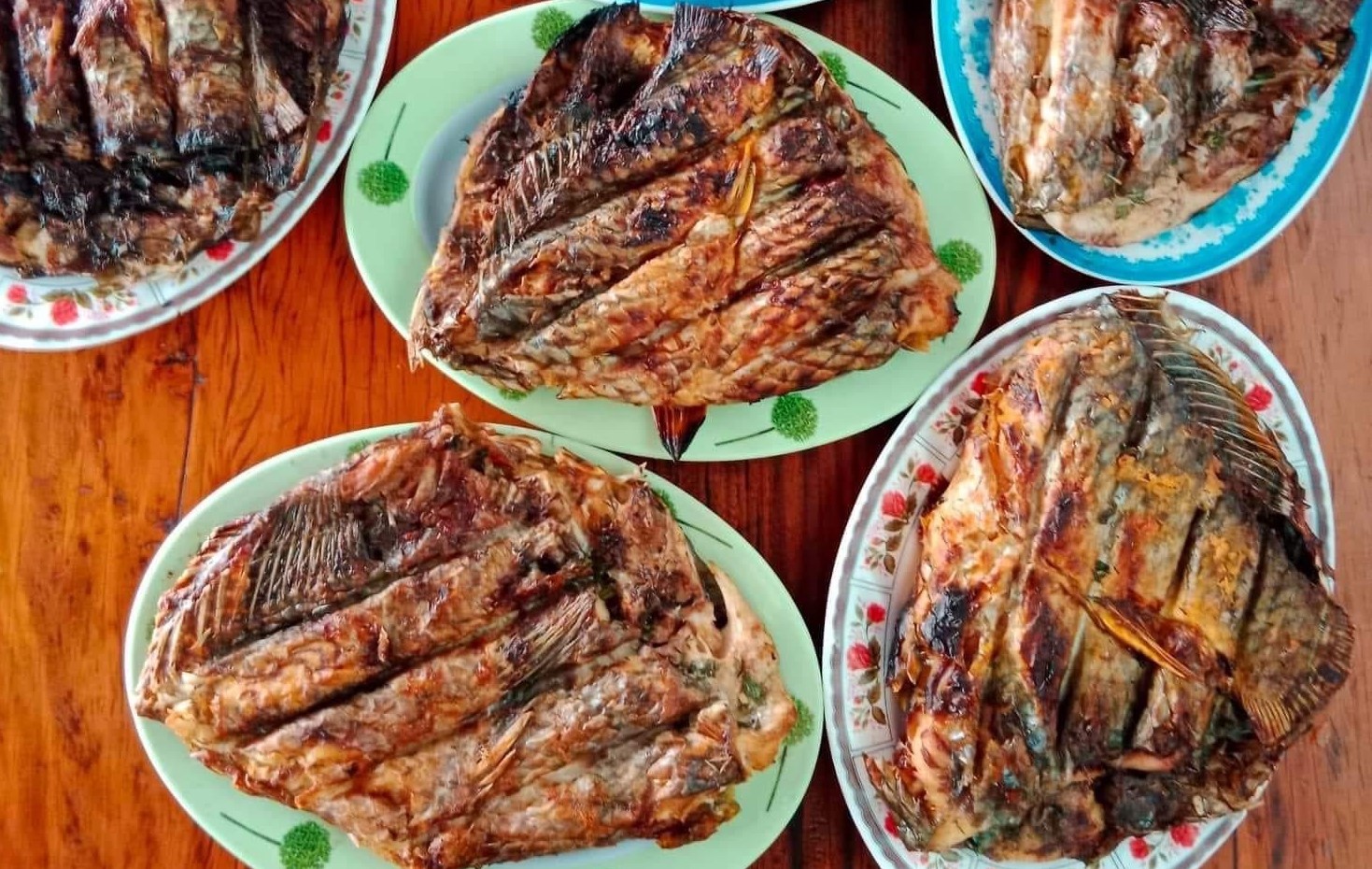
Pa Pinh Top Grilled Fish – The Essence of Thai Ethnic Cuisine (Source: Lao Dong Newspaper)
The flavor of stream fish carries a strong taste of nature, and that is exactly what makes this dish so distinctive. When enjoyed with sticky rice or wild forest vegetables, you can fully appreciate the pure, unspoiled flavors of the Northwest mountains.
Rainbow trout – A modern taste from the highlands
Thanks to the cool climate year-round, regions such as Sapa and Moc Chau are well suited for farming rainbow trout, a relatively new specialty that has become a symbol of modern Northwest cuisine. Rainbow trout has firm flesh, a mild richness, and no fishy taste, making it ideal for dishes such as fresh salads, grilling, or hot pot.
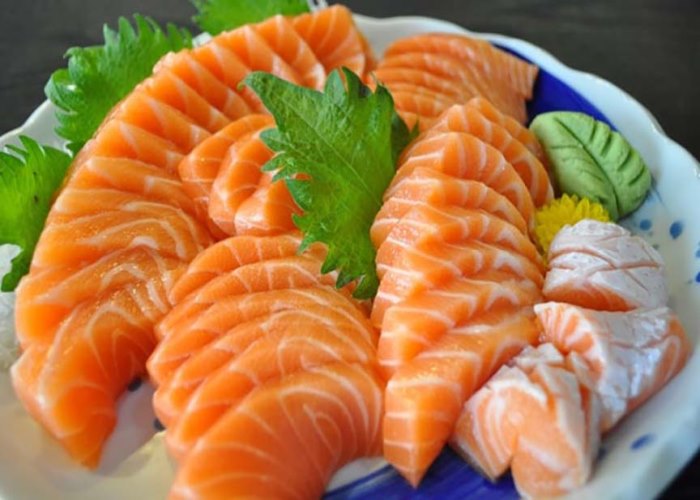
Northwest Rainbow Trout – Perfect for fresh fish salad (Source: Tay Bac TV)
This is considered the most “approachable” dish on the list, suitable for all diners, especially for those who want to explore highland cuisine while still enjoying familiar, easy-to-like flavors.
Wild Bee Larvae – A delicacy from nature
Wild bee larvae reflect the close connection between the people of Northwest Vietnam and nature. The larvae are harvested from wild beehives, then stir-fried with kaffir lime leaves and shallots, or mixed into salads with forest vegetables. When eaten, their rich, nutty texture and gentle sweetness blend with a natural aroma, creating a flavor that may feel unusual at first but is surprisingly enjoyable.
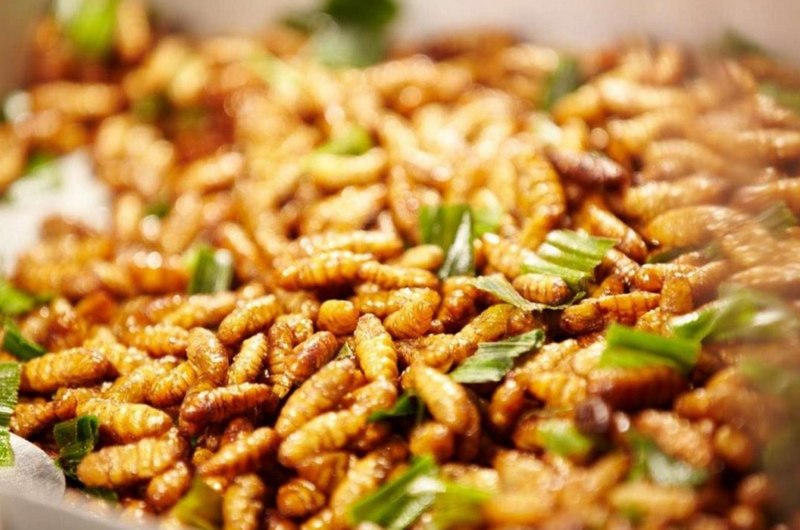
Wild bee larvae stir-fried with lime leaves
However, for those who have never tried insects before, this dish can feel a bit “challenging.” It’s best enjoyed with fresh herbs or dipped in salt mixed with lime juice to soften the flavor and make it more pleasant.
Hill chicken grilled with mắc khén – The bold flavors of Mai Chau’s mountains
Hill chicken grilled with mắc khén is a signature dish of Mai Chau, embodying the essence of Northwest Vietnamese cuisine. The chickens are free-range, raised naturally on hillside farms, resulting in firm, flavorful, and naturally sweet meat. When prepared, the chicken is marinated with mắc khén pepper, lemongrass, chili, and a splash of rice wine, then grilled over charcoal until the skin turns golden and crispy, releasing the distinctive aroma of wood smoke and forest spices.
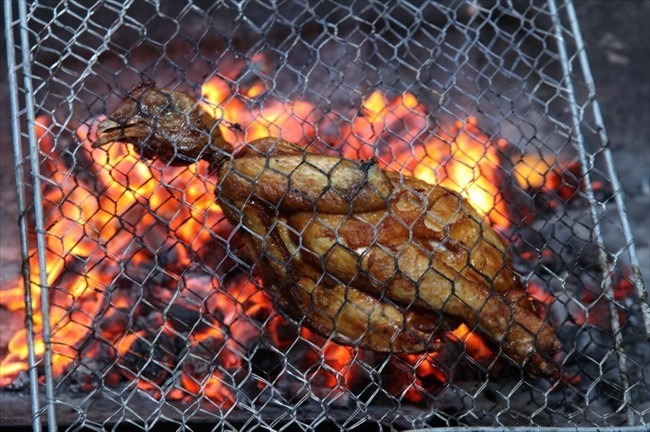
Hill chicken grilled with mắc khén over charcoal
When enjoyed, the mild numbing spiciness of mắc khén blends beautifully with the natural sweetness of the chicken, creating a truly memorable taste. For those not yet familiar with this spice, its aroma can be quite strong, pairing the dish with chẩm chéo dipping sauce or fresh herbs helps balance the flavors.
Black chung cake – A cultural Hue of the Highlands
A traditional delicacy of the Thai ethnic group, black chung cake is not only visually striking but also rich in symbolic meaning during festivals and Lunar New Year celebrations. Its glossy black color comes from ash made from núc nác tree bark or forest leaves, mixed with fragrant upland glutinous rice, mung bean filling, and native pork, creating a dish deeply rooted in highland culture.
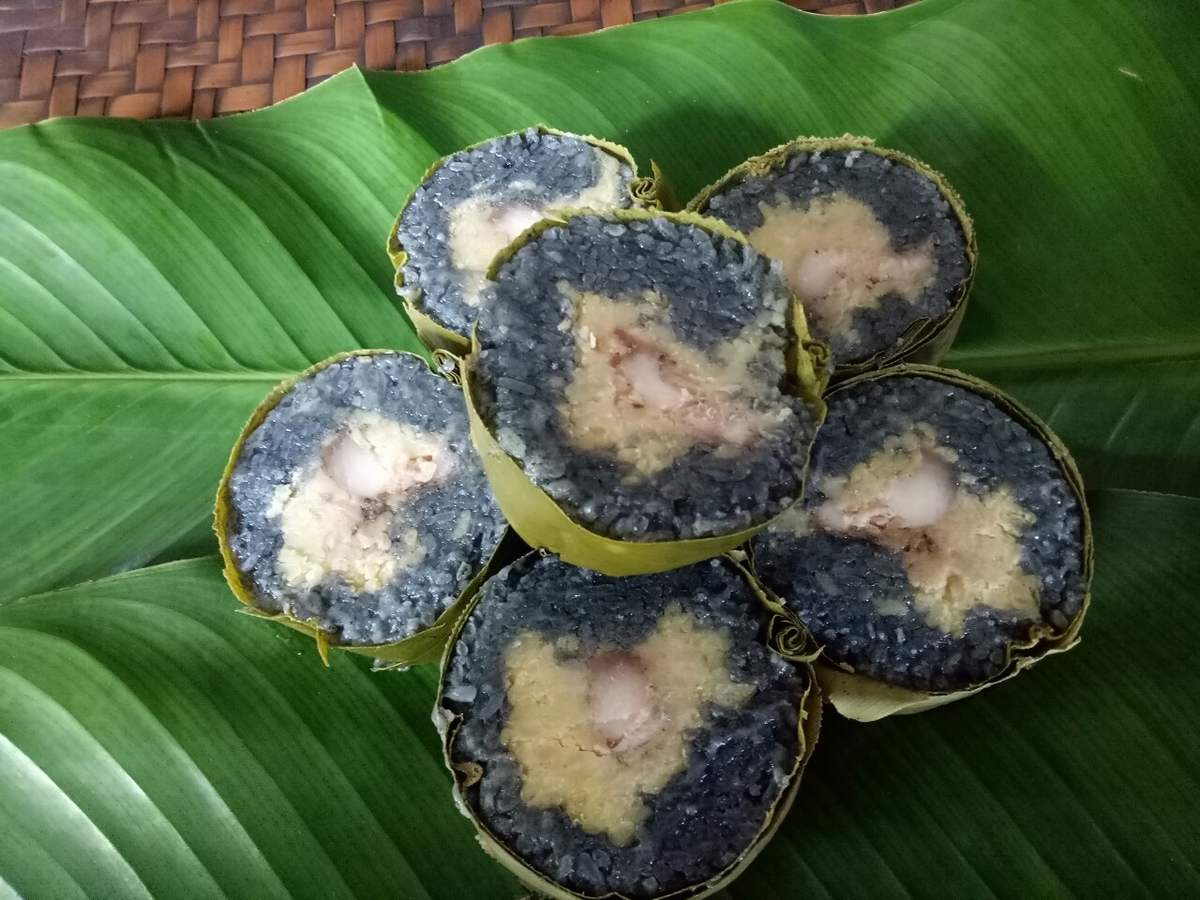
Black Chung Cake – An essential festive dish of the Thai people (Source: Mia)
The flavor of black chung cake is gentle and easy to enjoy, making it an ideal choice for those who want to experience Northwest cuisine but prefer to avoid dishes with strong or intense aromas.
Nậm Pịa – Experiencing the bitter taste of the Thai People
Among the highland specialties, nậm pịa is considered the most “distinctive” dish, both intriguing and challenging to the palate. Its main ingredients include beef (or goat) offal, combined with pịa, a thick, viscous substance derived from the partially digested contents of the animal’s young stomach, slowly simmered with various traditional spices.
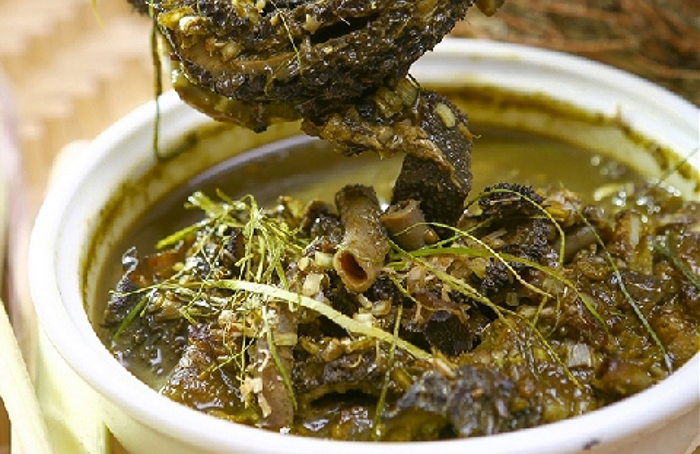
Nậm pịa – The most “special” dish of Northwest Vietnam (Source: PasGo)
Nậm pịa has a mildly bitter, rich flavor with a rather strong aroma, fully expressing the raw and rustic character of Northwest cuisine. If you are trying it for the first time, it is recommended to taste only a small spoonful to experience its unique flavor, a dish that locals often refer to as “food for the brave.”
Mai Chau upland sticky rice – The essence of mountain grains
Upland sticky rice is a simple dish that embodies the very essence of Mai Châu cuisine. The rice is grown on high terraced fields, absorbing the purity of the soil, mountain mist, and climate, resulting in plump, fragrant, and naturally chewy grains. Traditionally, the rice is steamed in wooden baskets to preserve its original aroma and texture, ensuring the grains are evenly cooked without becoming mushy.
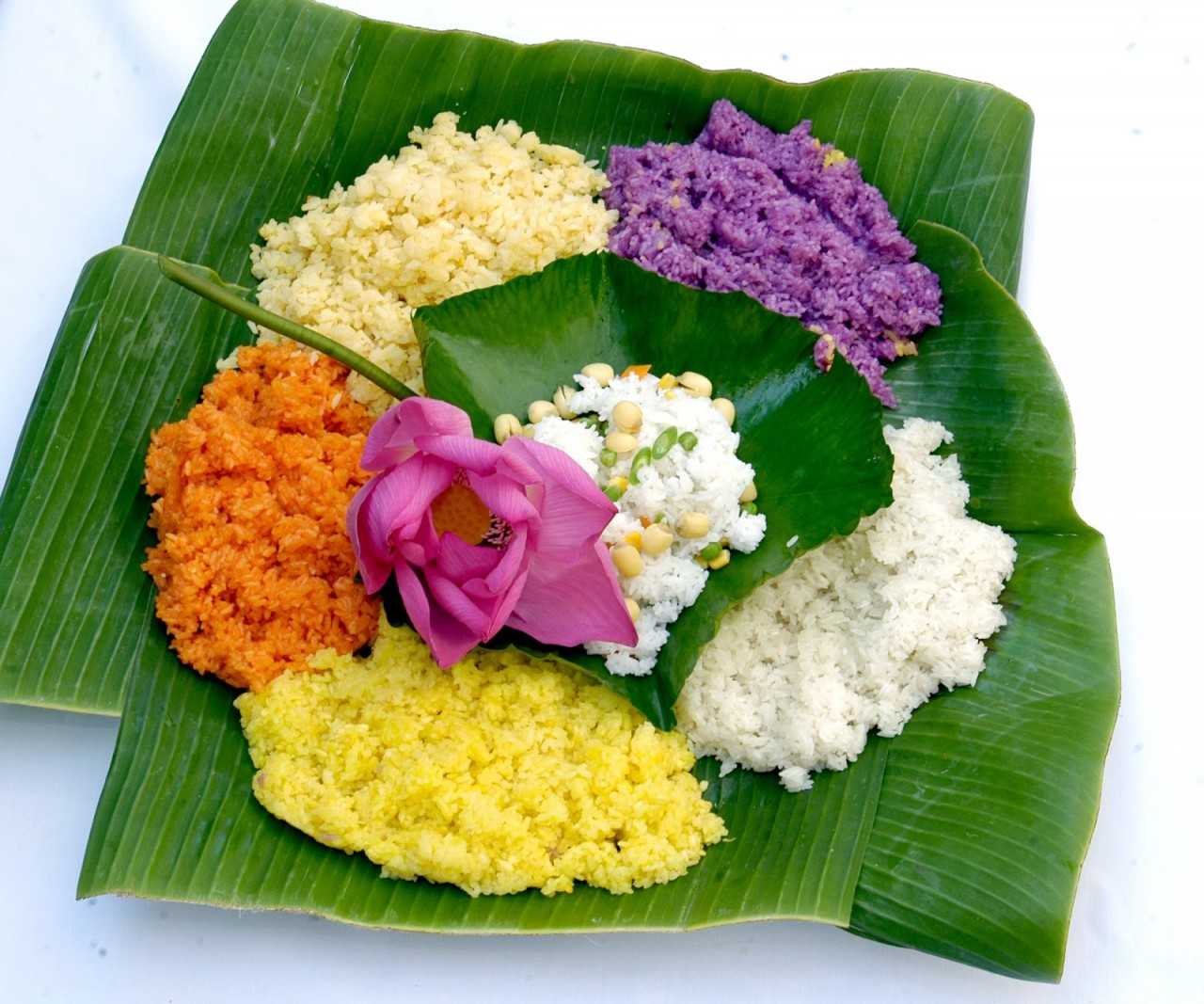
Mai Chau upland sticky rice
The sticky rice can be served plain or colored naturally using plant-based ingredients such as magenta leaves, turmeric, gac fruit, or pandan leaves, creating vibrant hues that symbolize abundance and prosperity. This dish is often enjoyed with grilled pork, stream fish, or chẩm chéo dipping sauce.
Moc Chau Veal Chao – Crispy flavor from the highland plateau
A signature dish of the Thai ethnic group in Mộc Châu, veal chao offers a perfect balance between rich seasoning and the natural tenderness of young veal. Thinly sliced veal is marinated with ginger, lemongrass, and fish sauce, then quickly flash-fried in hot oil. When served hot, the exterior is lightly crispy while the inside remains soft and juicy, releasing an irresistible aroma.
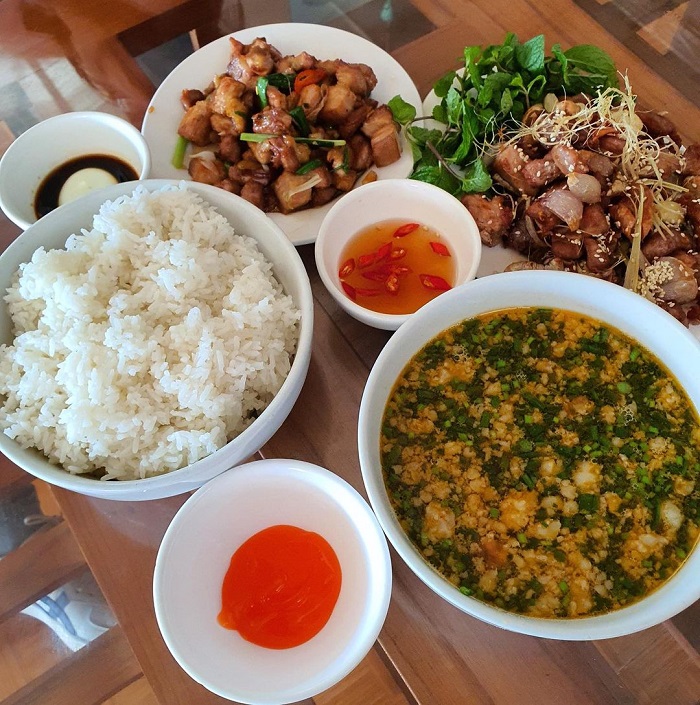
Moc Chau veal chao served with fresh herbs (Source: Lu Hanh Viet Nam)
This is considered the most “beginner-friendly” dish for those new to Northwest Vietnamese cuisine. It is easy to eat, well-balanced in flavor, and especially enjoyable when paired with chẩm chéo dipping sauce or savored alongside a warm cup of local rice wine.
Buffalo skin salad – A flavor that feels both new and familiar
Buffalo skin salad is a distinctive dish that showcases the culinary skill and creativity of the Thai ethnic group. After being carefully cleaned, boiled, and thinly sliced, the buffalo skin is mixed with mắc khén pepper, chili, and aromatic herbs to create a crunchy salad with a mildly spicy kick and an irresistibly fragrant aroma.
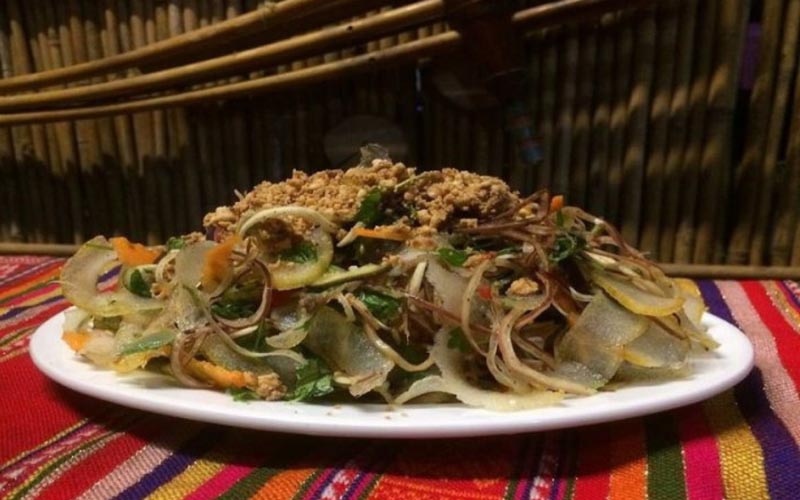
Buffalo skin salad – A specialty of the Thai ethnic group
At first taste, the texture may feel slightly “unusual” due to its distinctive crunchiness and chewiness. However, once you chew slowly, the rich, savory flavor and the aromatic note of mắc khén pepper gradually unfold, creating a surprisingly enjoyable experience.
“Cắp Nách” pork – An essential specialty of the highland region
Concluding the journey of Northwest culinary exploration, cắp nách pork is a dish you simply cannot miss. Made from a small native pig breed raised free-range, the meat is firm, naturally sweet, and low in fat. When grilled or roasted whole, the skin becomes irresistibly crispy, while the meat remains tender and fragrant, infused with the distinctive aroma of mắc khén pepper and wild lemongrass.
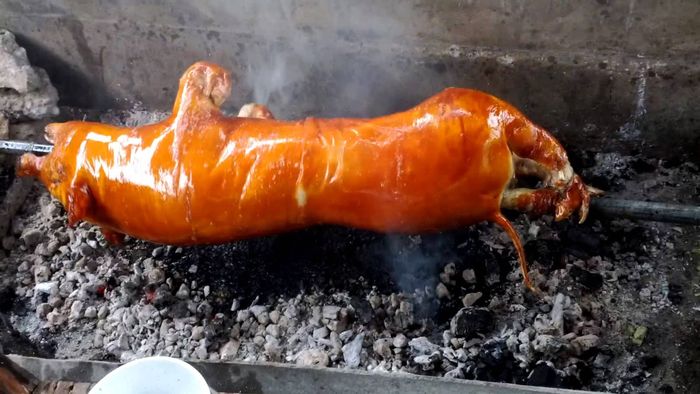
Whole roasted “Cắp Nách” pork (Source: Bazan Travel)
This dish is easy to enjoy and suits a wide range of tastes. It often appears at community feasts, serving as a warm and heartfelt invitation from highland people to visitors from afar.
Experiencing Northwest culinary travel with Mai Chau Hideaway
When embarking on a Northwest Vietnam culinary journey, travelers come not only to “eat good food,” but also to immerse themselves in the atmosphere, stories, and cultural identity of the highlands. At Mai Chau Hideaway Lake Resort, every detail, from architecture and ingredients to service style, is thoughtfully curated to deliver a complete Northwest culinary experience.
Bamboo Restaurant, located within the resort, is an ideal stop for those who appreciate rustic elegance. Built primarily from bamboo and wood, the space stands out with its spiral staircase, abundant natural light, and warm golden tones. Together, these elements create an inviting, relaxing ambiance nestled in the heart of Mai Chau’s mountain landscape.
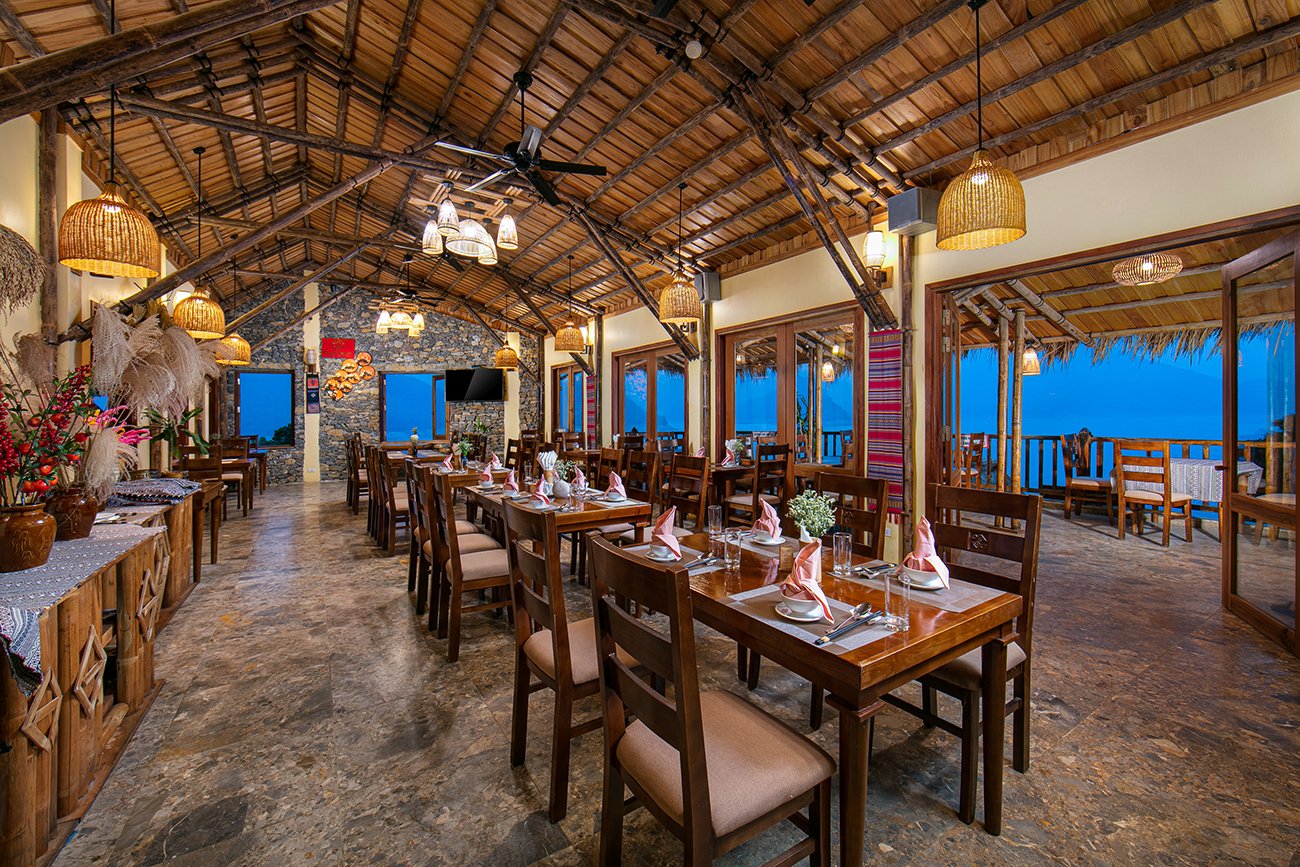
Bamboo Restaurant at Mai Chau Hideaway
Here, the menu is a harmonious blend of highland specialties and modern presentation. Fresh ingredients are carefully selected from local agricultural produce, delivering the authentic flavors of the Northwest mountains. Guests can enjoy familiar regional dishes such as grilled pork, grilled stream fish, and hill chicken grilled with mắc khén pepper, all while relaxing in a peaceful setting overlooking Hoa Binh Lake. Dining at the resort becomes a sensory experience, where delicious food meets stunning natural scenery.
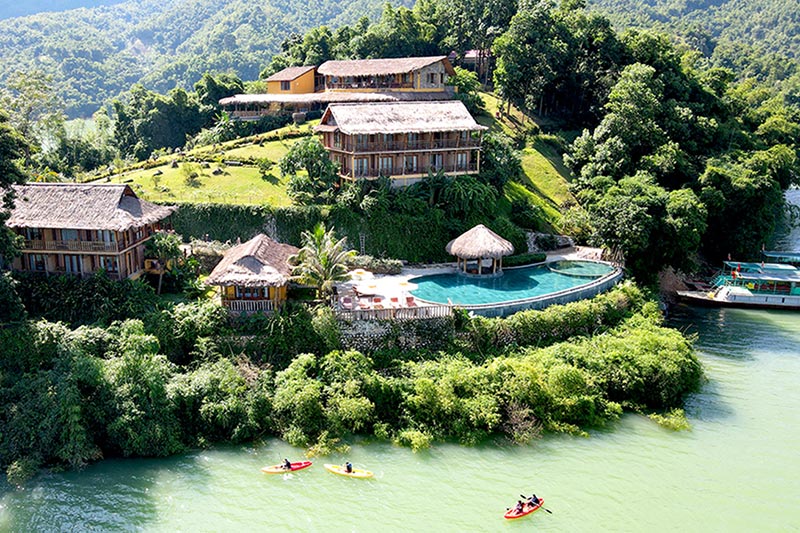
Mai Chau Hideaway Lake Resort overview
In addition to its à la carte offerings, Mai Chau Hideaway regularly curates seasonal or themed Northwest culinary set menus. These thoughtfully designed menus allow guests to explore the essence of regional cuisine within a single meal. Each dish tells a story, of flavor, culture, and tradition, making the journey into Northwest culinary travel more complete and memorable than ever.
Exploring Northwest Vietnam through its cuisine is a wonderful way to reconnect with the pure, original flavors of Vietnam’s mountains and forests. If you are looking for a destination where you can both unwind and savor the finest highland gastronomy, Mai Chau Hideaway is the ideal choice. Contact 0963 406 366 to reserve your stay and begin your own unforgettable Northwest culinary journey.