A white Thai stilt house is the building block of every village in Mai Chau. Walk through Ban Lac or Ban Van and you'll see rows of them, raised on wooden posts, roofs flat against the sky. Most visitors sleep inside one during a Mai Chau trip, but few know what they're actually looking at. This guide covers what sets a white Thai stilt house apart, what happens inside it, and what a stay actually looks like.
What makes a White Thai stilt house different
Several ethnic groups in northern Vietnam build stilt houses, and from a distance they can look alike: wood posts, raised floor, thatched roof. Up close, a white Thai stilt house has a few clear markers.
The roof is the fastest way to identify it. Black Thai stilt houses curve upward and carry a crossed wood ornament called "khau cut," shaped like buffalo horns. A white Thai stilt house skips that detail entirely. The roof stays flat and rectangular, and a wooden railing runs along the veranda instead, used for drying rice and sitting outside in the evening.
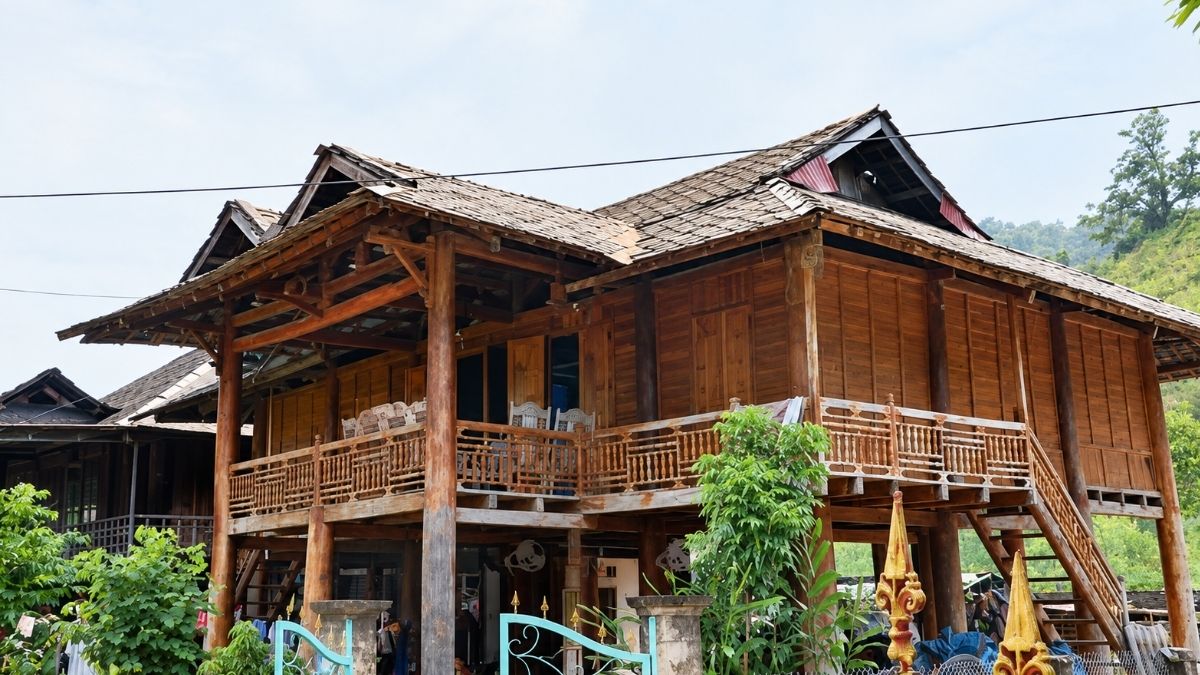
Stilt house of the White Thai people (Source: Tin Tuc Newspaper)
The construction method sets it apart too. Builders use "nghien" or "tau" wood for the main posts, soaked in a pond or stream for one to three years before use. That soak protects the wood from termites without chemicals. Bamboo strips, rattan, and tree bark hold the frame together through carved holes in the posts, so iron nails rarely appear anywhere in a traditional build.
One rule holds across nearly every white Thai stilt house: rooms, doors, and stairs all come in odd numbers. Locals tie odd numbers to growth and continuity. Older villages like Vang Pheo in Lai Chau still follow this closely. The main staircase, "tang quan," traditionally has seven steps, matching the belief that a person carries seven souls. A second staircase, "tang chan," sits near the kitchen and is used mainly by the women of the house. (Source: Bao Nhan Dan)
|
Feature
|
White Thai
|
Black Thai
|
Muong
|
|
Roof
|
Flat, no khau cut
|
Curved, with khau cut
|
Shaped like a turtle shell
|
|
Staircase
|
Main stairs for men, side stairs for women
|
Two offset staircases
|
One or two staircases
|
|
Wood
|
Nghien or tau, soaked 1-3 years
|
Forest wood, palm-leaf roof
|
Jackfruit, ironwood, or neem
|
|
Quick tell
|
Wood railing around the house
|
Khau cut on the roof peak
|
Ridge beam shaped like a spine
|
Inside a traditional White Thai stilt House
A traditional white Thai stilt house runs as one open floor, split into five functional areas. Some old houses stretch to thirteen rooms, enough for several married couples to live under one roof at once.
The altar room
This sits in the most important spot in the house, facing the main staircase. Families believe ancestors watch over the household from here, so the space stays clean and quiet, away from kitchen noise. The zone between the altar and the men's staircase is called "quan," and women rarely enter outside of special occasions. If you're staying as a guest, avoid walking in or taking photos here unless invited. Asking your host early, something like "is there a room I shouldn't go into," usually opens up conversation about the family's history.
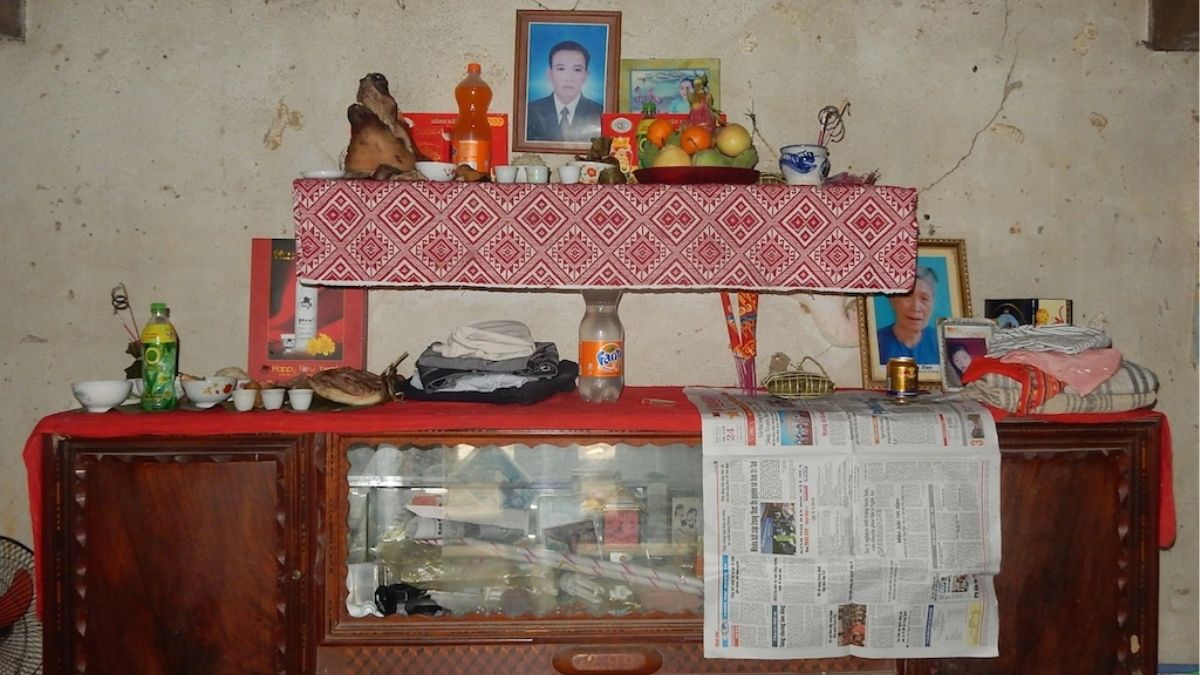
An ancestral altar inside a traditional stilt house of the Thai people in the Northwest (Source: Dan Tri Newspaper)
The kitchen
Most white Thai stilt houses run two fire pits. "Chi phay coc" sits across from the altar and gets used when older men receive guests. "Chi phay pai," in the outer room, handles daily cooking: steamed rice, sticky rice packed into bamboo tubes, corn and meat smoked above the fire to survive the mountain damp. What makes this room memorable isn't the food, though. It's the stories told around it after dark, old family history and Thai folk songs passed down by ear rather than in writing.
Read more: Experience Mai Chau stilt house - Culture, architecture, and staying tips
The middle Room
Families eat, host guests, and celebrate here. Meals go straight onto the floor: grilled fish, free-range chicken, five-color sticky rice, rice wine drunk from a shared jar through long straws. During festivals, the room clears out for xoe dancing and bamboo pole dancing, and guests usually get pulled into the circle rather than left watching from the side.

Visitors join local people in the Xoe dance and the bamboo pole dance (Source: Ministry of Culture, Sports and Tourism)
The space under the house
Built high, between 1.3 and 2.4 meters, to keep the family clear of damp ground, floods, and wild animals. Over time it turned into a workspace. Brocade weaving happens here most often. Women sit at the loom for hours, and kids learn simply by sitting nearby and copying, no formal lessons involved. A woven scarf or bag made here makes a better souvenir than anything factory-produced.
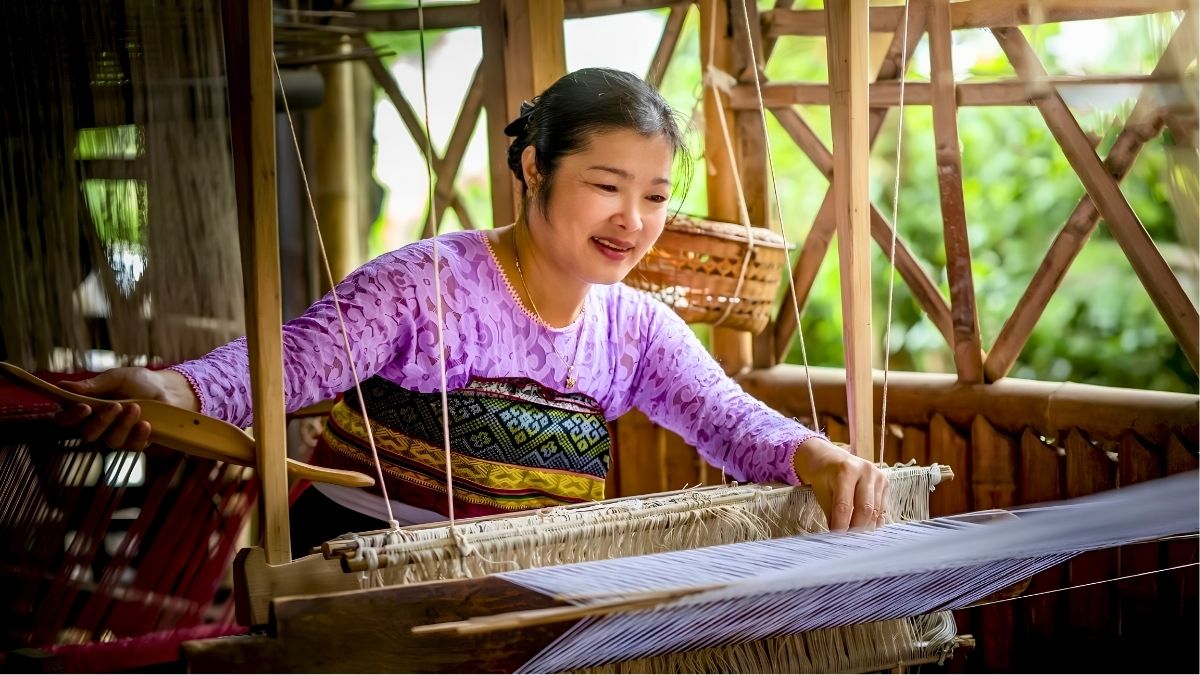
Brocade weaving – a craft closely associated with White Thai women (Source: Vietnam Thinh Vuong)
The upper loft
The most private part of a white Thai stilt house, closed off to most visitors. Family heirlooms stay here: the "com" blouse worn by White Thai women at weddings and Tet, hand-woven textiles passed down through generations, silver jewelry, sometimes old books in Thai script. Rice and corn also get stored up here, right above the kitchen fire, since the smoke and warmth keep pests off the grain. Stay long enough and build some trust with your host, and you might get invited up to see an old "com" and hear who made it.
Ceremonies held inside a White Thai stilt house
|
Ceremony
|
When it happens
|
Where in the house
|
What it means
|
|
Housewarming
|
Right after construction
|
Altar room
|
Asking ancestors for permission to move in
|
|
Wedding
|
Set by the family
|
Altar and middle room
|
Introducing the couple to the ancestors
|
|
Funeral
|
When someone passes away
|
Altar room
|
Offerings and farewell rites; daily routines pause
|
|
Xip Xi festival
|
14th day of the 7th lunar month
|
Altar, then middle room
|
Prayers for health, especially for children
|
Visiting a White Thai stilt house: Five things not to do
- Don't step on the doorsill. It marks a real boundary, not just a piece of wood.
- Don't walk into the "quan" area if you're a woman, unless invited.
- Don't wear a hat or dress too casually near the altar.
- Don't point at things or sit with your back turned toward the altar.
- Don't head up to the loft or open the family's belongings without being asked.
Before stepping inside, watch where your host leaves their shoes and follow their lead, instead of walking straight onto the wood floor in sandals. Every family handles these customs a bit differently. Some hold onto the old rules tightly, others have loosened up as more homes turn into homestays. Watching first and asking before acting keeps you on safe ground either way.
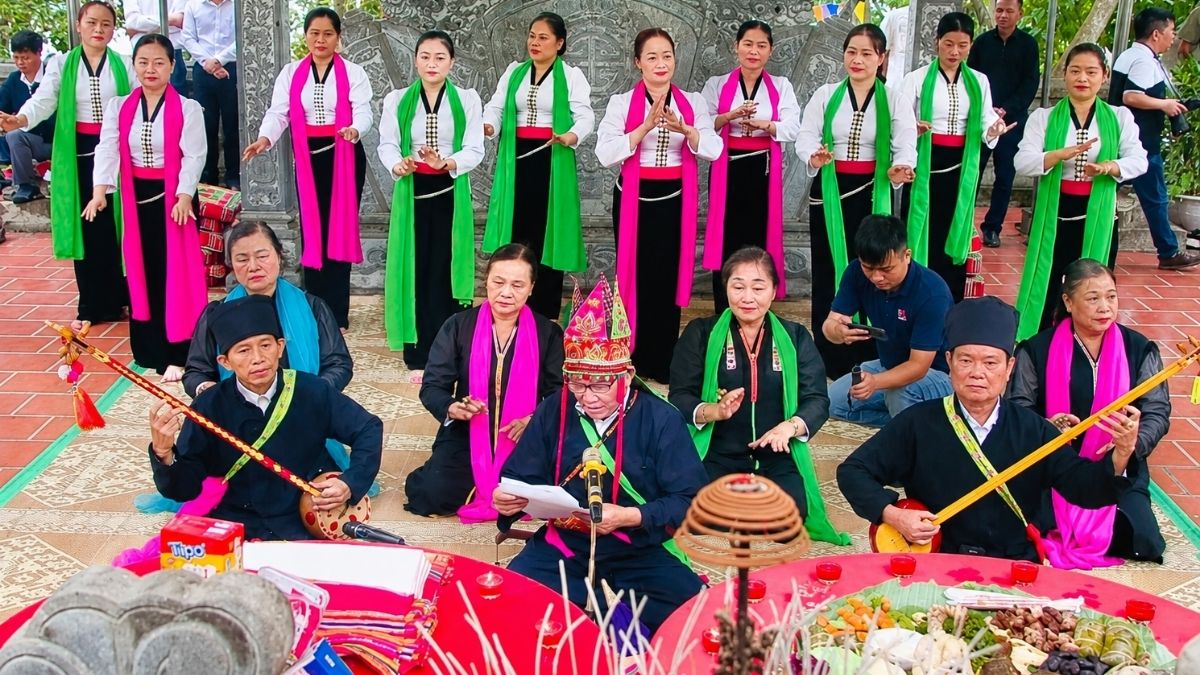
Xip Xi Festival of the White Thai People (Source: Ethnic Groups and Development Newspaper)
What a stay in a White Thai stilt house actually involves
- Sleeping in the house: Guests sleep on mats laid out in a row, often sharing the room with other travelers. A shared stay in Ban Lac runs about 100,000 to 150,000 VND per person per night. A private room or the full house costs more, starting around 700,000 VND depending on size.
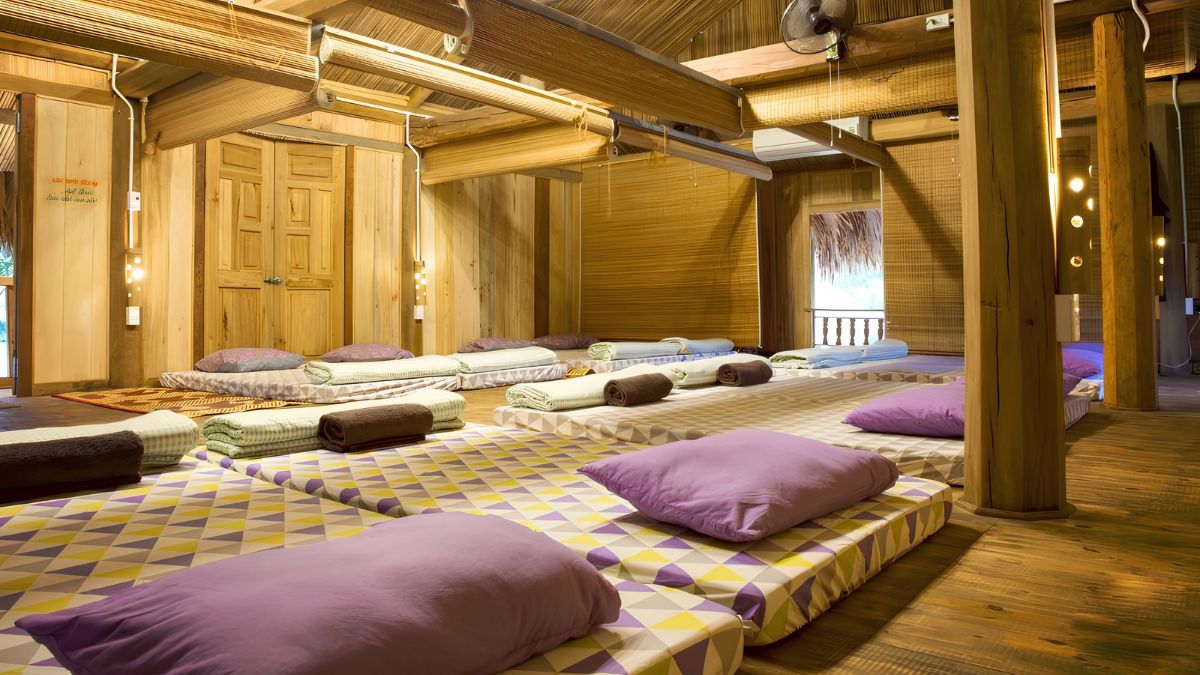
Visitors can sleep on mattresses laid out along the length of the house (Source: Collected)
- Waking up in the valley: Mornings show off Mai Chau at its best. From the veranda you can watch rice fields, limestone hills, and the village starting its day. Visit during harvest, roughly May to June or September to October, and the fields turn gold.
- Eating with a local family: Group meals with a host family usually start around 100,000 VND per person. Rice wine or a music performance often costs extra. Ask ahead whether breakfast is included and whether any surcharges apply, so nothing surprises you later.
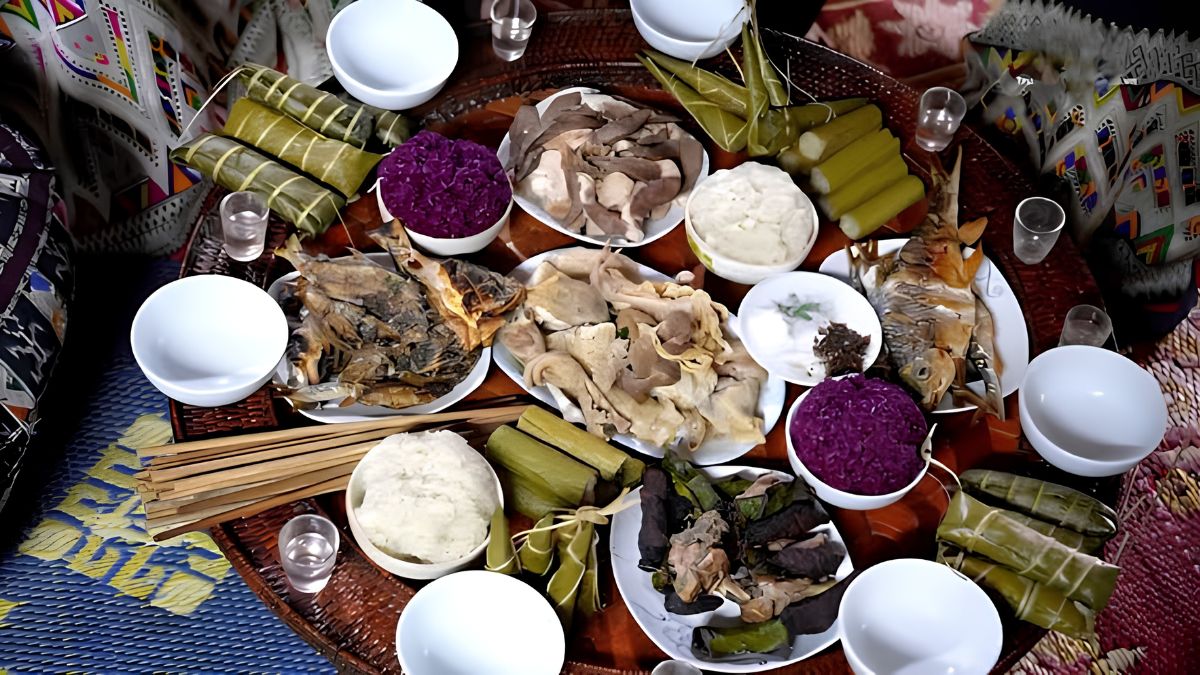
Enjoying a meal in a White Thai stilt house (Source: Van Hoa Newspaper)
- Getting around by bike: Renting a bike to loop through Ban Lac, Ban Van, and the surrounding fields is an easy way to slow down and stop wherever looks interesting, no set schedule needed.
- Visiting without staying overnight: Not ready for a full night in a homestay? You can still spend a few hours walking through a village, stepping inside a white Thai stilt house, and talking with locals. The Thai Museum in Mai Chau is worth a stop first if you want background on the architecture before heading out.
Read more: Mai Chau Rice Terraces: Best Seasons, Villages and Photo Routes for a Peaceful Northern Vietnam Trip
Pair the village experience with something more comfortable
A night in a village stilt house gives you the real thing, but it's not for everyone. Shared sleeping, shared bathrooms, and no air conditioning aren't for every traveler, especially after a long day of hiking or cycling.
Mai Chau Hideaway Lake Resort works well as a base for this kind of trip. The resort's architecture draws directly from the traditional white Thai stilt house, and it sits on Hoa Binh Lake, a short drive from Ban Lac and Ban Van. That setup makes it simple to spend the day in the villages and come back to a proper room by the lake at night.
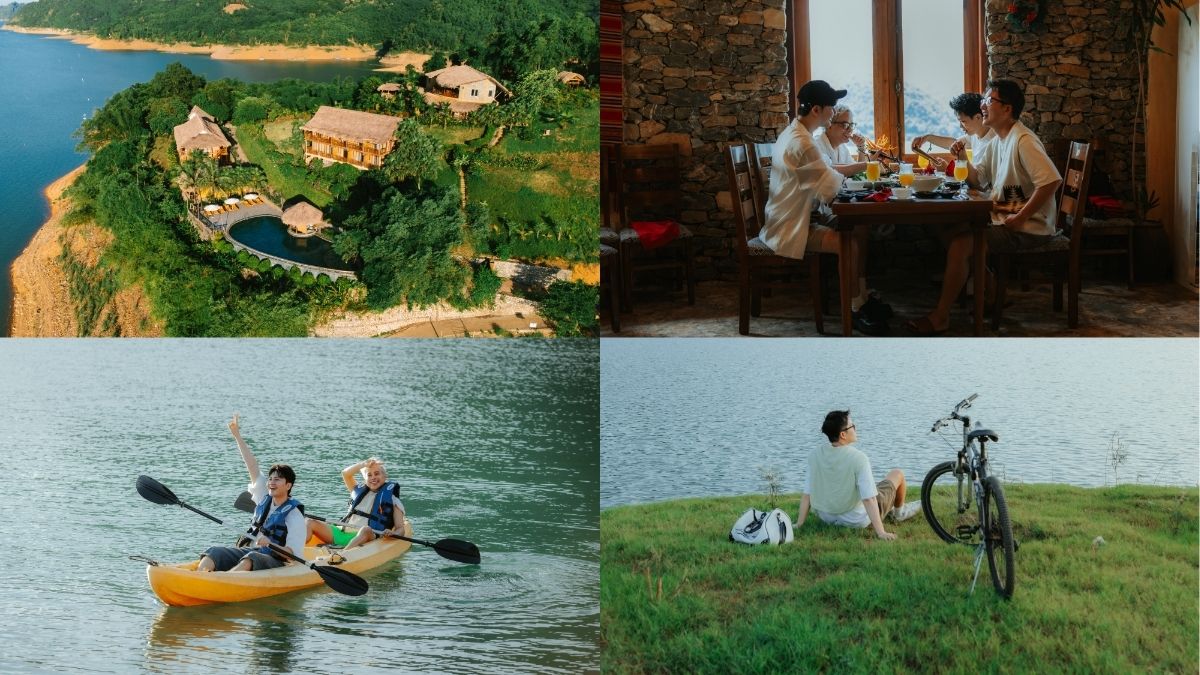
Discover White Thai stilt-house culture with Mai Chau Hideaway Lake Resort
In the evening, the resort runs a Mai Chau Culture Night, with a fire, xoe dancing, and local musicians, close to what you'd find in a village but built into the resort stay. At Bamboo Restaurant, the kitchen uses local ingredients, including fish from Hoa Binh Lake and Muong pork. During the day, guests can join a kayaking trip on the lake or a half-day cycling tour that stops at nearby villages to watch brocade weaving up close.
If you're mapping out a Mai Chau trip and want to fit both a village stay and a few resort days into your schedule, reach out to the resort's team directly. Booking ahead also helps you lock in a room with a lake view, especially during busy months.
FAQ about White Thai stilt houses
What's the fastest way to tell a white Thai stilt house from a Black Thai one?
Look at the roof. A white Thai stilt house has a flat gable roof. Black Thai houses have a curved roof shaped like a turtle shell, with the "khau cut" ornament on top.
Should I book a white Thai stilt house stay in Mai Chau ahead of time?
Yes, especially on weekends, during harvest season, or around holidays. Each family homestay has limited rooms and fills up fast.
Is a shared stay in a white Thai stilt house expensive?
Not really. Shared sleeping runs about 100,000 to 150,000 VND per person per night. A private room or the full house costs more depending on size and amenities.
When does the Xip Xi festival happen?
On the 14th day of the 7th lunar month each year, a day specific to White Thai families for honoring ancestors and praying for health.
Can I get the white Thai stilt house experience and still stay somewhere comfortable?
Yes. Many travelers stay at Mai Chau Hideaway Lake Resort and set aside part of the trip for Ban Lac or Ban Van to get the full stilt house experience.