Thung Nai Hoa Binh is the small port commune in Cao Phong district where most boat trips onto Hoa Binh Lake begin. It sits about 25 km from Hoa Binh city and roughly 95–100 km, or a two-hour drive, from Hanoi. If you have seen photos of limestone islets rising out of calm green water, a stilted boat station, and a red-roofed temple tucked into a cliff, there is a good chance those photos were taken from a boat that left Thung Nai port.
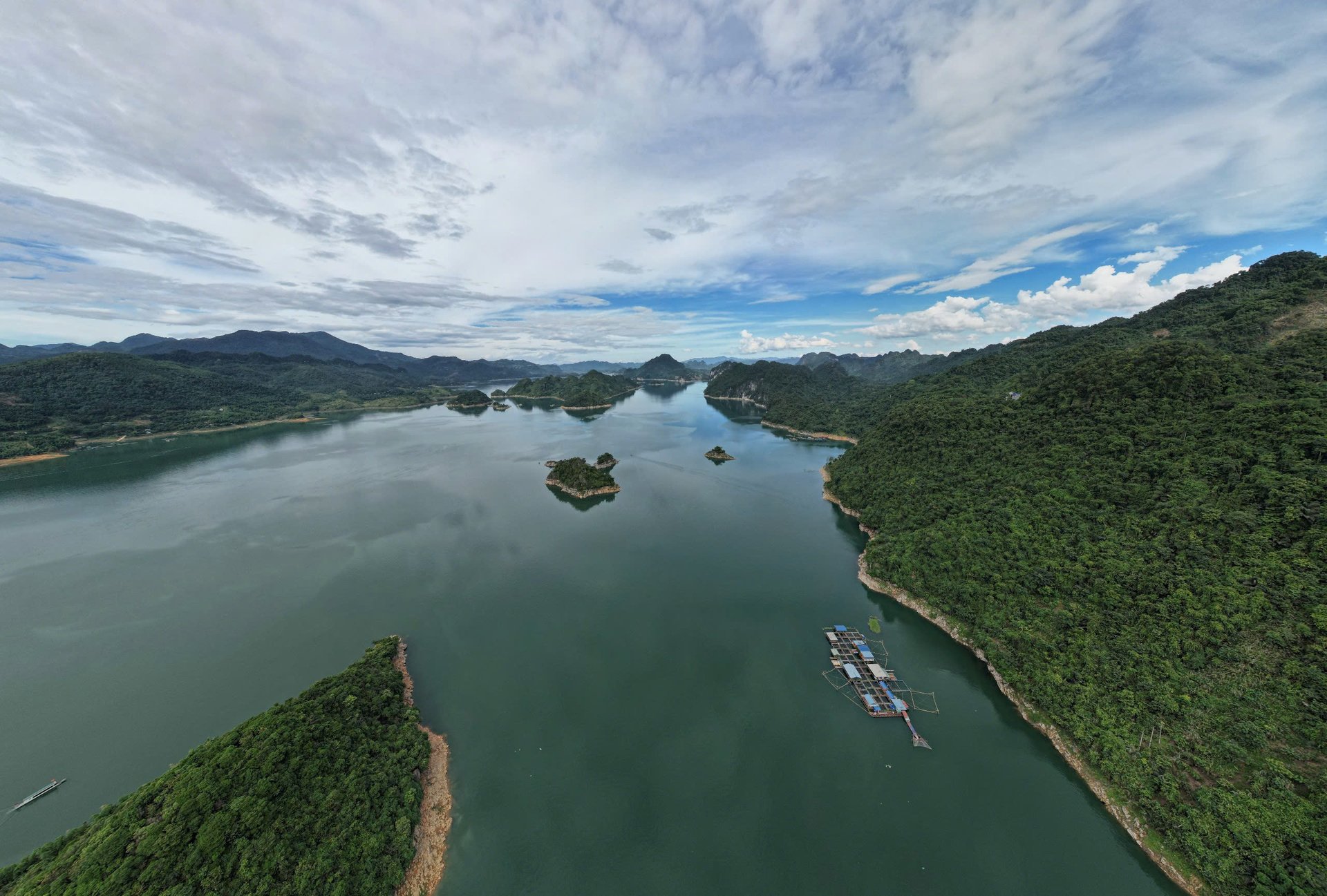
Thung Nai port on Hoa Binh Lake with tourist boats and limestone islands (Source: Collected)
What Is Thung Nai and Why Is It Hoa Binh Lake's Busiest Boat Port?
Thung Nai is a commune that sits directly on the shore of the Hoa Binh Hydropower Reservoir, better known to travelers simply as Hoa Binh Lake. Before the Da River was dammed to build the Hoa Binh hydropower plant, this area was a mountain valley. Once the reservoir filled, the valley became a lake dotted with limestone karst peaks that now look like small islands, which is why some travelers nickname the area a "Ha Long Bay on land."
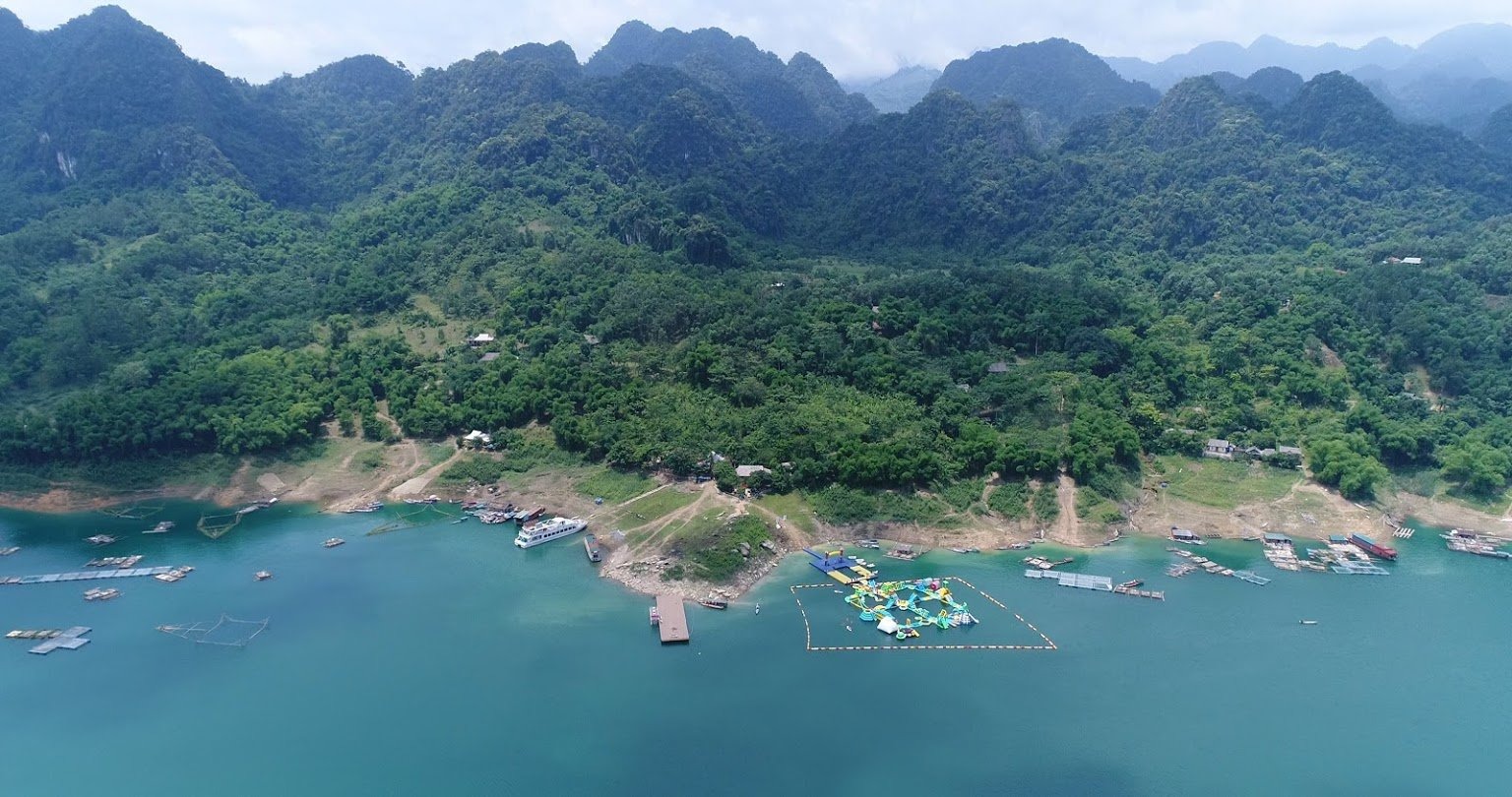
Ha Long Bay on land (Source: Collected)
The port itself can handle a large number of boats at once, from small family-sized wooden boats to larger vessels that carry 30 to 50 passengers, plus a few multi-day cruise boats with sleeping cabins on board. There is a car park, a small cluster of food stalls, and staff who can arrange a boat on the spot, although booking ahead through a tour operator or your accommodation is more reliable during weekends and holidays.
What makes Thung Nai the default starting point for most Hoa Binh Lake itineraries is simple geography: it is the closest developed port to Hanoi with the widest choice of boats and the most established tour infrastructure. Two other ports exist on the same lake - Bich Ha port near Hoa Binh city, and Ngoi Hoa port further west - but neither has the same volume of daily departures as Thung Nai.
Read more: Hoa Binh Lake Travel Guide: One-Day All-Inclusive Tour From Hanoi
Den Thac Bo: The Legendary Temple That Draws Most Boats Out of Thung Nai
The single biggest reason travelers head to Thung Nai is Den Thac Bo, a temple complex dedicated to the Lady of Thac Bo (Ba Chua Thac Bo), a folk goddess believed to protect boatmen and traders who once navigated the dangerous Da River rapids before the dam was built. The temple sits partway up a hillside overlooking the lake and is reached by a short flight of stone steps directly from a boat landing.
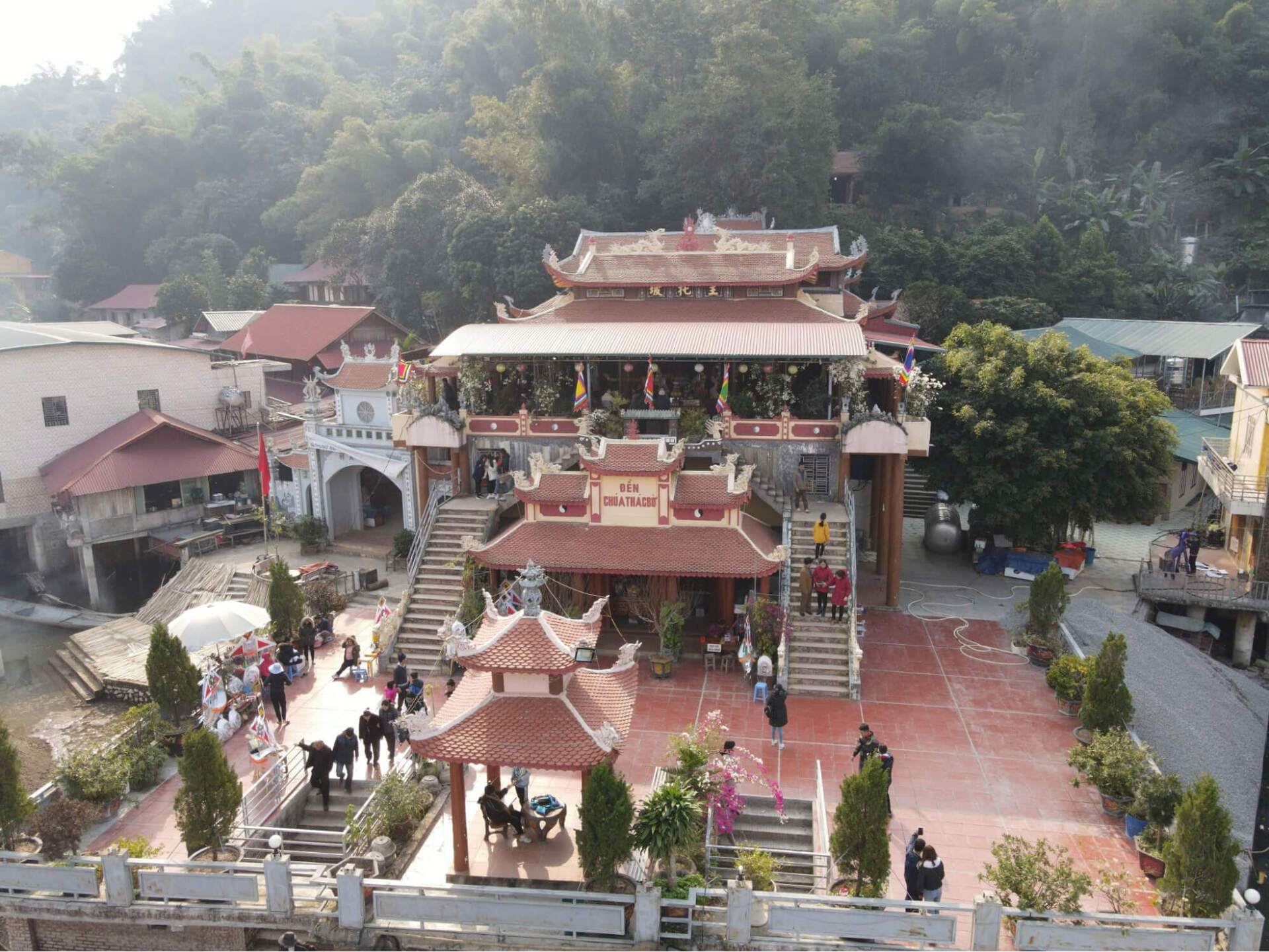
Den Thac Bo temple on a hillside above Hoa Binh Lake (Source: Collected)
Local legend holds that the goddess appeared to guide soldiers and traders safely through the river's rapids centuries ago, and fishermen still stop to pray for safe passage before long trips on the reservoir. For visitors, the appeal is less about religious ritual and more about atmosphere: incense smoke drifting over red lacquered pillars, boats bobbing at the jetty below, and a sweeping view back across the water toward the karst peaks.
Close to the temple is Thac Bo Cave, a limestone cave with stalactite formations that boats commonly combine into the same stop. Most standard Thung Nai boat itineraries pair the temple and the cave together, so budget around 45 minutes to an hour for this stop alone, longer if you visit during the Thac Bo Temple Festival in the first lunar month, when the site becomes considerably busier with domestic pilgrims.
Coconut Island and Other Stops You Can Reach From Thung Nai Port
Once you are on the water, Thung Nai boats typically string together a small loop of stops rather than a single destination. The most requested combination includes the temple and cave above, plus a handful of scenic or cultural add-ons depending on how much time you have.
Common stops reachable from Thung Nai include:
- Dua (Coconut) Island: a small islet popular for photos, named for the palm trees that once grew there.
- Thac Bo Temple and Cave: the spiritual and scenic centerpiece of most itineraries.
- Da Bia village: a Muong ethnic settlement in Tien Phong commune, Da Bac district, reachable by the same boats that serve Thung Nai and nearby Bich Ha port.
- Ba Khan and villages further along the lake: for travelers combining a Thung Nai boat trip with an onward overnight stay in Mai Chau or Suoi Lon.
Boatmen will often serve simple lakeside meals on board for larger groups, typically featuring bamboo-shoot chicken and grilled river fish, so you can treat a Thung Nai boat trip as a half-day or full-day outing rather than a quick photo stop. Independent travelers who prefer more control over the pace can also hire a small two-person "thuyen tom" fishing boat for a faster, more adventurous route through narrower channels that the larger tourist boats cannot enter.
If your itinerary already includes a stay near Mai Chau, it is worth reading about the villages hidden deeper inside the lake before you decide which stops to prioritize from Thung Nai.
Read more: Ban Ngoi Village: The Muong Hamlet Hiding Inside Hoa Binh Lake
How to Get From Hanoi to Thung Nai
Getting to Thung Nai from central Hanoi takes roughly two hours by car in normal traffic, covering about 95–100 km. The most common route follows the Hoa Lac – Hoa Binh expressway to Hoa Binh city, then continues along local road 435 (also referenced as Tay Tien road in some older guides) for the final 20–25 km stretch down to the port.
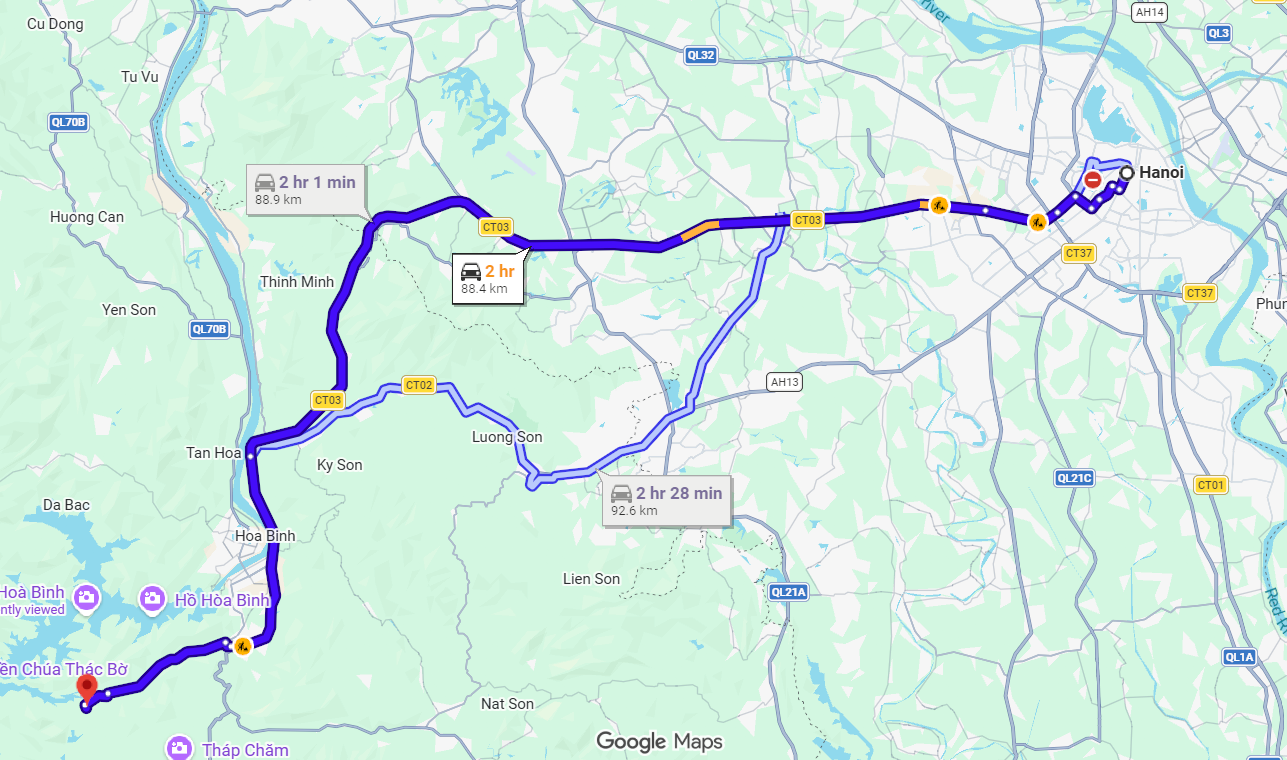
Map show from Ha Noi to Thung Nai
Self-driving is possible if you are comfortable with mountain roads that narrow and wind noticeably in the final approach to the lake. Motorbike travelers frequently combine this route with a stop in Hoa Binh city, then continue on toward the port, sometimes loading their bikes onto the boat itself to continue the journey by water. For most international visitors, though, a private car with driver or a seat on a group tour departing from Hanoi is the simplest option, since parking, boat coordination, and timing are handled for you.
Three practical points are worth knowing before you set out. First, there is no train or public bus service running directly to Thung Nai port, so private transport is effectively required. Second, boats generally stop accepting new departures by mid-to-late afternoon, so an early start from Hanoi - ideally before 7:30 a.m.
It gives you a full day on the water rather than a rushed two-hour loop. Third, mobile signal is patchy once you are on the lake itself, so download offline maps or confirm your boat pickup time and location before leaving cell coverage.
Thung Nai Port vs Ngoi Hoa Port: Which One Do You Actually Need?
This is the part most travel guides skip, and it matters if your trip includes a stay at Mai Chau Hideaway Lake Resort. Thung Nai is the largest and most heavily marketed port on Hoa Binh Lake, so it naturally dominates search results and tour listings. However, it is not the port that serves the resort itself. Travelers heading to Mai Chau Hideaway typically depart from Ngoi Hoa port instead, which sits closer to Suoi Lon village on the western side of the lake, or arrive by road directly to the resort.
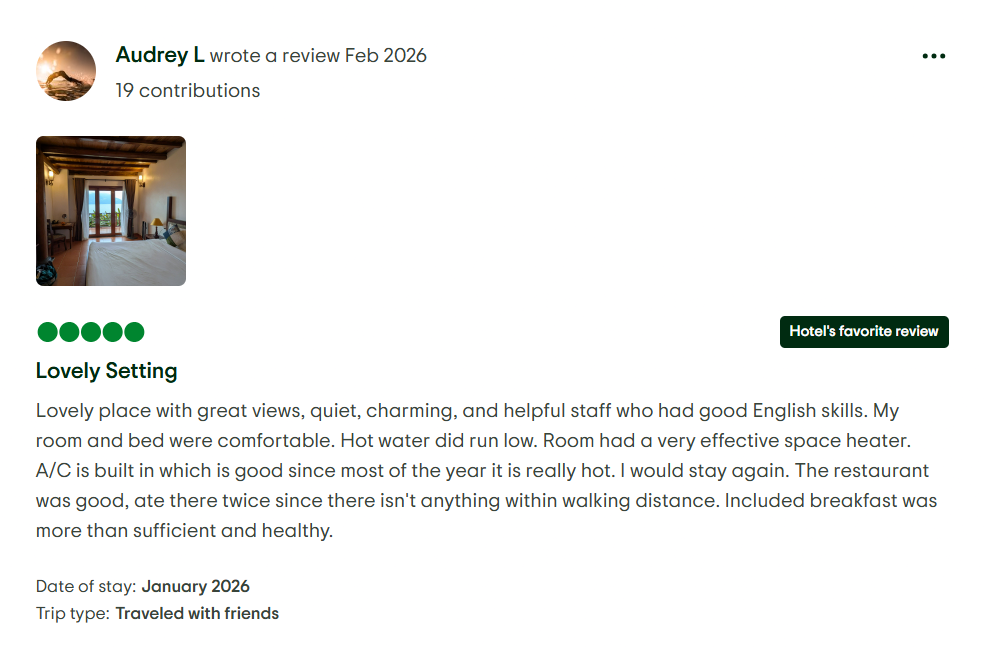
Review of visitor on Triadvisor
One international Tripadvisor reviewer of Mai Chau Hideaway noted this exact point after visiting: the journey to the resort begins from Ngoi Hoa port rather than Thung Nai, even though Thung Nai remains the main departure hub for other sightseeing routes around the lake. That distinction is easy to miss when you are researching "Hoa Binh Lake boat tour" and Thung Nai comes up first in almost every result.
Here is a simple side-by-side comparison to help you plan the right route depending on your final destination:
|
Port
|
Distance from Hanoi
|
Best for
|
Connects to
|
|
Thung Nai
|
~95–100 km, ~2 hrs
|
Day-trip sightseeing loops, Thac Bo temple/cave, Coconut Island
|
Bai Sang boat station toward Mai Chau district
|
|
Bich Ha (Hoa Binh city)
|
~75 km, ~1.5 hrs
|
Shorter lake excursions, Da Bia village
|
Same lake network as Thung Nai
|
|
Ngoi Hoa
|
~120–140 km, ~2.5–3 hrs
|
Direct access to Suoi Lon village and Mai Chau Hideaway
|
Mai Chau Hideaway Lake Resort
|
If a Thung Nai boat loop is on your itinerary and you also plan to stay at Mai Chau Hideaway, the resort's own tour team can arrange the connecting transfer so you experience both the classic Thung Nai sightseeing route and a direct, unhurried arrival at the resort rather than trying to piece the logistics together yourself.
Explore Mai Chau Hideaway's guided boat and village tours on Hoa Binh Lake to see how a Thung Nai excursion can be combined with your stay.
Boat Types, Group Sizes and Price Ranges at Thung Nai
Boats at Thung Nai range from small family boats to larger group vessels, and pricing depends heavily on boat size, duration, and whether meals are included. As a rough guide for planning purposes:
- Shared group tours from Hanoi, including transport, guide and a boat seat, generally start around 800,000–1,200,000 VND per person for a one-day itinerary.
- Private boat rental, useful for families or small groups who want to set their own pace, typically runs 500,000–1,500,000 VND depending on boat size and hours on the water.
- Larger vessels (30–50 seats) with onboard dining are usually booked through tour operators rather than walk-up at the port, especially in high season.
- Small "thuyen tom" fishing boats, which carry only two passengers, cost less per trip but are best suited to travelers who want a faster, more adventurous ride rather than a relaxed sightseeing cruise.
Prices shift with fuel costs and season, so treat these as planning ranges rather than fixed quotes, and confirm the final price with your boatman or tour operator before departure. Weekends and Vietnamese public holidays see noticeably more boat traffic and higher demand for the larger vessels, so booking a day or two ahead is worth the small effort if your travel dates fall on a weekend.
Best Time of Year and What to Pack for a Thung Nai Boat Trip
Hoa Binh Lake is a year-round destination, but conditions on the water change with the seasons. The dry season, roughly October through April, offers the clearest skies and calmest water, which makes for the best photography conditions and the most comfortable boat rides.
Spring, particularly around the Thac Bo Temple Festival in the first lunar month, brings larger crowds of domestic visitors heading to the temple, so expect busier boats and longer waits at the jetty during that window.
Summer months bring hot, humid weather and occasional sudden rain showers, which can shorten or delay boat trips, though the lake itself stays scenic and the heat is part of why many travelers head out onto the water in the first place.
Water levels also fluctuate seasonally with hydropower operations, which can slightly change how close boats can get to certain islets or cave entrances, so a boat crew's local knowledge matters more here than a fixed printed itinerary.
For packing, bring a hat and sunscreen even on cloudy days, since glare off the water is stronger than it looks. A light rain jacket is useful outside the driest months, closed-toe shoes make the stone steps up to Thac Bo Temple easier to manage, and a dry bag or waterproof phone pouch is worth carrying if you plan to switch between boats or take a smaller fishing boat into narrower channels.
Where to Stay Near Thung Nai: Basic Homestays vs a Full Lake Resort Experience
Accommodation directly around Thung Nai port itself tends toward simple guesthouses and homestays built for overnight boat-trip stopovers rather than longer stays. That works well if Thung Nai is a one-night stop on a wider northern Vietnam loop, but travelers looking for a more comfortable, multi-night base on Hoa Binh Lake generally continue further along the lake toward Suoi Lon village, where Mai Chau Hideaway Lake Resort sits.
Mai Chau Hideaway is set apart from most Hoa Binh Lake accommodation by its location alone: it occupies a peninsula that extends directly into the lake, surrounded by water on nearly every side, rather than simply offering a lake view from the shore.
.png "Mai Chau Hideaway Resort’s accommodation")
Mai Chau Hideaway Resort’s accommodation
The resort's 32 rooms are built across five separate zones, each named after one of the five ethnic groups of Vietnam's northwest - Thai, Muong, Dao, Mong and a general Northwest zone - with architecture inspired by the traditional wooden stilt houses of the region, reworked in a rustic 1960s–70s style.
A few details make the resort easy to recognize once you are there. The reception area at Bamboo Restaurant is built around a distinctive twisting bamboo staircase, warmly lit and often used as a photo point by guests arriving from the lake. Just below it, a natural stone infinity pool sits at the water's edge, positioned so the pool water appears to blend directly into Hoa Binh Lake itself.
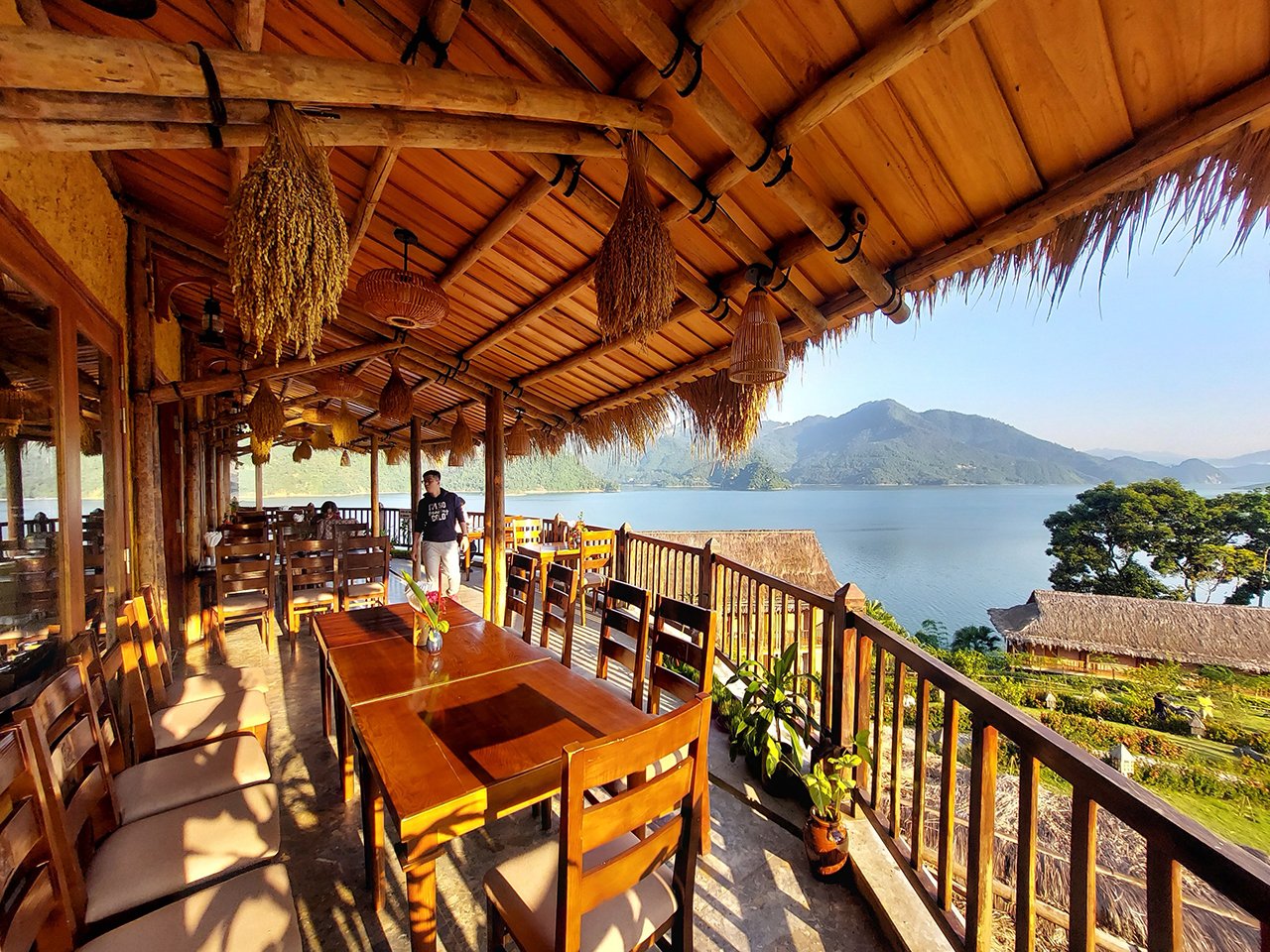
A corner at Mai Chau Hideaway Resort
The kitchen focuses on Northwest Vietnamese cooking, including dishes such as beef in wild mushroom and mac khen pepper sauce and Northwest-style green papaya salad, alongside evening cultural performances of Thai, Muong and Dao folk dance, including the well-known Flower Dance (mua xoe hoa).
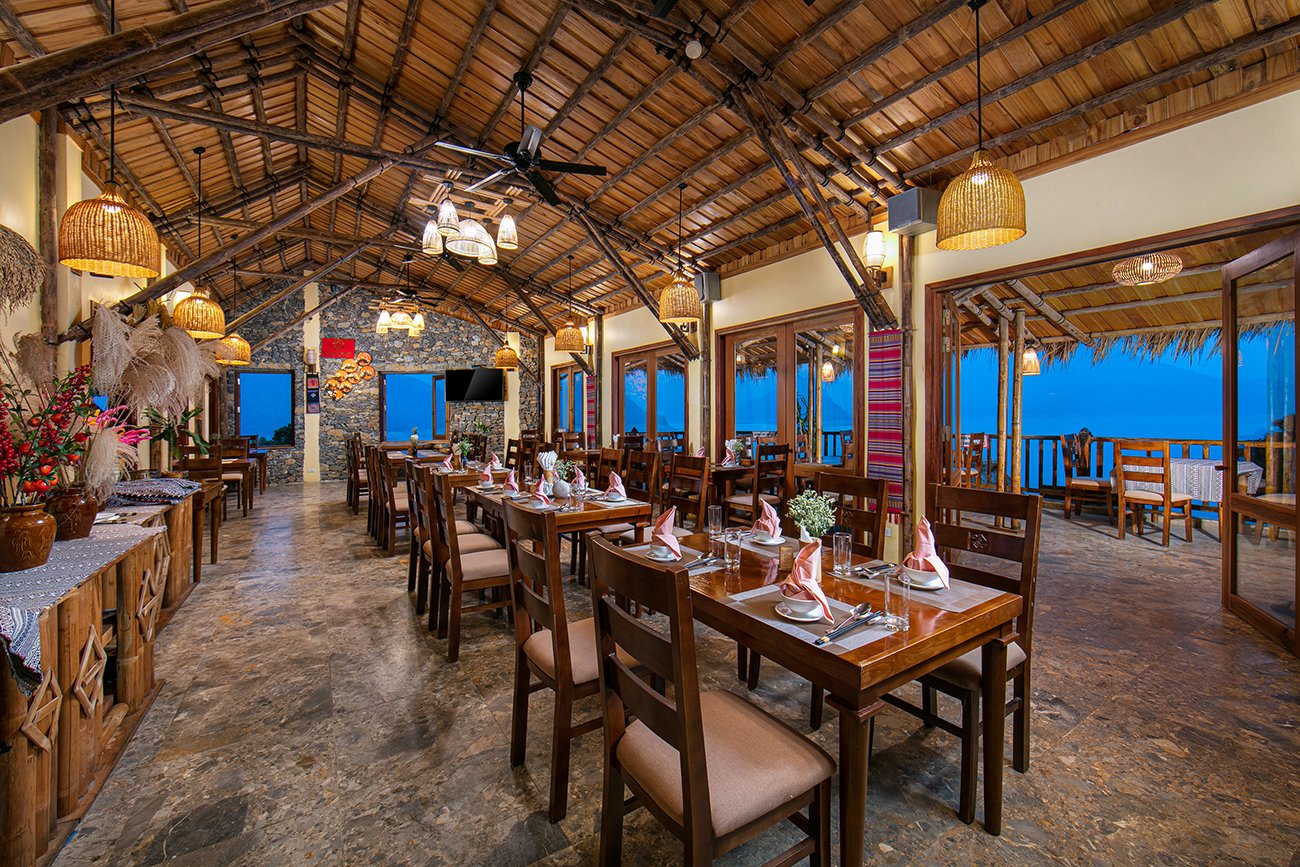
Bamboo Restaurant reception with a twisted bamboo staircase at Mai Chau Hideaway
If your plan is to see Thung Nai's temple and islands during the day, then unwind somewhere quieter for the night, pairing a Thung Nai boat excursion with a stay at the resort is a natural fit. You can check current room categories and rates for Mai Chau Hideaway or browse the property gallery before booking.
Book your stay directly through Mai Chau Hideaway's official reservation page to lock in the best available room for your travel dates.
Frequently Asked Questions About Thung Nai Hoa Binh
Is Thung Nai the same as Hoa Binh Lake?
→ No. Hoa Binh Lake is the full reservoir created by the Hoa Binh hydropower dam. Thung Nai is one commune and boat port located on the shore of that lake, and it happens to be the busiest departure point for lake excursions.
How far is Thung Nai from Hanoi?
→ About 95–100 km, which typically takes around two hours by car via the Hoa Lac – Hoa Binh expressway and local road 435.
Can I reach Mai Chau Hideaway directly from Thung Nai port?
→ Not directly. Mai Chau Hideaway is generally reached via Ngoi Hoa port or by road to Suoi Lon village, not from Thung Nai. If you want to combine a Thung Nai sightseeing loop with a resort stay, it is worth arranging the connecting transfer through the resort's tour desk in advance.
What is the main attraction to see from Thung Nai port?
→ Den Thac Bo temple and its neighboring cave are the primary draw, usually combined with a stop at Dua (Coconut) Island on the same boat trip.
Do I need to book a boat in advance?
→ It is not strictly required on quiet weekdays, but booking ahead is strongly recommended for weekends, holidays, and the Thac Bo Temple Festival period, when boat demand at the port rises sharply.
Planning a Hoa Binh Lake trip that goes beyond a single boat loop? See how a Thung Nai excursion fits into a longer stay by checking Mai Chau Hideaway's full tour and activity list, or compare it with a wider Mai Chau tour itinerary before you finalize your route.