At first glance, Phu Tho Temple may seem less impressive than Vietnam's more famous attractions. There are no cruise boats, lantern festivals, or dramatic mountain panoramas here. Instead, visitors come to experience one of the country's most important cultural and spiritual landmarks.
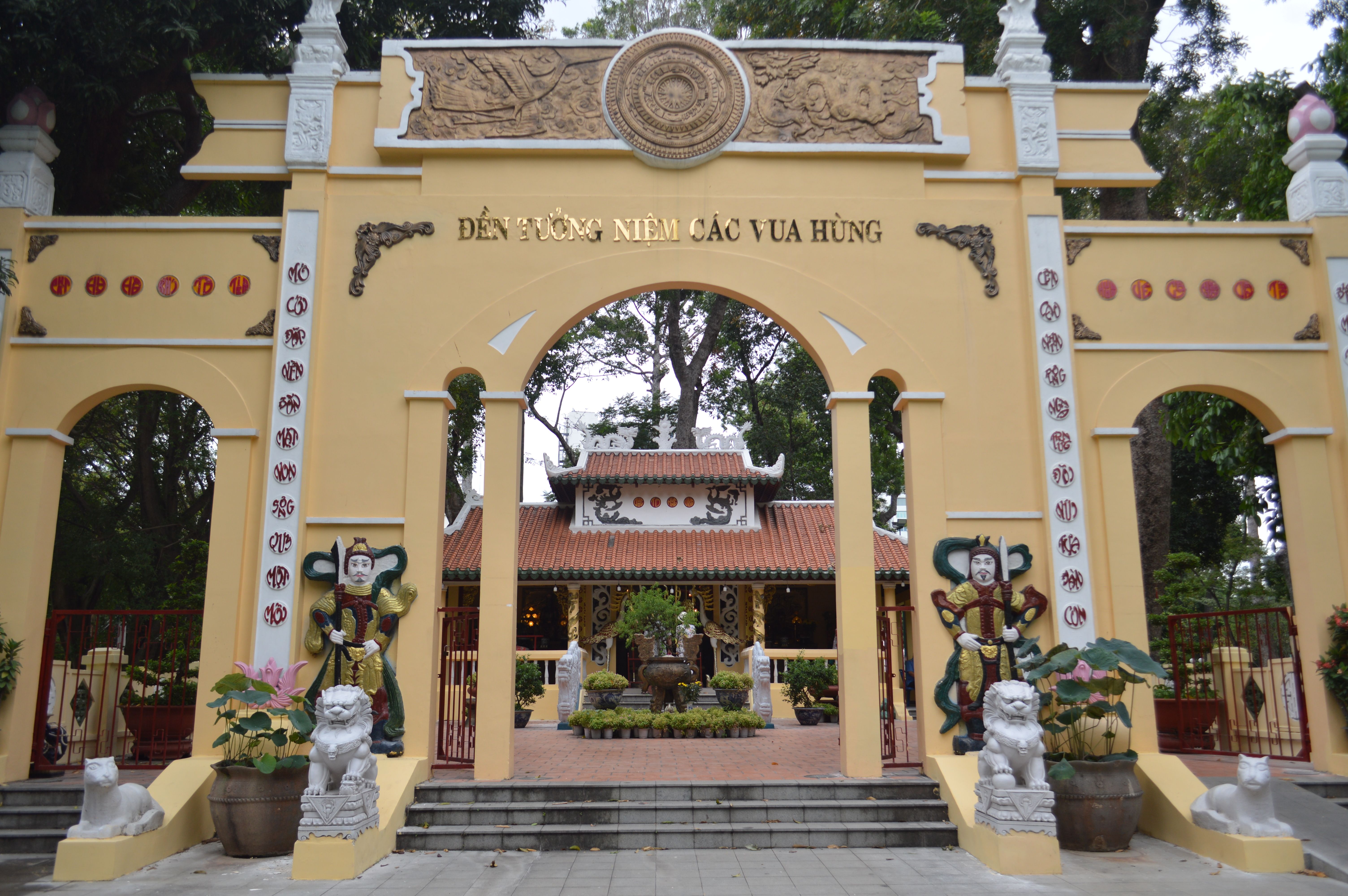
Hung Kings Temple Entrance (Source: Collected)
For foreign travelers, Hung Kings Temple can feel different from more famous attractions such as the Temple of Literature, Trang An, or Ha Long Bay. It is quieter on normal days, deeply local, and less designed around international tourism. That is exactly why it can be worth visiting, especially if you want to understand Vietnam beyond postcard landscapes.
|
Item
|
Info
|
|
Location
|
Viet Tri
|
|
Distance from Hanoi
|
80-90 km
|
|
Travel Time
|
1.5-2.5 hours
|
|
Entrance Fee
|
Usually free
|
|
Best Time
|
Spring & Autumn
|
A wide entrance shot of Hung Kings Temple in the morning, with Vietnamese visitors walking up the steps. Shoot from a low angle to show the scale of the pilgrimage route.
What Is Phu Tho Temple?
“Phu Tho Temple” is a common search term, but the more accurate name is Hung Kings Temple or Hung Kings Temple Relic Site. It is a temple complex in Phu Tho Province dedicated to the Hung Kings, the legendary rulers associated with the early foundation of the Vietnamese nation.
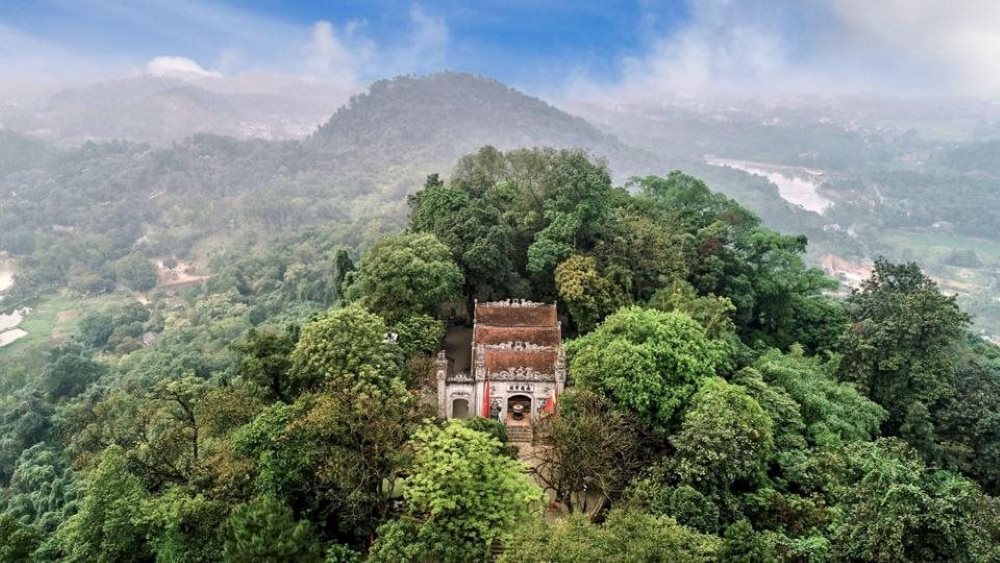
Nghia Linh Mountain (Source: Collected)
The site is located on Nghia Linh Mountain in Viet Tri City, Phu Tho Province, around 90 kilometers northwest of Hanoi. Rather than being a single temple complex, Hung Kings Temple is a collection of sacred structures spread across a forested mountain landscape. Visitors ascend a series of stone stairways that connect several important sites, including Ha Temple, Trung Temple, Thuong Temple, Gieng Temple, a pagoda, ceremonial courtyards, ancient gates, and the mausoleum believed to be the resting place of the sixth Hung King.
Set among centuries-old trees and shaded pathways, the complex combines natural scenery with spiritual significance. Each structure marks a different stage in the legends surrounding the Hung Kings, the founders of the Vietnamese nation. The hilltop setting also offers panoramic views of the surrounding countryside, making the journey as memorable as the monuments themselves. Today, the site serves not only as a place of worship and pilgrimage but also as one of Vietnam's most important historical and cultural landmarks.
Why “Phu Tho Temple” Usually Means Hung Kings Temple
Most international travelers type “Phu Tho Temple” because they know the province name but not the official site name. Locally, however, people usually say Den Hung or Khu Di Tich Den Hung.
This matters when you book transport or ask for directions. If you say “Phu Tho Temple,” some drivers may understand you, but “Den Hung” or “Hung Kings Temple” is much clearer.
The Difference Between Hung Kings Temple, Den Hung, and the Phu Tho Temple Complex
Hung Kings Temple and Den Hung refer to the same sacred destination. In English, travelers may see different names such as Hung Kings Temple, Den Hung Historical Site, or Hung Temple Complex, but they all describe the same nationally important place dedicated to the Hung Kings, the legendary founders of Vietnam.
Many first-time visitors expect a single temple that can be photographed and explored in twenty minutes. In reality, a visit to Den Hung is closer to a gradual pilgrimage. You start at the foot of the mountain and slowly climb hundreds of stone steps through shaded forests, stopping at different temples along the way. Each section represents a different chapter in Vietnam's founding legends and carries its own stories, rituals, and symbolism.
The experience is not only about architecture. Along the route, visitors encounter ancient trees, incense-filled courtyards, ceremonial gates, and viewpoints overlooking the surrounding countryside of Phu Tho Province. During major festivals, especially Hung Kings Commemoration Day, the entire complex becomes a center of cultural activities and pilgrimage, attracting millions of Vietnamese visitors who come to pay respect to their ancestors.
Why Hung Kings Temple Matters in Vietnamese Culture
Hung Kings Temple is important because it represents far more than a religious destination. The site embodies the connection between spirituality, national memory, ancestor worship, and Vietnamese identity. Even Vietnamese people who are not particularly religious often grow up hearing the saying, “When drinking water, remember its source,” and the annual remembrance of the Hung Kings is widely seen as an expression of gratitude to the nation's ancestors rather than simply a religious ritual.
The Hung Kings and the Origin Story of Vietnam
The Hung Kings are traditionally regarded as the first rulers of Van Lang, the ancient kingdom associated with early Vietnamese history and legend. For many visitors, the historical details may feel partly mythical. But that is not the point.
The power of the place comes from collective memory. When Vietnamese families climb the steps, burn incense, and bow before the altars, they are not only visiting an old monument. They are paying respect to a shared origin story.
Worship of the Hung Kings as UNESCO Intangible Cultural Heritage
The worship of the Hung Kings in Phu Tho was inscribed by UNESCO as Intangible Cultural Heritage of Humanity in 2012. UNESCO describes the practice as a form of ancestor worship that brings communities together to express gratitude to the Hung Kings.
This is one reason the site feels different from a typical tourist attraction. You are entering a living ritual space, not a museum frozen in time.
Why Vietnamese People Visit This Site Every Year
Every year, especially around the Hung Kings Commemoration Day, millions of Vietnamese people travel to Phu Tho to pay tribute to the nation’s ancestral kings. The main festival period takes place around the 10th day of the third lunar month.
What most tourists do not realize is that the festival is not only about ceremonies. It also reflects how strongly Vietnamese people connect family, ancestry, agriculture, and national identity.
Where Is Phu Tho Temple Located?
Hung Kings Temple is located on Nghia Linh Mountain in Viet Tri City, Phu Tho Province, northern Vietnam. It is northwest of Hanoi and can be visited as a day trip if you start early.
The temple complex is built into a hill, so expect stairs, slopes, shaded paths, and several stops along the way. The setting is not dramatic like a mountain viewpoint in Ha Giang, but it has a calm and ceremonial atmosphere.
One thing many first-time visitors underestimate is the physical layout. You are not simply dropped at the main altar. You walk upward, passing different temples before reaching the most sacred sections.
How Far Is Phu Tho Temple from Hanoi?
Hung Kings Temple is roughly 80-90 km from Hanoi, depending on your starting point and route. By private car, the trip usually takes around 1.5 to 2.5 hours in normal traffic.
If you are staying in Hanoi Old Quarter, build in extra time. Morning traffic inside Hanoi can make the first part of the journey slower than expected.
Can You Visit Phu Tho Temple on a Day Trip?
Yes, Phu Tho Temple works well as a day trip from Hanoi. A comfortable plan is to leave Hanoi around 7:00 AM, arrive before the hottest part of the day, spend 2-3 hours at the complex, have lunch in Viet Tri or nearby, then return in the afternoon.
If you prefer slower travel, you can also combine Phu Tho with Hoa Binh Lake or Mai Chau instead of rushing back to Hanoi.
What to See Inside the Hung Kings Temple Complex
The best way to experience the site is to follow the natural pilgrimage route rather than jumping straight to the top. Each stop has a different role in the story. Before beginning your ascent, a brief stop at the Hung Kings Museum within the complex is highly recommended. By familiarizing yourself with the archaeological artifacts of the Hung King era, the physical journey up the stone steps is transformed from a simple climb into a meaningful connection with the roots of Vietnamese culture. Before starting the pilgrimage route, consider spending a few minutes at the Hung Kings Museum near the entrance. The exhibits provide useful historical and archaeological context that helps many visitors better understand the symbolism of the temples further up the mountain.
Ha Temple: The Starting Point of the Pilgrimage Route
Ha Temple is usually one of the first major stops. It marks the beginning of the uphill journey and gives visitors time to slow down.
From my experience reviewing traveler routes in northern Vietnam, this is where foreign visitors often begin to realize that Den Hung is not a “photo stop.” The pace is more respectful. People pause, adjust their clothes, prepare incense, and move quietly.

Ha Temple (Source: Collected)
Trung Temple: A Quiet Stop with Historical Meaning
Trung Temple sits higher on the route and is associated with important legends around the Hung Kings. It tends to feel calmer outside the festival season.
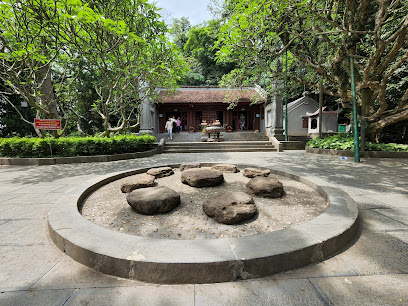
Trung Temple (Source: Collected)
This is a good place to observe local behavior. Watch how families move together, how older visitors lead the ritual, and how younger people follow. It tells you more about Vietnamese culture than a signboard ever could.
Thuong Temple: The Most Sacred Point of the Complex
Thuong Temple is often considered the most sacred part of the complex. It is located near the top of Nghia Linh Mountain and is where many visitors make their most important offering.
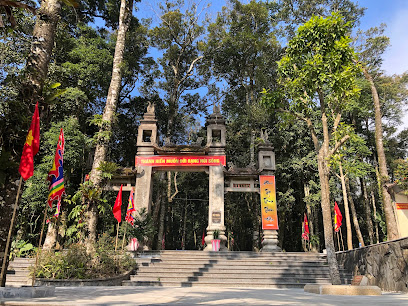
Thuong Temple (Source: Collected)
Local Insider Tip: Do not rush this section just because it is the “main” stop. Give yourself time to stand aside and observe before taking photos. During busy periods, move with the flow of local visitors and avoid blocking the altar area.
King Hung Tomb: A Symbolic Ancestral Site
King Hung Tomb is another important stop in the complex. Even if you are not familiar with Vietnamese legends, the tomb gives the site a stronger sense of solemnity.
Foreign visitors sometimes ask whether the history is literal or legendary. A better way to approach it is to see the tomb as a symbol of ancestral memory. That is how many sacred places work in Vietnam: history, myth, and ritual live together.
Gieng Temple and Local Legends
Gieng Temple is connected with stories of princesses and wells in local legend. It adds a softer, more human layer to the visit after the more ceremonial atmosphere of the upper temples.
What most tourists do not know:
The smaller stops can be more memorable than the famous ones if you visit slowly. Bring a guide or read a short explanation before you go, because many meanings are not obvious from architecture alone.
Thien Quang Pagoda: The Buddhist Layer of the Complex
Thien Quang Pagoda shows how Vietnamese sacred sites often blend different spiritual traditions. The Hung Kings Temple complex is centered on ancestral worship, but Buddhist elements are also present.
This layered spirituality is common in Vietnam. A single site may include ancestor worship, folk belief, Buddhism, local legends, and national history.
Best Time to Visit Phu Tho Temple
The best time depends on what you want: a quiet cultural visit or a major national festival atmosphere.
|
Period
|
Experience
|
|
Spring (Feb-Apr)
|
Pleasant weather and festival atmosphere
|
|
Summer (May-Sep)
|
Hot and humid but greener landscapes
|
|
Autumn (Oct-Nov)
|
Cooler temperatures and fewer visitors
|
|
Hung Kings Festival
|
Cultural immersion but heavy crowds
|
The most comfortable months are usually spring and autumn, when northern Vietnam is cooler and walking uphill feels easier. Summer can be hot and humid, especially around midday.
If you travel between May and September, bring water, a hat, and light clothing that still covers shoulders and knees respectfully.
Go early in the morning. Arriving before 9:00 AM gives you softer light, cooler air, and fewer large groups. For the most peaceful experience, many regular visitors recommend arriving between 7:00 AM and 8:00 AM. At this time, temperatures are cooler, the light is softer for photography, and the main tour groups have usually not arrived yet.
When I plan cultural site visits in northern Vietnam, I usually avoid the 11:00 AM to 2:00 PM window. It is the least pleasant time for walking, and the atmosphere often feels flatter under harsh sun.
Should You Visit During Hung Kings Festival?
Visit during the festival if you want energy, ceremonies, crowds, and a strong sense of national devotion. Avoid it if you prefer quiet temples and easy photography.
The Hung Kings Festival is meaningful, but it can be intense. Roads are busier, accommodation may be harder to secure, and the temple steps can become crowded.
How to Get to Phu Tho Temple from Hanoi
Most travelers start from Hanoi. You can go by private car, bus, or train, but comfort levels vary a lot.
|
Transport
|
Travel Time
|
Convenience
|
Best For
|
|
Private Car
|
1.5-2.5 hrs
|
High
|
Families, photographers, flexible travel
|
|
Bus
|
2-3 hrs
|
Medium
|
Budget travelers
|
|
Train + Taxi
|
3+ hrs
|
Low
|
Slow travel enthusiasts
|
|
Motorbike
|
Variable
|
Low
|
Experienced riders only
|
A private car is the easiest option, especially if you want to combine Hung Kings Temple with another destination. It lets you leave early, stop for breakfast or coffee, and avoid working around public transport schedules. This is the best choice for families, older travelers, photographers, or anyone planning a longer northern Vietnam route.
Buses from Hanoi to Phu Tho or Viet Tri can be cheaper, but they may not drop you directly at the temple complex. You may need a taxi or ride-hailing service for the final section. For backpackers, this can work. For travelers with limited time, it is not always worth the extra coordination.
Taking a train to Viet Tri is possible and can be interesting if you enjoy slower travel. However, it is not the most efficient choice for a day trip because you still need onward transport from the station.
Why Self-Driving May Not Be Ideal for First-Time Visitors
Self-driving in northern Vietnam can be stressful if you are not used to local traffic patterns. Road signs, motorbike flow, and parking near festival sites may be confusing.
Common Mistake to Avoid:
Do not rent a motorbike from Hanoi and assume this will be an easy cultural day trip. The distance is not extreme, but the traffic, heat, and return journey can make it tiring.
Practical Visitor Information for the Hung Kings Temple
To ensure a respectful and rewarding experience at this deeply sacred ancestral site, please consider the following practical guidance for your visit.
Duration
Plan your time based on your travel goals to avoid rushing through a site of such significant historical weight.
|
Visit Type
|
Recommended Time
|
Best For
|
|
Express Visit
|
1.5 - 2 Hours
|
Travelers on a strict itinerary focusing on main structures.
|
|
Cultural Visit
|
3 - 4 Hours
|
A deeper experience, allowing for a slower pace and observation of rituals.
|
Suggested Route:
Begin at the lower entrance, moving sequentially through Ha Temple, Trung Temple, Thuong Temple, and the King Hung Tomb. If time permits, conclude your route with Gieng Temple and Thien Quang Pagoda.
If this is your first visit, allow at least 3-4 hours rather than rushing through the complex. Many visitors underestimate the distance between the temples and the amount of walking involved, especially during warm weather or festival periods. Comfortable footwear with reliable grip is strongly recommended, as the stone steps can become slippery after rain.
Local Insider Tip: Opt for footwear with reliable grip. The stone steps can become hazardous when wet, and paths can be uneven during busy festival seasons.
Fees
While the site is generally accessible, you should always arrive prepared for incidental expenses. Access policies for religious sites in Vietnam can fluctuate based on local management, specific events, or seasonal crowds.
While entry to the complex is generally free, visitors should still carry some cash for parking, bottled water, snacks, small offerings, or local transport. Small-denomination Vietnamese Dong is particularly useful, as card payments and digital payment options may not always be available around the temple area.
- Budgeting for Incidentals: Maintain a supply of small-denomination Vietnamese Dong. These are crucial for parking, public restroom access, bottled water, snacks, and small, voluntary offerings or donations. A collection of smaller notes is significantly more practical for these transactions than large denominations.
Dress Code & Behavioral Etiquette
As a sacred ancestral site, the Hung Kings Temple requires a higher standard of decorum than standard tourist attractions.
- Respectful Attire: Your clothing must cover your shoulders and knees. Prioritize modest, breathable fabrics like linen trousers, long skirts, and loose shirts to manage the climate while maintaining propriety. Avoid beachwear, crop tops, or attire better suited for nightlife.
If you are unfamiliar with local incense rituals, it is perfectly acceptable to observe quietly rather than participate. Many experienced guides recommend spending a few minutes watching how local families move through the temples before approaching the altars yourself. This often provides a deeper understanding of the site's cultural significance than simply following a checklist of rituals.
Photography is generally welcome in outdoor areas, but visitors should avoid photographing worshippers during prayer without permission. Respectful observation is often more appreciated than trying to capture every moment on camera.
Is Phu Tho Temple Worth Visiting?
→ Yes, if you are interested in Vietnamese culture, history, ancestor worship, and meaningful local travel. No, if you only want dramatic scenery or fast entertainment.
Who Will Enjoy This Trip Most?
→ Hung Kings Temple is best for travelers who enjoy cultural context. History lovers, slow travelers, families, photographers, and people planning a deeper northern Vietnam itinerary will likely appreciate it. It is also a good choice for second-time visitors to Vietnam who have already seen Hanoi, Ha Long Bay, and Ninh Binh.
Who Might Find It Less Interesting?
→ If you prefer beaches, nightlife, shopping streets, or highly polished tourist sites, Phu Tho Temple may feel too quiet outside festival season. This is not a place designed to entertain you every minute. You need curiosity and patience.
Phu Tho Temple vs Other Cultural Sites Near Hanoi
Compared with the Temple of Literature, Hung Kings Temple feels more national and ancestral. Compared with Perfume Pagoda, it is less scenic but more connected to origin mythology. Compared with Ninh Binh, it offers less landscape drama but more cultural symbolism.
|
Destination
|
Main Appeal
|
Best For
|
|
Hung Kings Temple
|
Vietnamese origin story and ancestor worship
|
Cultural travelers
|
|
Temple of Literature
|
Academic history and architecture
|
First-time visitors
|
|
Perfume Pagoda
|
Pilgrimage and mountain scenery
|
Spiritual travelers
|
|
Ninh Binh
|
Landscapes and boat trips
|
Nature lovers
|
How Mai Chau Hideaway Fits into a Northern Vietnam Nature and Culture Trip
Mai Chau Hideaway sits by Hoa Binh Lake and focuses on nature, relaxation, and cultural experiences around northwest Vietnam. For travelers who visit Hung Kings Temple in the morning and want to continue beyond Hanoi, a lakeside stay can make the journey feel less rushed.
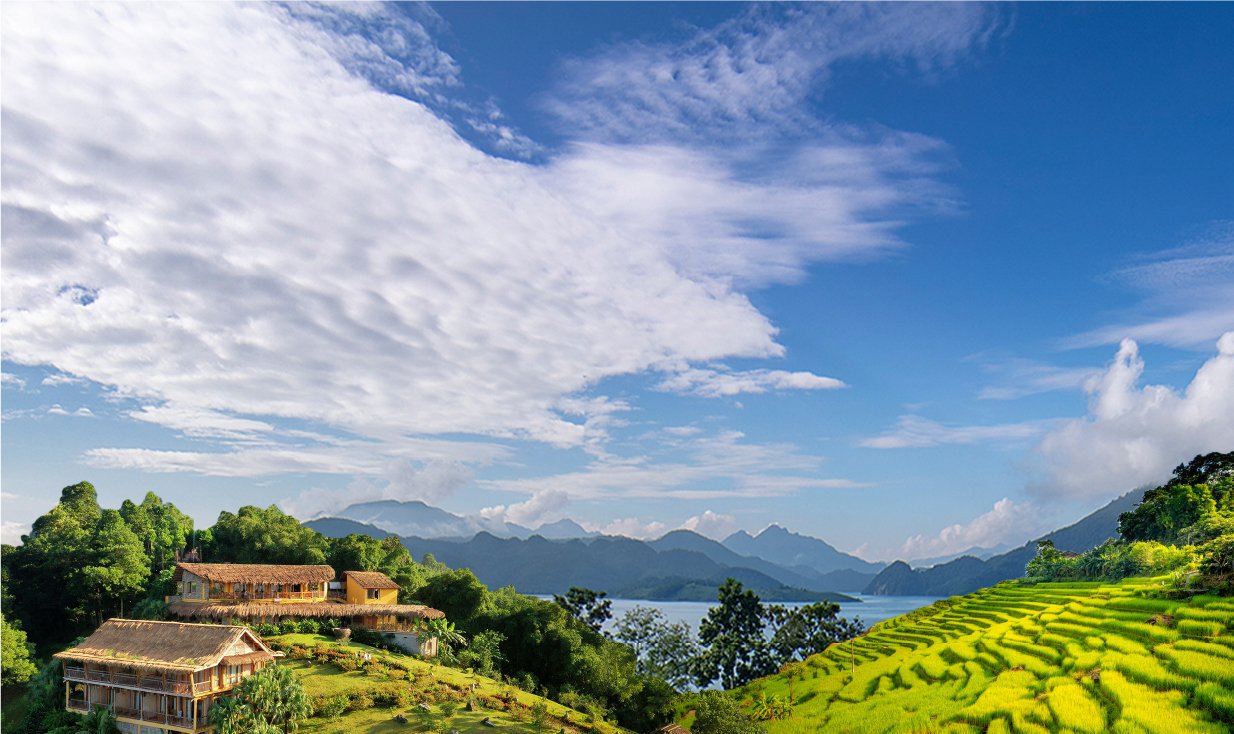
Mai Chau Hideaway Lake Resorts
This is where a soft itinerary works well: sacred history in Phu Tho, mountain scenery around Hoa Binh Lake, then village culture and quiet evenings in Mai Chau.
If you are planning a slower northern Vietnam route, consider using Mai Chau Hideaway as a peaceful base after your cultural stop in Phu Tho. It fits best for travelers who want lake views, fresh air, and a softer landing after busy temple or city days.
Read more: Experience breakfast at Mai Chau Hideaway Lake Resort
Where to Stay After Visiting Phu Tho Temple
Your ideal overnight stop depends on how much time you have and what kind of trip you are planning.
|
Option
|
Best For
|
What to Expect
|
|
Viet Tri
|
Festival visitors, late arrivals
|
Convenient access to Hung Kings Temple and nearby services
|
|
Hanoi
|
Short itineraries
|
Easy day trip option with a wider choice of hotels, restaurants, and attractions
|
|
Mai Chau Hideaway
|
Nature lovers, couples, families
|
A slower-paced experience with lake views, mountain scenery, and outdoor activities
|
If you have an extra two or three days in northern Vietnam, consider continuing beyond Phu Tho instead of returning directly to Hanoi.
A route through Hoa Binh Lake and Mai Chau offers a completely different side of the region. After exploring one of Vietnam's most important cultural and spiritual sites, you can unwind among mountains, lakes, ethnic villages, and quieter landscapes.
At Mai Chau Hideaway, travelers can enjoy lakeside relaxation, kayaking, local cuisine, and a slower rhythm of travel that contrasts nicely with the temple experience. This option is particularly appealing for couples, families, and travelers who enjoy combining culture with nature.
Ask a Local Guide to Explain the Legends and Rituals
Without historical context, many first-time visitors find the temples visually similar. A local guide can help explain the legends of the Hung Kings, the meaning of ancestor worship, and the role the site plays in modern Vietnamese identity. With explanation, the route becomes a story about ancestry, kingship, agriculture, and Vietnamese identity.
Expert Recommendation: If you are combining Phu Tho with Mai Chau or Hoa Binh, ask your accommodation or local operator to help build a realistic route. Distances in northern Vietnam can look simple on a map but feel longer when you include traffic, stops, and mountain roads.
FAQ About Phu Tho Temple
Is Phu Tho Temple the Same as Hung Kings Temple?
→ Yes. Most travelers using the phrase “Phu Tho Temple” are referring to Hung Kings Temple, also called Den Hung.
How far is Phu Tho Temple from Hanoi?
→ It is roughly 80-90 km from Hanoi. Travel time by private car is usually around 1.5 to 2.5 hours, depending on traffic and your starting point.
Is Phu Tho Temple suitable for children?
→ Yes, but families should prepare for walking and steps. Bring water, snacks, hats, and comfortable shoes.
Can foreigners visit Hung Kings Temple?
→ Yes. Foreign visitors can visit respectfully. It helps to learn the basic cultural meaning before you go.
Is there a dress code?
→ There may not always be strict enforcement, but respectful clothing is strongly recommended. Cover shoulders and knees, especially near altars and prayer areas.
What is the best month to visit?
→ Spring and autumn are usually the most comfortable. If you want to experience the Hung Kings Festival, plan around the 10th day of the third lunar month, but expect crowds.
Before heading to Hung Kings Temple, take a moment to make sure you have the essentials for a comfortable and respectful visit:
☐ Comfortable walking shoes with good grip
☐ Light clothing that covers shoulders and knees
☐ A hat and sunscreen for sunny days
☐ A reusable water bottle
☐ Small-denomination Vietnamese Dong for parking, drinks, or offerings
☐ A fully charged phone or camera
☐ Basic knowledge of the Hung Kings and their cultural significance
☐ Extra travel time if visiting during festival season
☐ Respectful behavior around altars and worshippers
☐ An early start from Hanoi for cooler temperatures and fewer crowds